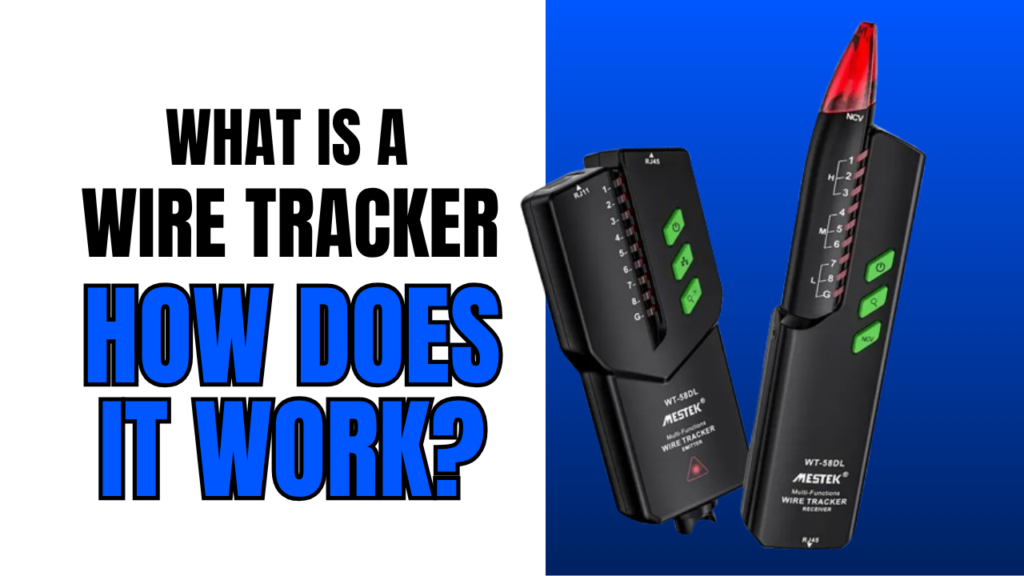
Electricians and technicians face this challenge regularly, whether they’re troubleshooting faulty wiring, installing new components, or identifying disconnected or mislabeled cables in complex wiring systems. A wire tracker, also called a wire tracing tool. It is designed to identify and trace low-voltage cables inside walls or cable bundles.
This tool typically consists of two main components: a transmitter and a receiver, which work together to detect lines in both energized and de-energized conditions. This article explores wire trackers, how they work, their main components, common applications, and how to choose the right one for electrical and network cabling tasks.
What Is a Wire Tracker
A wire tracker, often called a “tone generator and probe kit” or “cable tracer.” It is a diagnostic tool used to find the path of a wire or identify a specific strand in a multi-core cable. Unlike a multimeter, which requires physical contact with the copper conductor to measure voltage or continuity, a wire tracker works through induction.
The device typically consists of two separate units: a transmitter and a receiver. These two components work in tandem to “label” a wire with a unique electronic signature that the technician can then follow through walls, conduits, or dense cable trays. Whether you are working with network (RJ45), telephone (RJ11), or generic electrical wires, the wire tracker provides a non-invasive way to map out complex wiring systems.
Main Components of a Wire Tracker
A standard wire tracker system is not a single tool but a pair of devices that work in tandem: the transmitter and the receiver. Each plays a distinct role in the tracing process.
1) Transmitter
The transmitter is the starting point of the process. It connects directly to the wire or cable you want to trace and sends a signal through it.
Most transmitters can connect in different ways, such as RJ45 ports for network cables, RJ11 ports for telephone lines, or alligator clips for bare wires. Once connected, it sends a tone or signal through the cable. Some models allow you to choose different tone patterns, which makes it easier to identify the correct wire in busy or noisy environments.
2) Receiver
The receiver is a handheld probe used to locate the signal sent by the transmitter. It detects the signal without needing direct contact with the wire.
As you move the receiver along cables, it produces a sound that becomes stronger as you get closer to the correct wire. Many receivers also include a sensitivity control to help isolate a single cable when multiple wires are close together.
How Does a Wire Tracker Work
A wire tracker works by sending a signal through the target wire and detecting it with a receiver. When the transmitter sends a changing electrical current through a wire, it generates a localized electromagnetic field around the conductor. Because the signal is oscillating (changing back and forth), the magnetic field it creates also oscillates at the same frequency.
The receiver contains an internal coil that acts as an antenna. When this coil enters the magnetic field generated by the transmitter, a small electrical current is induced within the receiver’s circuitry. The receiver then amplifies this induced current and pushes it through a speaker or a visual LED indicator.
There are two primary methods of signal transmission:
- Analog Tracing: This uses a standard sine or square-wave tone. It is excellent for long-distance tracing but can be susceptible to “crosstalk,” where the signal jumps to adjacent wires, making it hard to distinguish the exact cable in a tight bundle.
- Digital Tracing: Modern high-end trackers use encoded digital signals. This method is much more precise because the receiver is “tuned” to look for a specific digital pattern. It effectively ignores interference from power lines, fluorescent lights, or other data cables.
Common Applications of Wire Trackers
Wire trackers are versatile tools used across multiple industries. Their applications range from simple DIY home repairs to complex industrial installations.
1) Network Cable Tracing
In IT and networking, “ghost” cables are a common headache. A wire tracker allows an admin to plug the transmitter into a wall jack in an office and then use the probe at the central patch panel to find exactly which port that office connects to. It is also used to verify “continuity,” ensuring that the R45 connector is properly crimped and the signal is reaching the other end.
2) Electrical Troubleshooting
Electricians use wire trackers to trace disconnected or inactive low-voltage cables during maintenance work. If a stray nail snaps a wire inside a wall, the transmitter’s signal stops at the break point. The electrician can locate the exact repair point without tearing down the entire wall by following the tone until it disappears.
3) Commercial and Maintenance Work
Building maintenance teams rely on these devices for facility management. When retrofitting an old office building with new sensors or HVAC controls, wire trackers help identify existing low-voltage lines that can be reused, saving thousands of dollars in material costs.
How to Use a Wire Tracker Step by Step
Using a wire tracker is intuitive, but following a standardized process ensures accuracy and safety.
- Preparation: Ensure the line you are testing is de-energized (unless using a specialized “live wire” tracker).
- Connection: Plug the target cable into the transmitter using the appropriate port (RJ45/RJ11) or attach the alligator clips to the wire’s copper core.
- Activation: Turn on the transmitter. Most devices allow you to choose between a “solid” tone or a “pulsing” tone. The pulsing tone is often easier to distinguish from background interference.
- Scanning: Turn on the receiver and start at the transmitter, moving away along the suspected path of the wire.
- Identification: When searching through a bundle, touch the probe tip to different wires. The one that produces the loudest, clearest sound is your target.
- Verification: Once found, you can often short the wires at the far end. If the tone changes or disappears, you have confirmed the correct line.
Common Problems When Using a Wire Tracker
While highly effective, wire trackers can face challenges in certain environments:
- Signal Interference: In areas with heavy machinery or high-voltage power lines, “60Hz hum” can interfere with the tracker’s signal.
- Crosstalk: In tightly twisted bundles, the signal can sometimes “bleed” from one wire to another. This is why adjustable sensitivity is vital for distinguishing the “true” signal from the “bleed.”
- Shielded Cables: When you trace STP (Shielded Twisted Pair) cables, the metal foil shield can block the electromagnetic signal and make it difficult for the receiver to detect the tone. In these situations, you may need to connect the transmitter directly to the shield itself.
- Depth Limitations: Most standard trackers can only “see” through a few inches of drywall or wood. If the wire is buried deep behind concrete or metal, the signal may be too faint to detect.
How to Choose the Right Wire Tracker
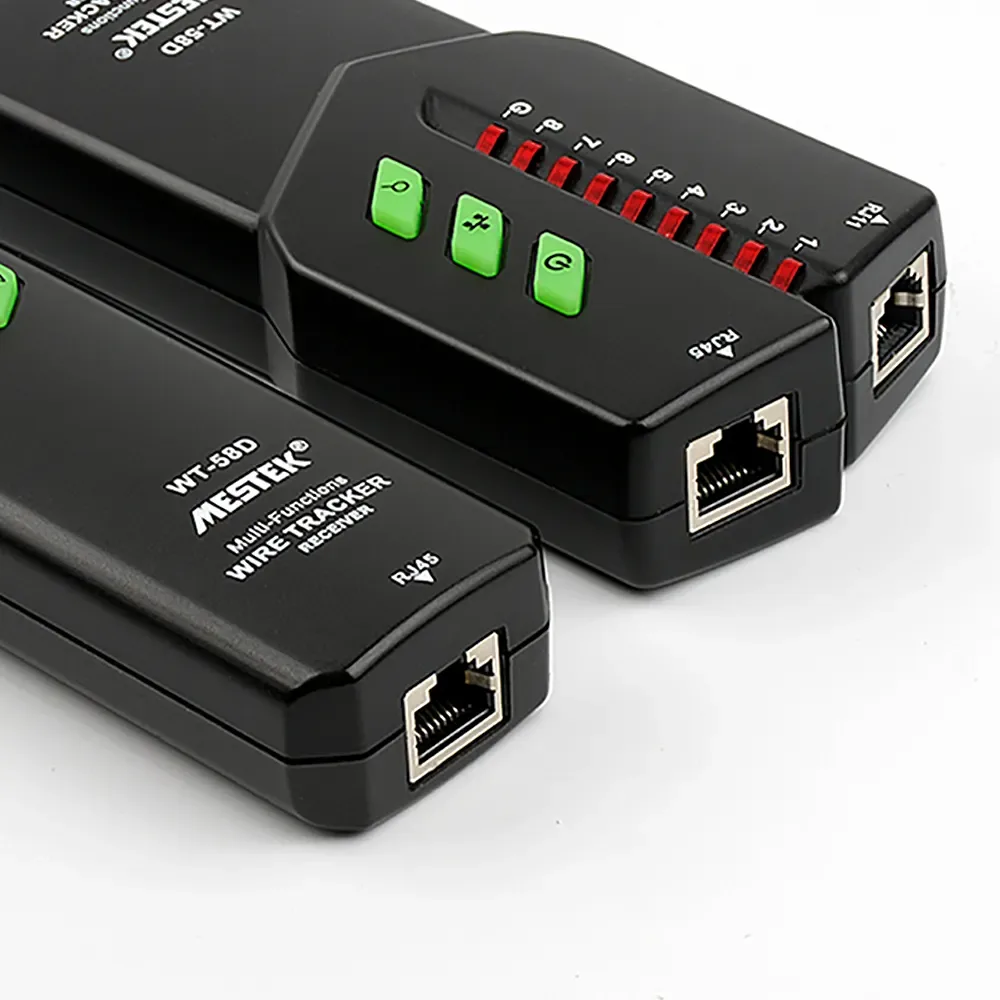
When shopping for a wire tracker, consider the following features to ensure it meets your professional needs:
- Tracing Distance: Look for a device rated for the length of your typical runs (e.g., 300 meters or more).
- Sensitivity Control: An adjustable dial on the receiver is crucial for distinguishing between wires in a crowded panel.
- Port Support: Ensure it has native RJ11 and RJ45 ports to avoid needing extra adapters.
- Digital vs. Analog: Digital trackers are more expensive but are much better at rejecting interference and preventing “signal bleed” in network environments.
- Added Features: Some units include a “mapping” function to check for miswires (split pairs, shorts, or opens) or a built-in flashlight for working in dark closets.
Conclusion
The wire tracker is a fundamental tool that brings clarity to the often-confusing world of cabling. It allows professionals to work faster, smarter, and with significantly less frustration by using the principles of induction. The ability to accurately locate a line is the difference between a quick fix and a day-long headache, whether in simple home repairs or massive industrial network installations.
For those looking for a reliable, professional-grade solution, the MESTEK Wire Tracker WT58DL is an excellent choice. It is specifically designed for network and low-voltage line testing, offering the precision and durability required for modern infrastructure challenges.