Wood is one of the most widely used materials in manufacturing, but it is also highly sensitive to moisture. If moisture levels are not properly controlled during production, wood products can warp, crack, shrink, or even develop mold after delivery.
For manufacturers, this doesn’t just affect product quality — it can lead to customer complaints, production delays, material waste, and increased costs. That’s why moisture control has become a standard part of quality management in modern wood manufacturing.
Why Moisture Control Is Important in Wood Manufacturing
Wood naturally absorbs and releases moisture depending on the surrounding environment. Even after cutting and processing, the material continues to react to humidity and temperature changes.
If the moisture content is too high during production, finished products may change shape after installation. Flooring can expand, furniture panels may bend, and wooden doors can become difficult to close properly.
On the other hand, wood that is too dry can crack or split during machining and assembly.
For manufacturers producing furniture, flooring, cabinets, or construction materials, maintaining stable moisture content is essential for consistent product quality.
Common Moisture Problems in Production
Moisture-related issues can appear at almost every stage of the manufacturing process. These issues not only reduce product reliability but can also increase rejection rates and material waste.
Warping and Deformation
Uneven moisture distribution inside the wood often causes bending or twisting after cutting and assembly.
Cracking and Splitting
When wood dries too quickly or unevenly, internal stress can develop and lead to surface cracks.
Mold and Mildew
Excess moisture during storage or transportation creates ideal conditions for mold growth, especially in humid environments.
Dimensional Instability
Changes in moisture content can cause expansion or shrinkage, making it difficult to maintain precise product dimensions.
Moisture Control Throughout the Manufacturing Process
Effective moisture management starts long before the final product is completed. By controlling moisture at each stage, factories can improve consistency and reduce long-term product failures.
Raw Material Inspection
Manufacturers often check incoming lumber to ensure moisture levels are within acceptable ranges before production begins.
Drying and Conditioning
Kiln drying is commonly used to reduce moisture content to a stable level suitable for machining and assembly.
Production Environment Control
Humidity inside workshops and storage areas should remain as stable as possible to prevent moisture fluctuations.
Final Quality Inspection
Before packaging and shipping, manufacturers typically verify that finished products meet moisture specifications.
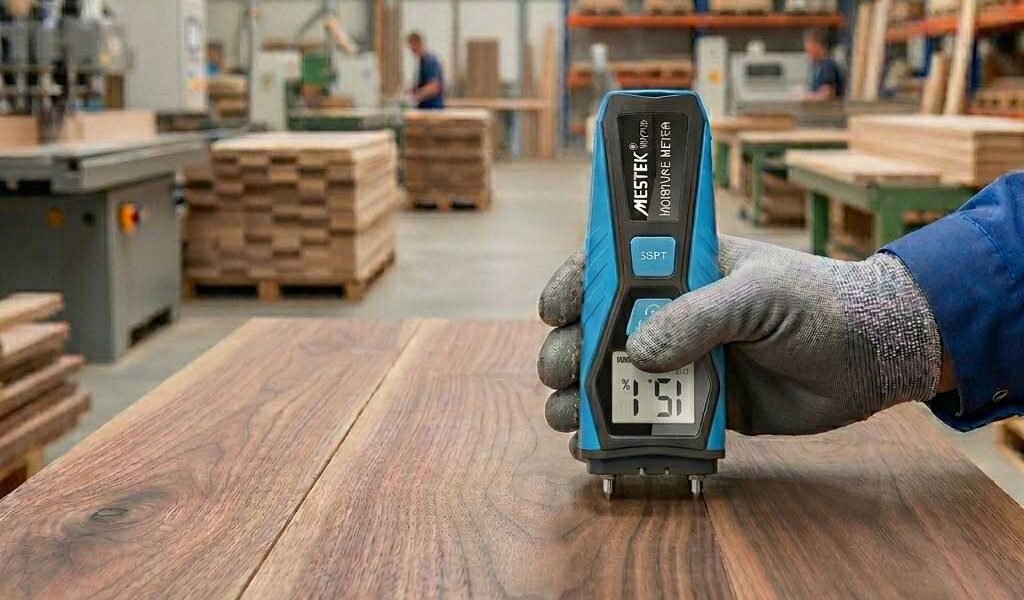
Handheld moisture meters help quality control teams detect inconsistent moisture levels before products leave the factory.
The Role of Moisture Measurement in Quality Control
Accurate moisture measurement plays an important role in modern wood manufacturing. Without reliable testing, it becomes difficult to know whether materials are ready for processing or shipment.
Many factories use moisture meters during incoming inspection, drying verification, and final quality checks. This helps operators quickly identify materials that may cause problems later in production.
For example, if one batch of lumber contains significantly more moisture than the rest, it may react differently during cutting, painting, or assembly. Detecting these differences early helps avoid costly mistakes.
If you are selecting testing equipment for woodworking applications, you can also refer to the MESTEK WM700 to learn about the best wood moisture meter for different production and inspection needs.

How Better Moisture Control Improves Manufacturing Efficiency
Moisture control is not only about preventing defects — it also improves overall manufacturing efficiency.
When materials remain stable and consistent:
- Machining becomes more accurate
- Product quality becomes easier to maintain
- Rework and material waste are reduced
- Customer returns decrease
For large-scale manufacturers, even small improvements in moisture consistency can lead to significant cost savings over time.
Conclusion
In wood manufacturing, moisture control is directly connected to product quality, production efficiency, and long-term reliability.
From raw material inspection to final quality checks, managing moisture properly helps manufacturers reduce defects, improve consistency, and avoid unnecessary losses.
As quality standards continue to rise across the woodworking industry, moisture management is no longer optional — it is an essential part of modern production.