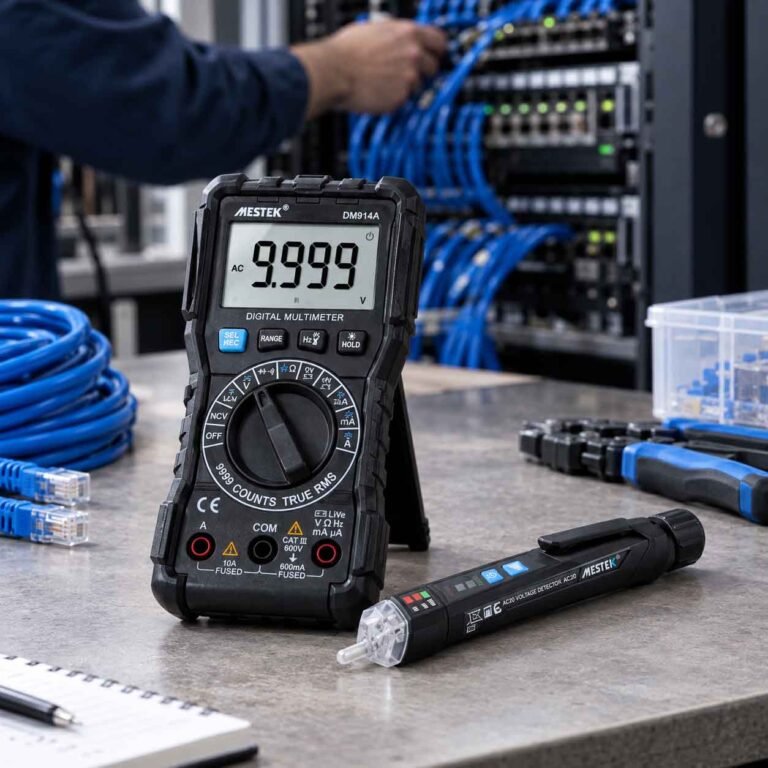
A voltage detector is a small, handy tool used to quickly check whether an electrical circuit has voltage present. Many homeowners, electricians, and DIY enthusiasts use it for troubleshooting outlets, switches, and wires. Unlike complex measurement tools, a voltage detector focuses on one main job — telling you if a wire is “live” or not — which makes it fast and convenient.
How Does a Voltage Detector Work?
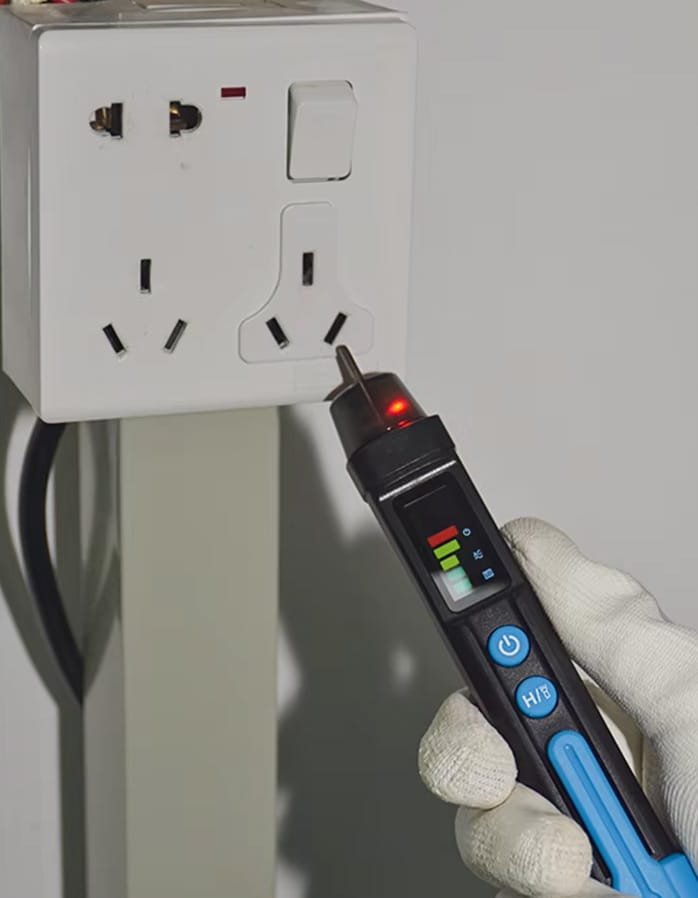
A voltage detector works on the principle of detecting the electric field generated by alternating current (AC). When you bring the tip of the detector close to a live wire or socket, the tool senses the field and triggers an alert — usually with a light, sound, or both.
Tips: Most voltage detectors are designed for AC voltage only. They are generally not suitable for direct current (DC) applications such as car batteries or solar panels. Always check the manufacturer’s specifications before use.
How to Use a Voltage Detector
- Power on the voltage detector — most models have a simple button or switch.
- Test on a known live source first to ensure it’s working.
- Hold the tip close to the wire, outlet, or switch you want to check.
- Watch for the alert — an LED light, a beep, or vibration means voltage is present.
- When done, turn it off and store it safely.
It’s quick, safe, and you don’t need direct contact with the wire’s metal parts.
How to Choose a Voltage Detector
When selecting a voltage detector, consider the following:
- Voltage detection range:Common ranges include 12–1000V AC and 48–1000V AC. Choose one that fits your application — lower starting ranges are better for low-voltage circuits.
- Safety rating:Check if it has a safety rating of CAT III or CAT IV, which means it has been tested to a higher safety standard. [See MESTEK AC50A]
- Alerts and display:A good voltage detector will have bright LED indicators, audible alarms, or even vibration alerts for noisy environments.
- Adjustable sensitivity:This feature lets you fine-tune detection, making it easier to locate the exact point of a live wire.
Safety Tips for Using a Voltage Detector
Inspect before use — Check the tip, body, and batteries for damage.
Wear protective gear — Insulated gloves and safety glasses can prevent accidents.
Follow the manual — Always read the user guide to avoid misuse.
Use only for AC — Unless specified, do not use on DC systems.
Voltage Detector vs. Multimeter vs. Clamp Meter
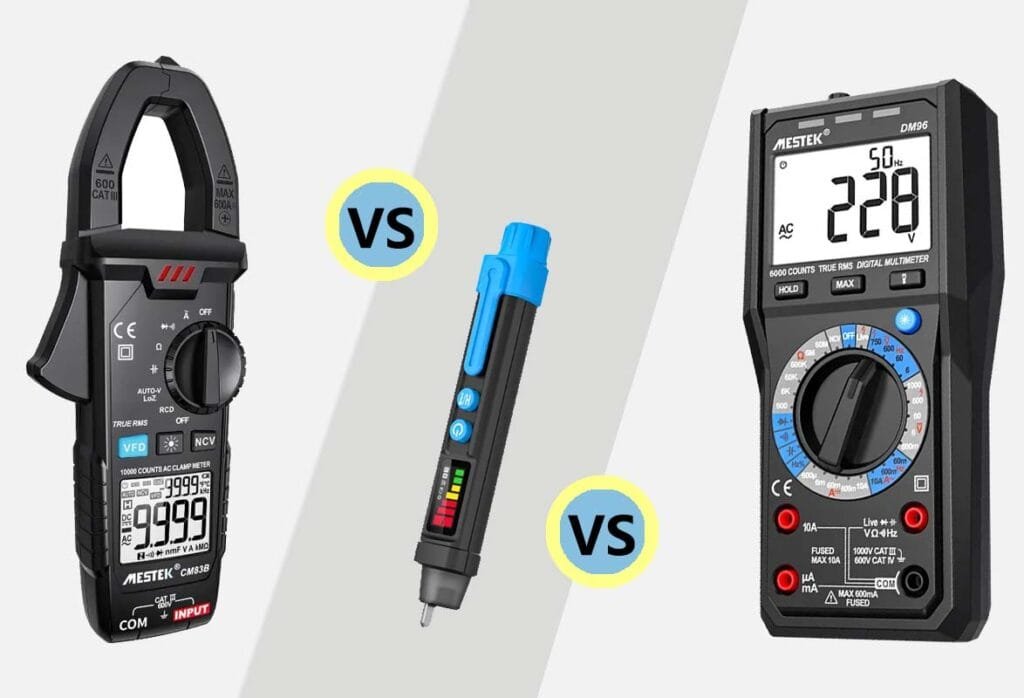
Voltage Detector – Quick, one-handed, no-contact AC testing.
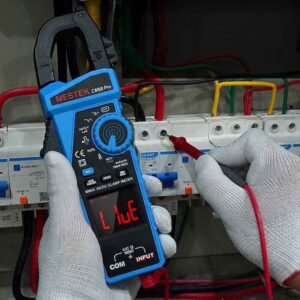
Multimeter – High accuracy, measures voltage, current, resistance, and more, but requires basic operation skills. [See our guide: Clamp Meter vs. Multimeter]
Clamp Me[er – Measures current without disconnecting wires, often used for troubleshooting large electrical systems.
FAQ
Is the reading from a voltage detector always accurate?
Not necessarily. Most voltage detectors are designed to indicate the presence of voltage rather than give a precise numerical value. Their main purpose is to help you quickly confirm whether a circuit is live and reduce the risk of electric shock.
Can I use a voltage detector on household outlets?
Yes. Voltage detectors are perfect for checking if household outlets are live. If you suspect an outlet is faulty or has lost power, simply bring the tip of the detector close to the socket opening. If the circuit is live, most detectors will beep or light up. Keep in mind that they may occasionally pick up interference.
Why isn’t my voltage tester detecting anything?
Possible reasons include low battery power, sensitivity set too low, improper positioning of the tip, or the circuit genuinely being de-energized. Make sure the tip is close enough to the live wire and that the unit is switched on.
Are voltage detectors suitable for beginners?
Absolutely. Voltage detectors are straightforward and user-friendly, making them ideal for beginners. Most models provide clear visual or audible alerts when voltage is detected. That said, always read the manual first and test the device on a known live circuit to ensure it’s working correctly.
Why is my voltage detector giving unstable readings?
Unstable readings can be caused by electromagnetic interference, improper sensitivity settings, or low battery. In some cases, voltage fluctuations in the circuit itself may cause inconsistent results. Try replacing the batteries and testing in a stable power environment before troubleshooting further.
Conclusion
Electric work isn’t something you want to rush.
Sometimes I’ll check the same outlet twice just to be sure, especially in older buildings where wiring can be unpredictable.
A voltage detector saves time in those moments and gives you a quick answer without any guesswork.
It’s a small tool, but it can make a big difference when safety’s on the line.
If you have specific electrical requirements, feel free to contact Mestek Instruments for expert solutions.