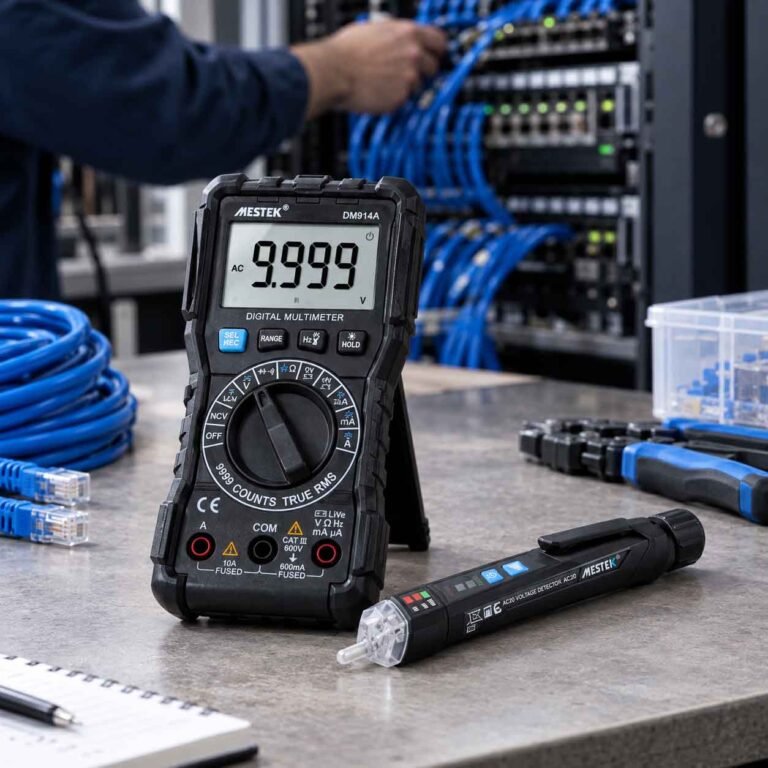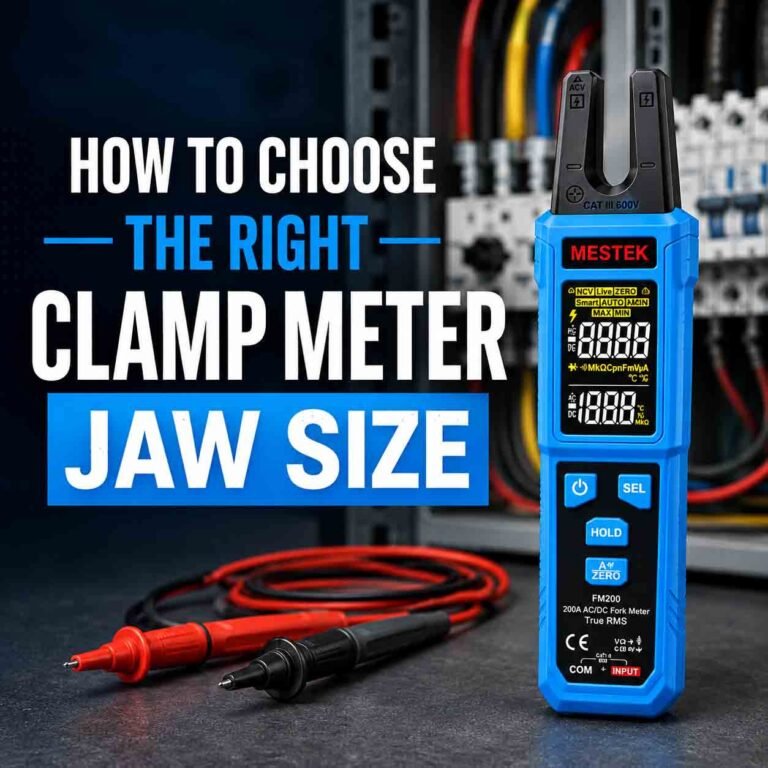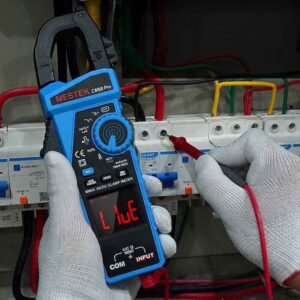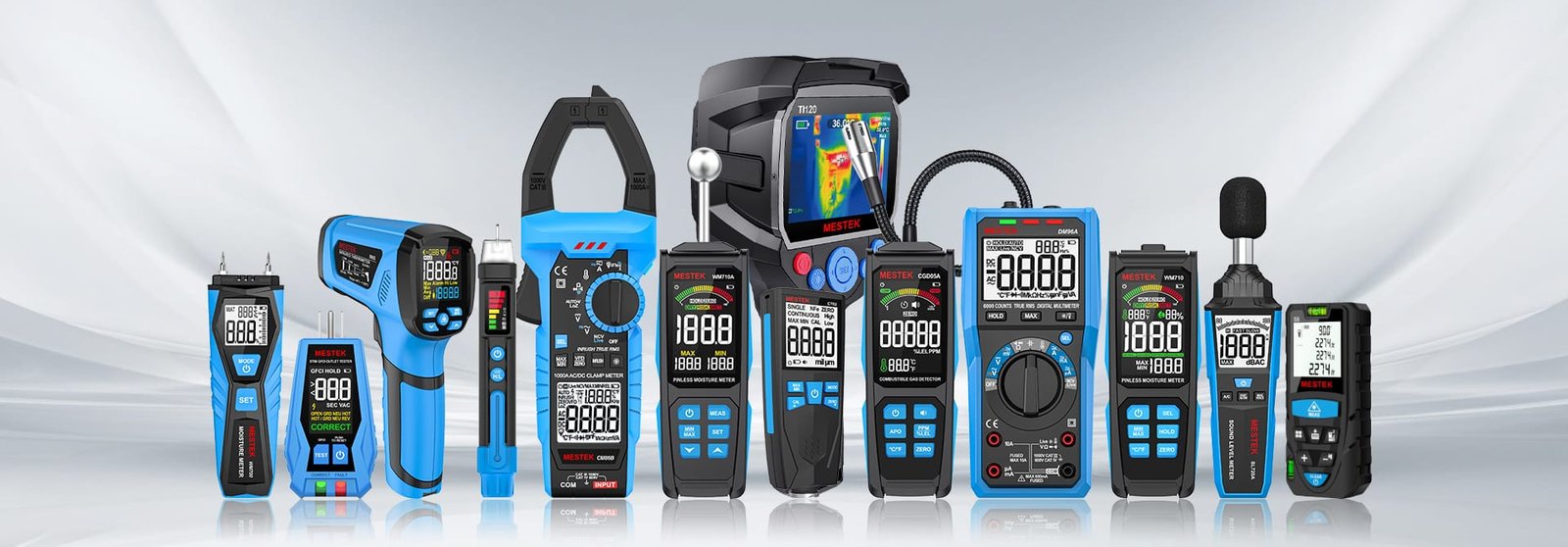
From an electrician’s perspective, we have a lot of maintenance tools. The question is, which tool should we choose? Clamp electric meter or multimeter? The clamp electric meter is better than a multimeter?
We are often troubled by these questions, and now we will discuss these two measurement tools. Because they appear in the same scene, but they have their own advantages in dealing with the details of maintenance.

First, let’s look at some parameters of multimeter and clamp electric meter.
Multimeter
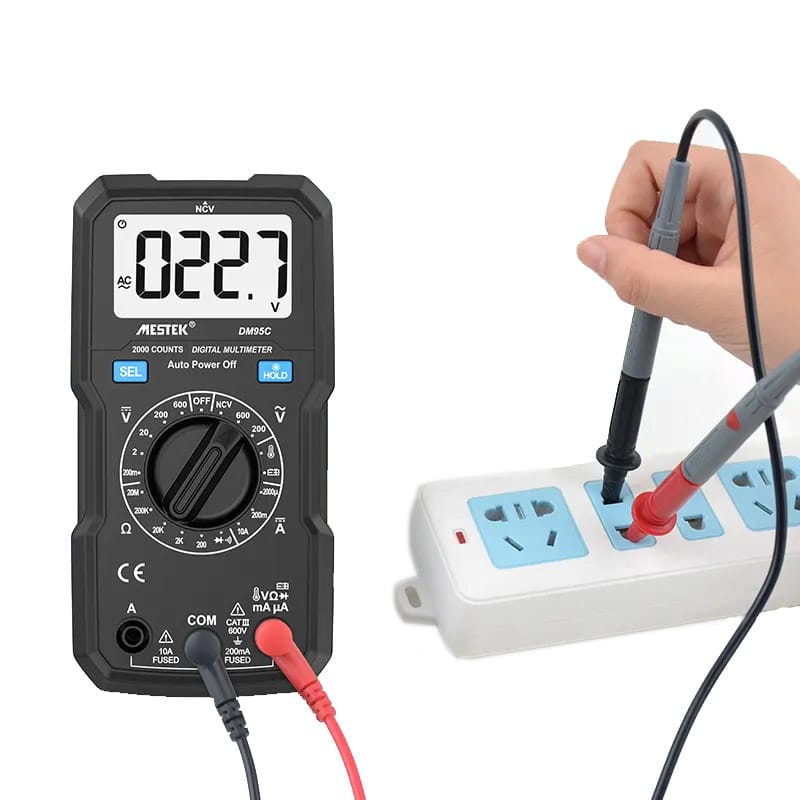
Multimeters can measure voltage, current, resistance, capacitance, temperature, diodes and many other parameters. They are common in electronic repair, circuit testing, and home appliance repair. Digital multimeters usually have automatic and manual types to cope with different measurement scenarios. We can read the readings on the LCD screen.
| Scene | Application |
| Electronic devices | Electrical parameters of computers, telecommunication equipment, and PCB circuits |
| Home appliances | Detect voltage, current and resistance of air conditioners, refrigerators and washing machines |
| laboratory | Precise measurement of electronic components |
| Automobile circuit | Car batteries and motors |
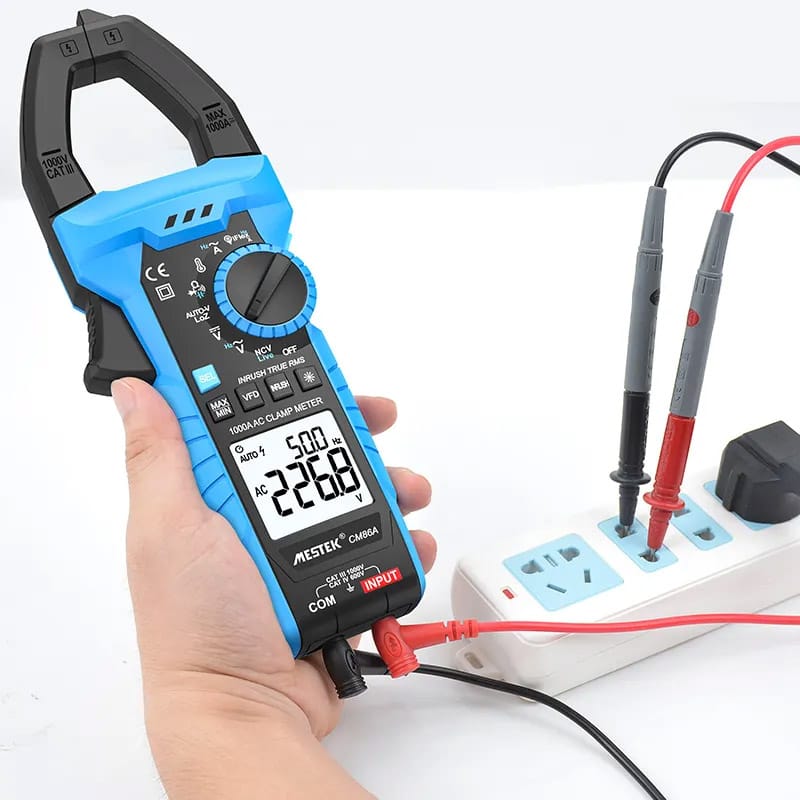
The clamp electric meter is more commonly used for measuring current. Unlike a multimeter, a clamp meter does not require a probe to measure current, which avoids physical contact in most cases.
| Scene | Application |
| Industrial power distribution | Measuring large AC currents in transformers and industrial power lines |
| Home appliances | HVAC, elevator systems, monitoring motors |
| laboratory | AC current measurement for solar energy and energy storage systems |
| Automobile circuit | Current detection in the computer room to ensure load balance |
Safety
If you are very concerned about safety, then the best choice is a clamp electric meter. Because when we measure current, in order to avoid contact with the wires, the clamp meter’s built-in clip can solve this problem, it is safer than a multimeter. If you need to measure more accurate current or voltage, we need to choose a multimeter. In terms of mA and mV performance, it is beyond doubt.
This CM86B is one of the best clamp electric meters with 1000A AC/DC measurement. It is worth mentioning that the flexible clamp can be used in more places. When we choose a clamp electric meter, we look for a backlight, which is a great choice. If it also has lighting on the top, it will be great. In many cases, we are in a dim environment in the maintenance room, such as you are in the basement or the wire you need to test is in a corner that is not easy to find.

Buy a clamp electric meter or a multimeter?
This depends a lot on what you intend to do. If you are thinking about mains power, yes, what you need is to buy a clamp electric meter. On the other hand, if you are interested in electronics, perhaps battery-powered equipment, and you want to check and minimize power consumption, then you will definitely want to measure current in a multimeter, in the mA and µA range.