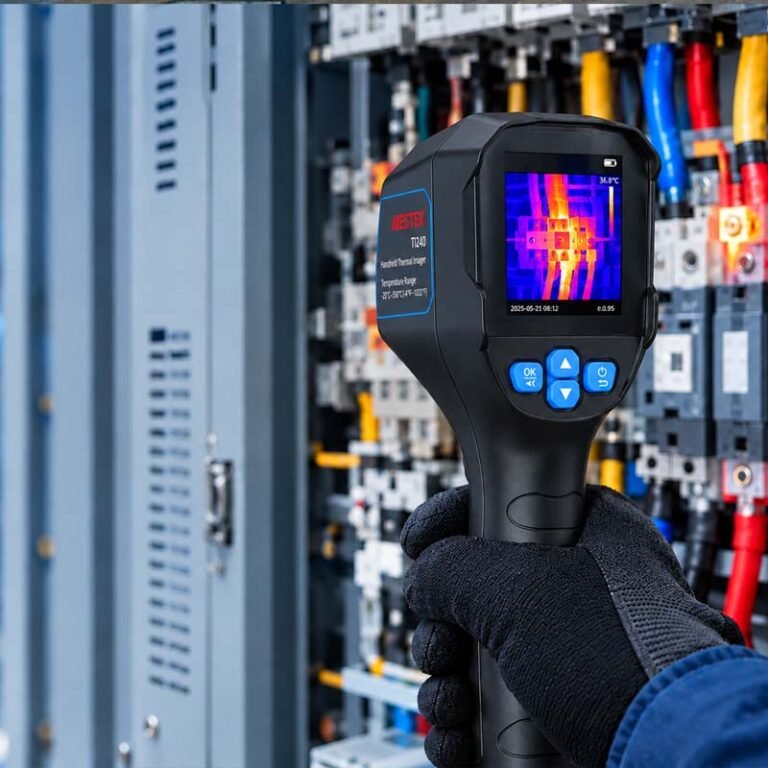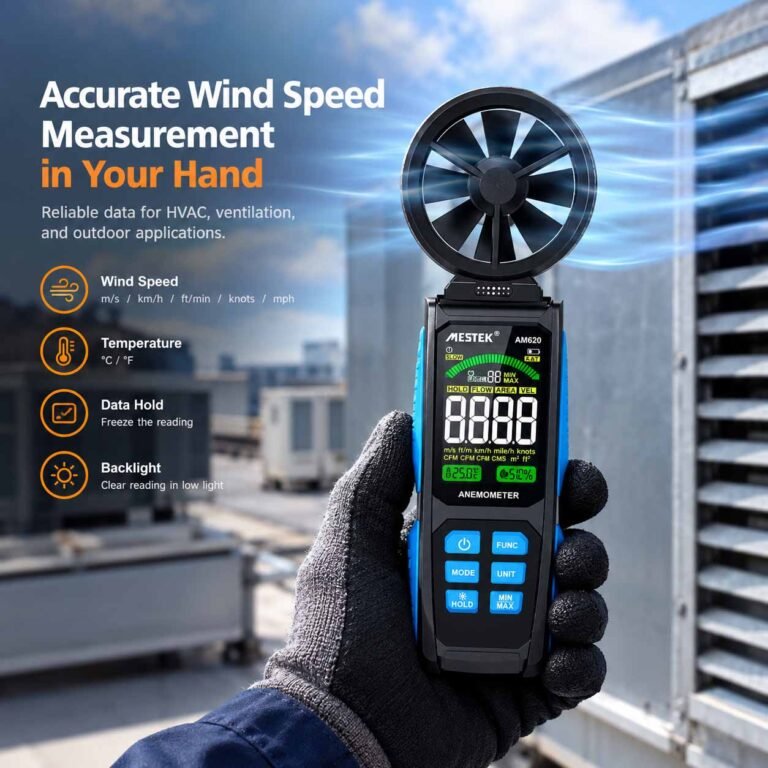
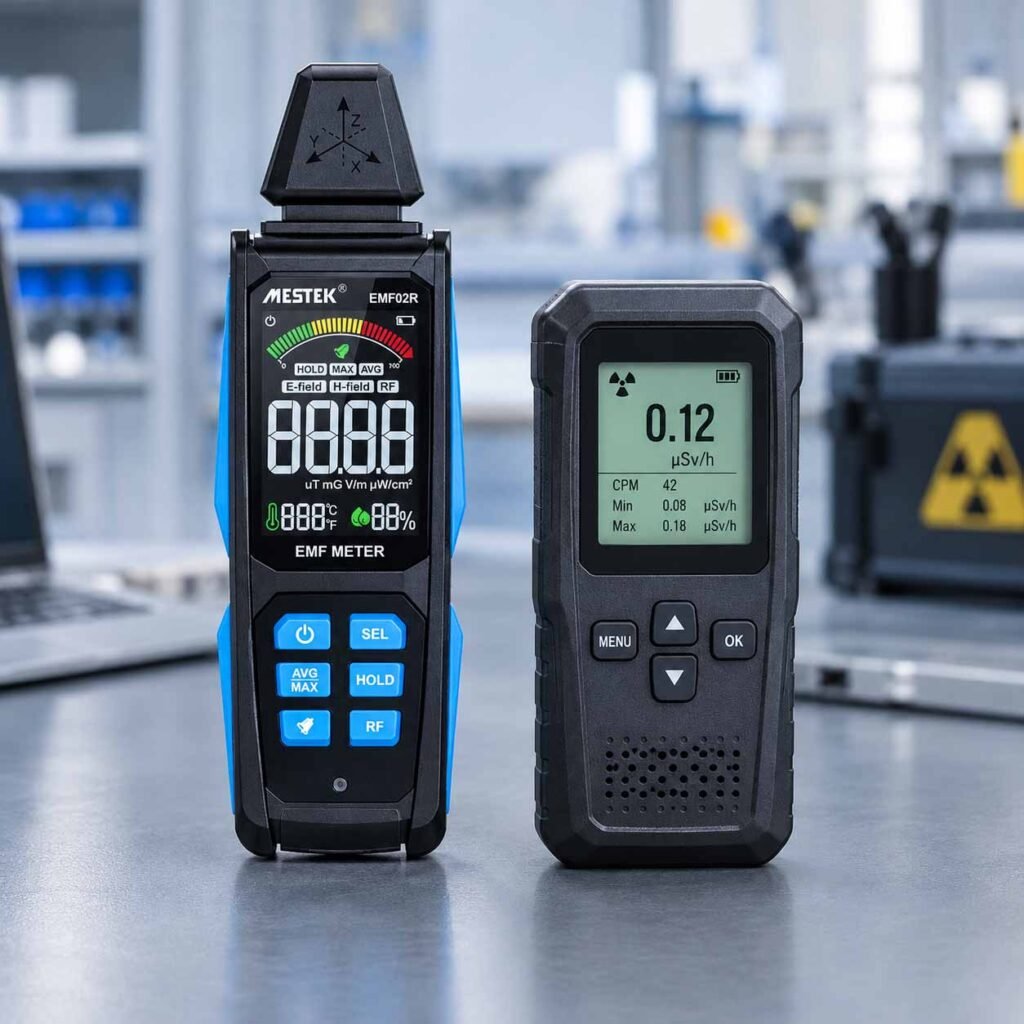
When choosing a device to detect invisible radiation, you may come across two common instruments: an EMF meter and a Geiger counter. Both can detect phenomena that are impossible to see or feel directly, but they are designed to measure different things.
An EMF meter is used to measure specific electromagnetic fields, such as those associated with electrical equipment, wiring, or wireless signals. A Geiger counter detects ionizing radiation, which can come from radioactive materials and certain other sources.
What Is an EMF Meter?
An EMF meter can be used to check electromagnetic fields around power lines, household appliances, and wireless devices. However, not every meter measures the same thing. Some models measure magnetic fields, while others can also measure electric fields or RF signals. Before using one, make sure it covers the type of field you want to check. A meter that measures magnetic fields, for example, may not be suitable for checking RF signals from a wireless router.
What Does an EMF Meter Measure?
Magnetic fields: commonly measured in milligauss (mG) or microtesla (μT).
Electric fields: commonly measured in volts per meter (V/m).
RF fields: may be expressed as electric field strength or power density, such as microwatts per square meter (μW/m²).
Not every EMF meter measures all three types of fields. Some models are designed for a particular frequency range, while others combine multiple measurement modes.
For example, a meter designed to measure power-frequency magnetic fields may not be suitable for assessing RF signals from wireless devices. Always check the manufacturer’s stated frequency range and measurement specifications before selecting a device.
When Do You Need an EMF Meter?
An EMF meter is useful when you want to measure electromagnetic fields around electrical or wireless equipment.
Common applications include checking magnetic fields near electrical appliances, comparing readings at different distances from a power source, and investigating RF field levels near wireless devices.
The instrument can help you compare measurements under consistent conditions. However, a single reading does not automatically establish whether an environment is safe or unsafe. Interpretation depends on the measured field, frequency, measurement conditions, and relevant exposure guidelines.
What Is a Geiger Counter?
A Geiger counter is a radiation detection instrument used to detect ionizing radiation. It commonly uses a Geiger–Müller (GM) tube or another detector designed for the radiation types specified by the manufacturer.
When ionizing radiation interacts with the detector, it produces an electrical signal that the instrument registers. The device may display a numerical reading, provide an audible clicking sound, or trigger an alarm when its configured threshold is reached.
According to the U.S. Nuclear Regulatory Commission, a Geiger–Müller counter registers electrical pulses generated when ionizing radiation interacts with the gas inside its detector tube.
What Does a Geiger Counter Detect?
The radiation a Geiger counter can detect depends on its detector design. Certain models can detect beta particles, while others can detect gamma radiation or X-rays. Detection of alpha particles also depends on the detector construction and whether the radiation can reach its sensitive area.
It is therefore important not to assume that every Geiger counter detects every type of ionizing radiation.
Geiger counters and other radiation survey instruments are used in radiation monitoring, research, educational demonstrations, and surveys involving potentially radioactive materials.
What Units Does a Geiger Counter Use?
CPM (counts per minute): the number of detected events counted over one minute.
CPS (counts per second): the number of detected events counted per second.
μSv/h (microsieverts per hour): a dose-rate-related unit displayed by some radiation meters.
These units describe different aspects of a measurement. CPM and CPS are counts of detected events, while μSv/h expresses an estimated radiation dose rate. Converting a count rate into a dose rate depends on the detector, radiation type, energy response, and instrument calibration.
The CDC notes that Geiger counters are commonly used to measure radioactivity, while other instruments may be more appropriate for measuring ambient radiation dose rates.
EMF Meter vs Geiger Counter: Key Differences
Although both devices are sometimes described as radiation detectors, their measurement purposes are different.
1. What They Detect
An EMF meter measures electromagnetic fields within its specified capabilities. These may include electric fields, magnetic fields, and RF signals.
A Geiger counter detects ionizing radiation that interacts with its detector. It is not designed to measure ordinary electromagnetic fields from household wiring or Wi-Fi signals.
2. How They Work
An EMF meter uses sensors suited to the field type and frequency it measures. The sensor converts the detected field into a reading displayed by the instrument.
A Geiger counter detects radiation interactions inside its radiation sensor and registers the resulting events. Depending on the model, it may display count rates, dose-rate estimates, or other radiation-related information.
3. Measurement Units
EMF meters typically display values such as mG, μT, V/m, or RF power density.
Geiger counters commonly display CPM, CPS, or a radiation dose-rate unit such as μSv/h.
Because the units represent different measurements, the readings cannot be compared directly. A magnetic field measurement in milligauss is not equivalent to a radiation dose-rate measurement in microsieverts per hour.
4. Typical Applications
An EMF meter is suitable for measuring specified electromagnetic fields around electrical equipment, power sources, and wireless devices.
A Geiger counter is more appropriate when the goal is to detect ionizing radiation, monitor radiation levels within the instrument’s capabilities, or investigate a suspected radioactive source.
The correct instrument depends on what you need to measure, not simply on whether the product is advertised as a radiation detector.
Can an EMF Meter Detect Nuclear Radiation
No. An ordinary EMF meter is not designed to detect nuclear radiation or radioactive contamination.
Although the word *radiation* is used for both electromagnetic fields and ionizing radiation, these are different physical phenomena. Radiofrequency signals from wireless devices are non-ionizing electromagnetic radiation. X-rays and gamma rays are forms of ionizing radiation.
An EMF meter designed for electric, magnetic, or RF field measurements cannot replace a radiation detector when investigating radioactive materials.
Similarly, a Geiger counter cannot be used to measure the strength of the magnetic field around a power cable or the RF field from a wireless router.
If you need to investigate a potential radioactive source, choose a radiation detector with specifications appropriate to the suspected radiation type. For professional assessments or situations involving potential contamination, follow applicable radiation-safety procedures and consult qualified personnel.
Which Instrument Should You Choose?
The easiest way to choose between an EMF meter and a Geiger counter is to identify the question you are trying to answer.
Choose an EMF Meter If You Want to:
- Measure magnetic fields near electrical wiring or appliances.
- Check electric field strength in an indoor environment.
- Measure RF fields from supported wireless sources.
- Compare field readings across different locations or distances.
Before purchasing, confirm that the instrument supports the field type and frequency range relevant to your application.
Choose a Geiger Counter If You Want to:
- Detect ionizing radiation using a suitable radiation sensor.
- Monitor radiation levels within the device’s rated range.
- Conduct preliminary surveys involving potentially radioactive materials.
- Observe changes in radiation readings during educational or monitoring activities.
Check the radiation types detected, measurement range, display units, energy response, and calibration requirements. A basic Geiger counter may detect radiation without identifying the radioactive material that produced it.
If you are unsure which instrument fits your needs, define the measurement objective first. Are you investigating electromagnetic fields from electrical or wireless devices, or are you trying to detect ionizing radiation? The answer determines which instrument category is appropriate.
MESTEK EMF Meter and Radiation Detector Options
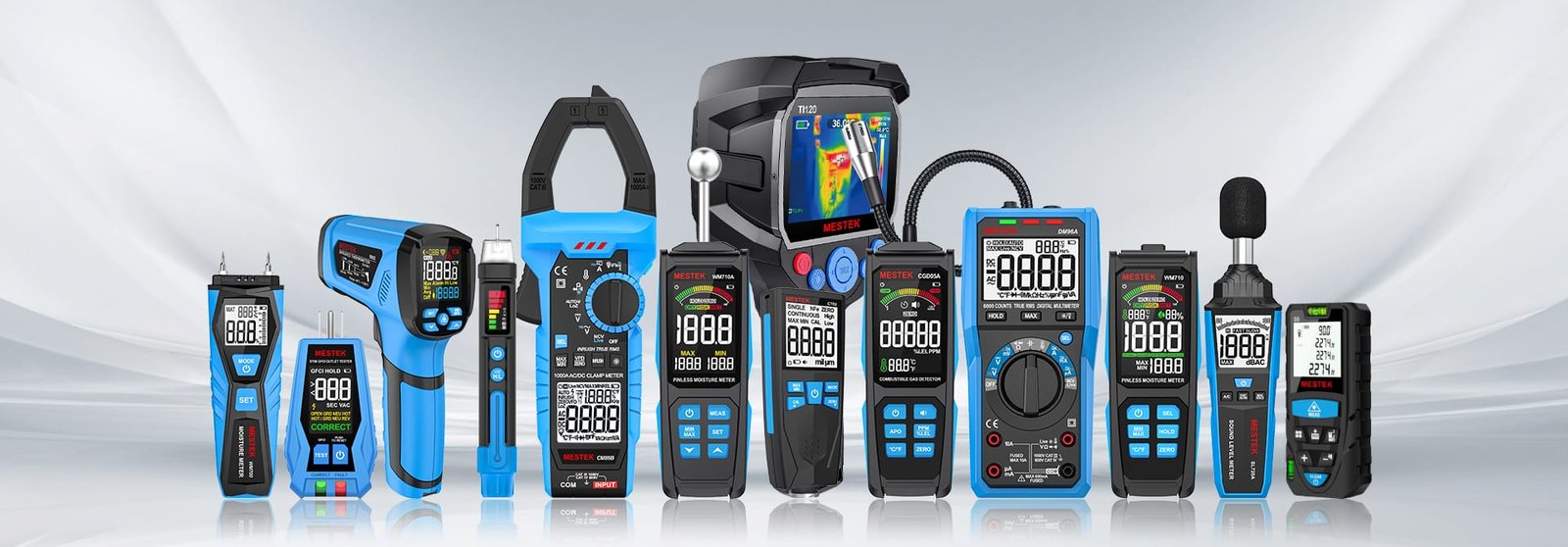
MESTEK offers instruments for both electromagnetic field measurement and radiation detection. Although they serve different purposes, selecting the appropriate model starts with the type of measurement you need.
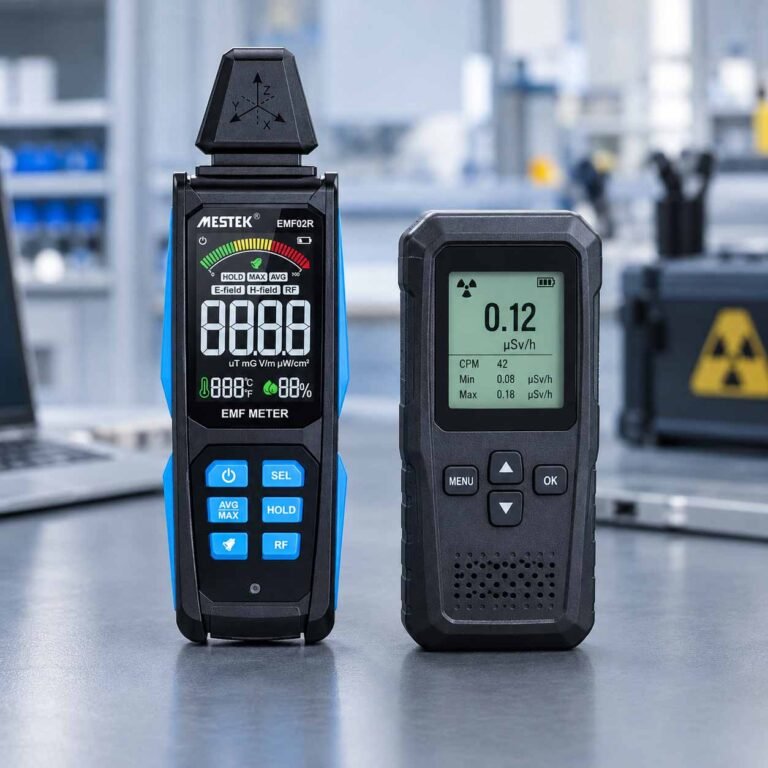
MESTEK EMF02R Professional EMF Detector

The MESTEK EMF02R is designed to measure electromagnetic fields for home, office, and wireless-environment monitoring.
According to its published specifications, it measures magnetic fields from 0.1 to 199.9 mG and electric fields from 1 to 1,999 V/m. Its listed RF test bandwidth is 30 MHz to 8 GHz. The instrument also features a single-axis sensing head, a digital display, an alarm function, and USB Type-C charging.
This model may be worth considering when you need to compare electromagnetic field readings around electrical equipment or supported wireless sources. Review its detailed specifications to confirm that its measurement modes are appropriate for the intended application.
View the MESTEK EMF02R EMF Detector.
MESTEK NC03 Nuclear Radiation Detector

The MESTEK NC03 is a radiation detection instrument that uses a Geiger-counter sensor. Its published specifications identify beta radiation and X-rays as detectable radiation types.
The NC03 displays radiation dose-rate readings in μSv/h and supports real-time monitoring, average and maximum readings, data logging, and audible and vibration alarms.
This instrument is intended for radiation detection rather than measuring ordinary electric or magnetic fields. Check the model’s specifications and operating instructions to ensure that it is suitable for the radiation type and monitoring task involved.
View the MESTEK NC03 Nuclear Radiation Detector.
Final Thoughts
When comparing an EMF meter vs a Geiger counter, the main difference is what each instrument is designed to measure.
An EMF meter measures specified electromagnetic fields from electrical and wireless sources. A Geiger counter detects ionizing radiation, subject to the capabilities of its detector.
Neither instrument can replace the other, and neither should be selected based on the word radiation alone. Check the measurement range, sensor type, units, and intended application before buying.
Choosing the correct instrument helps you collect more relevant measurements and avoid drawing conclusions from data that do not answer your actual question.
Explore MESTEK’s electromagnetic field detectors and radiation detection instruments to compare the available options.