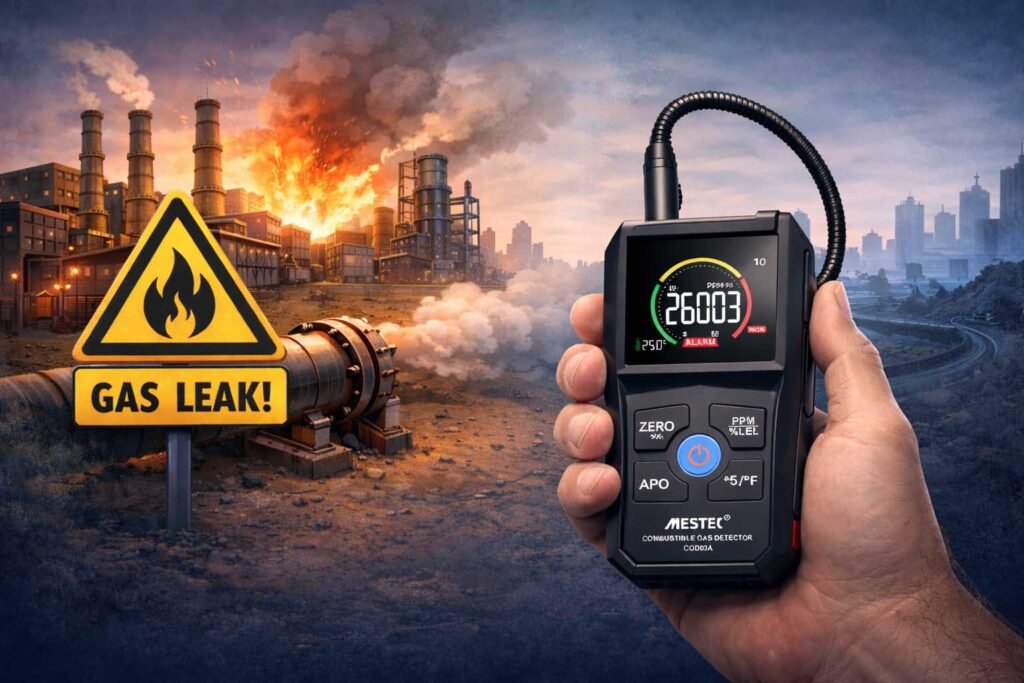
Combustible gas leaks pose silent, but deadly dangers. Whether it’s a leak in a family home or a leak in a massive factory, invisible gas leaks can set off explosions, fires, and toxic fumes. In industries such as manufacturing and chemical processing, a single leak can cause catastrophic accidents, costly repairs, and even loss of life.
Gas leak detection technology has come a long way over the last 120 years. Modern gas leak detectors use sophisticated electronic sensors and infrared technology to detect leaks before they become catastrophes. This article explains the science of gas leak detection, how modern detectors work, and the safety standards you need to practice this year.
Understanding Combustible Gases: The Foundation of Safety
A combustible gas (Gas Combustible) is any gas that will burn when mixed with an oxidant (usually oxygen in the air) and, if ignited. Examples include methane (the main component of natural gas), propane, butane, and the more recent hydrogen.
Each of these gases has a flammability range associated with the Lower Explosive Limit (LEL) and the Upper Explosive Limit (UEL). If the gas concentration is below the LEL, it is “too lean” to burn, and above the UEL, it is “too rich.” The goal of any gas leak detection system is to identify the concentrations well before they reach the LEL at 10 percent or 20% of the LEL.
Read Also: What is a Combustibles Gas Leak Detector
The Mechanics of Gas Leakage: Why Detection is Non Negotiable
Gas leaks don’t happen in a vacuum. They’re the result of old infrastructure, environmental factors, or human error. In homes, a slowly flowing gas leak from a gas stove or water heater could go undetected for weeks and then quietly accumulate in tight spaces until a single spark from a light switch makes a disaster of it. In industries, the stakes are even greater, as high pressure lines can leak massive amounts of gas in seconds.
Gas Leak Detection’s biggest challenge is that many of these gases are colorless and smellless. Gas companies add “mercaptan” to natural gas to give it that “rotten egg” smell, but mercaptan can fade (odor fade) or be masked by other ambient smells. Electronic detection is your best bet.
Modern Gas Leak Detection Technologies in 2026
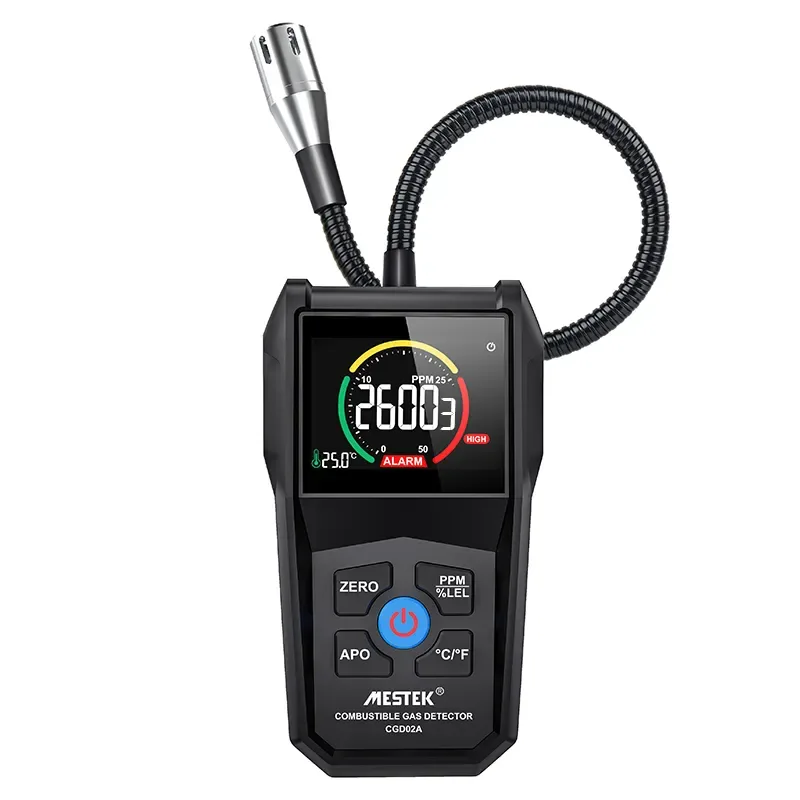
In 2026, a “layered defense” strategy is the industry standard. This involves using different sensor types to cover various environmental conditions, including handheld gas detector solutions and portable gas leak detection systems:
- Catalytic Bead (Pellistor) Sensors: These remain the workhorse for LEL detection. They work by oxidizing the gas on a heated platinum filament. The resulting change in electrical resistance is proportional to the gas concentration.
- Infrared (NDIR) Sensors: These sensors use light absorption to measure gas concentrations. Unlike catalytic sensors, they cannot be “poisoned” by silicones or sulfur and can operate in oxygen-depleted environments.
- Ultrasonic Acoustic Detection: For high-pressure leaks, acoustic sensors “listen” for the ultrasound generated by escaping gas. This is particularly effective in windy outdoor areas where gas clouds might dissipate before reaching a traditional chemical sensor.
- Portable Semiconductor Sensors: These are widely used in handheld gas detectors. Semiconductor sensors provide fast response times and high sensitivity for detecting combustible gases in residential and light industrial environments. These sensors are best for portable gas leak detection due to their compact size, affordability, and ease of use.
While advanced technologies like catalytic and infrared sensors are widely used in industrial systems, portable gas leak detectors often use semiconductor sensors for fast and flexible leak detection.
Step by Step Guide: How to Detect Combustible Gas Leaks
If you suspect a leak or are installing a monitoring system, follow this professional 2026 protocol.
Step 1: Environmental Assessment
Choose the gas if one appears. Do you have methane, which rises, or propane which sinks? Place your sensors accordingly. For methane, you need to mount your sensors near the ceiling, and for propane, near the floor.
Step 2: Equipment Selection
Use detectors calibrated for your target gas. When selecting a handheld gas detector or portable gas leak detection device, ensure it matches your application needs. A handheld gas detector is often the best choice for quick inspections and mobile use.
Step 3: Pre Operation Zeroing and Calibration
Before entering a suspected area, power up your tester in “clean air” and ‘zero’ before entering. If you are conducting a professional survey, check that the test device has a current calibration certificate. Many newer testing devices now have “Auto Self Tests,” which use internal gas reservoirs to test the health of the catalyst.
Step 4: The Survey Pattern
When looking for a leak, move the sensor slowly in a grid pattern. Focus on “points of failure” such as valves, joints, meters, and appliance regulators. Allow a few seconds for the sensor to respond at each point, as gas must diffuse through the sensor’s flame arrestor.
Step 5: Interpretation of Results
Look at the LEL percentage. A reading of 1% or 2% is a signal to check further. A reading higher than 10% is an “Action Level.” If the device “pins” or displays an over-range error, leave the area immediately because the gas concentration may be above the UEL or high enough to displace oxygen.
Step 6: Response and Mitigation
Once a leak is found, follow the “Triple A” Response: Alarm, Act, and Air.
- Alarm: Ensure everyone is notified.
- Act: Shut off the gas source if safe to do so.
- Air: Ventilate the space by opening windows and doors, but only if you can do so without creating a spark (don’t flip light switches or use phones in the gas cloud).
Common Sources of Gas Leaks
In modern 2026, gas leaks can originate from conventional or new sources.
- Aging Kitchen Appliances: Gas ranges and ovens with pilot lights or electronic igniters.
- Heating Systems: Forced air furnaces and boilers that use natural gas or propane.
- Gas Fireplaces: A common source of small, persistent leaks from the control valve.
- Outdoor Grills and Fire Pits: Often caused by corroded hoses or loose regulator connections.
- Industrial Processing Plants: High pressure storage tanks and extensive pipeline networks.
- Hydrogen Storage: The 2026 “hydrogen economy” requires specialized sensors for this very light gas.
Advanced Strategies for Industrial Gas Leak Detection
For safety managers in 2026, Gas Leak Detection is about managing large networks. Fixed point sensors are placed at high risk areas, such as pumps and storage areas, allowing a central control room to monitor gas levels for an entire facility.
In these types of applications, the Catalyst plays an important role. For example, high performance sensors use a catalyst that can be used to “poison” the degradation of the bead as a result of exposure to silicones, lead, or sulfur compounds. A Catalyst can guarantee that the detector will remain active even in the most aggressive industrial environments.
Maintenance: Protecting Your Investment in Safety
The Achilles’ heel of any gas leak detection system is neglect. Catalytic sensors are particularly sensitive.
- Avoid Poisoning: Keep sensors away from silicone based sprays, lubricants, and cleaners. These can form a glass like coating over the catalyst, effectively “blinding” the detector.
- Bump Testing: Perform a daily “bump test,” a brief exposure to gas to ensure the sensor still reacts. In 2026, automated bump test stations are the standard in industrial locker rooms.
- Sensor Replacement: Most high-quality sensors have an End-of-Life (EOL) indicator and typically require replacement every 3 to 5 years.
Conclusion
Combustible and gas leak detection requires good technology, maintenance, and compliance with 2026. Whether you are handling a residential or industrial property, making sure your staff is aware of when gas leaks are taking place can save lives and avoid serious emergencies.
Regular calibration, sensors placed strategically, and response procedures are all vital components of a gas safety program. With the right detectors and trained people, facilities can detect gas leaks early and continue to operate safely.