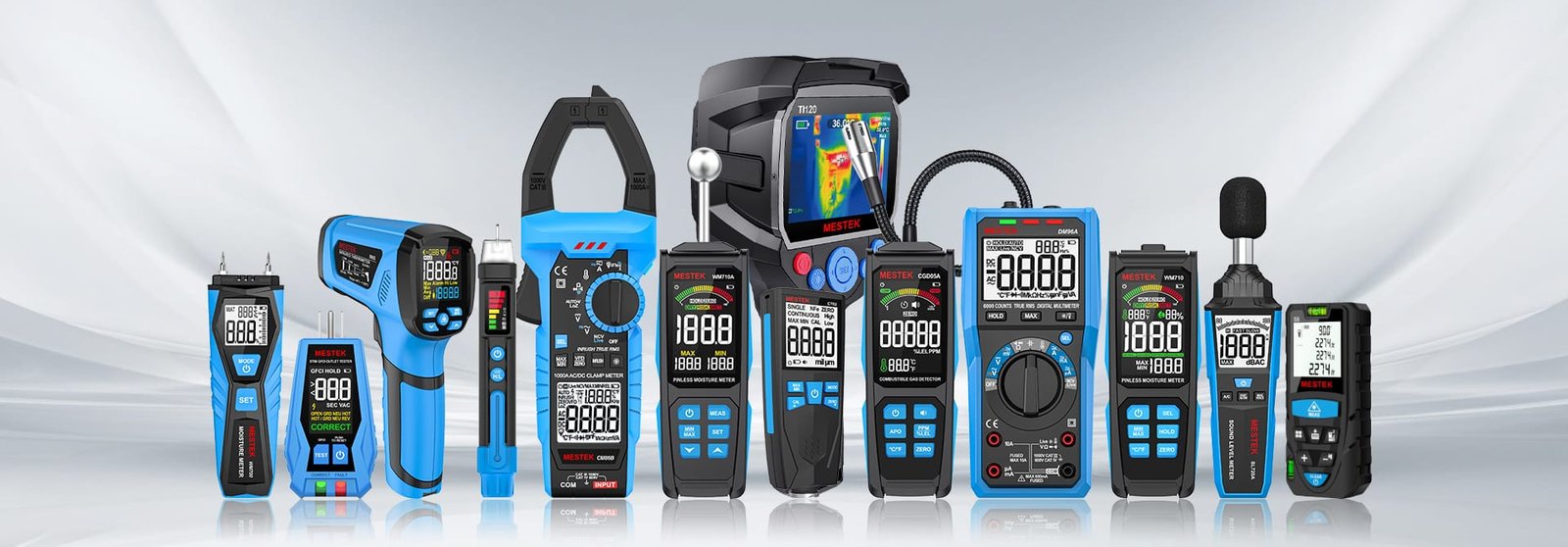
When comparing an infrared thermometer vs thermal camera, both tools measure temperature without contact, but they serve different purposes. Understanding the difference helps you choose the right tool for HVAC, electrical work, or industrial inspection.
What Is an Infrared Thermometer?
An infrared thermometer measures temperature at a single point by detecting infrared radiation. It provides a quick reading and is ideal for fast checks.
These devices are commonly used for HVAC systems, engine diagnostics, cooking surfaces, and basic electrical inspections. They are affordable, portable, and easy to use.
What Is a Thermal Camera?
A thermal camera captures a full thermal image instead of a single reading. It shows temperature distribution using color variations, helping users identify hot and cold areas instantly.
Thermal cameras are widely used in building inspection, electrical diagnostics, and predictive maintenance, where identifying hidden issues is critical.
Key Differences Between Infrared Thermometer and Thermal Camera
Measurement Type
Infrared thermometers measure a single point, while thermal cameras capture thousands of points to create a full image.
Visualization
Infrared thermometers provide only a number. Thermal cameras display a visual heat map, making it easier to detect problems.
Accuracy in Complex Situations
In simple tasks, both tools work well. However, in complex systems, thermal cameras are more effective because they reveal hidden hotspots.
Coverage
Infrared thermometers rely on distance-to-spot ratio, meaning accuracy depends on distance. Thermal cameras use a wider field of view, allowing faster scanning of large areas.
Cost(H3)
Infrared thermometers are budget-friendly and suitable for everyday use. Thermal cameras are more expensive but offer advanced diagnostic capabilities.
When Should You Use an Infrared Thermometer?
Use an infrared thermometer when you need fast, simple measurements. It works best when the target is clear and only one point needs to be measured.
Common uses include checking equipment temperature, HVAC systems, and quick inspections.
When Should You Use a Thermal Camera?
A thermal camera is better for detecting hidden problems and analyzing temperature patterns. It is ideal for electrical systems, building insulation, and industrial maintenance.
Which One Should You Choose?
Choosing between an infrared thermometer vs thermal camera depends on your needs. For quick checks and affordability, an infrared thermometer is sufficient. For detailed diagnostics and large-area inspection, a thermal camera provides more value.
Final Thoughts
Infrared thermometers and thermal cameras serve different roles. One provides fast point measurements, while the other offers a complete thermal picture. Selecting the right tool ensures better efficiency and more accurate results.