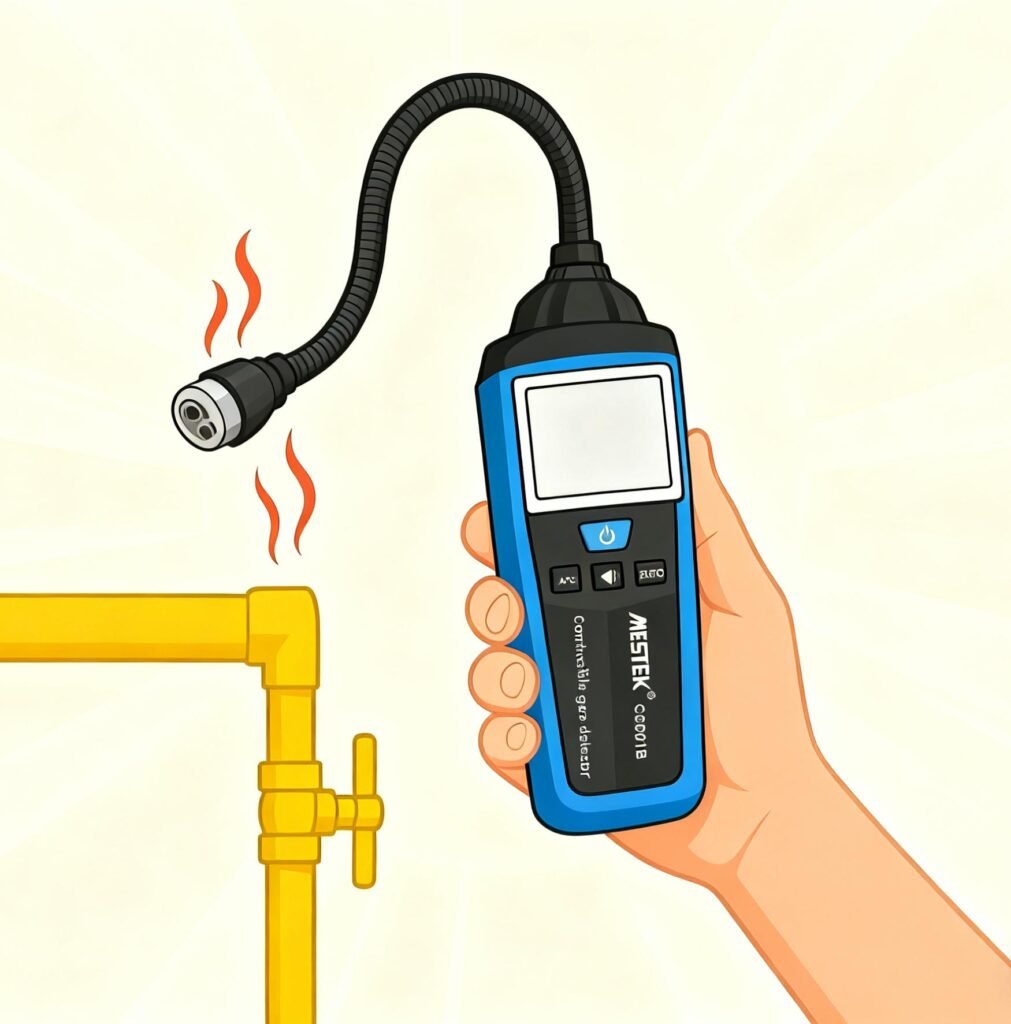
A Combustibles Gas Leak Detector is a safety device that detects leaks of flammable gases such as natural gas, propane, and methane before they reach dangerous levels. Gas leaks are often invisible and hard to identify without proper tools, yet they pose serious risks of fire, explosion, or poisoning. Using a detector provides fast and accurate alerts, helping safeguard homes, workplaces, and storage areas.
Functions of a Gas Leak Detector
A combustible gas leak detector is not just a simple tool, it is a life-saving instrument.Before choosing the right Combustibles Gas Leak Detector, it is important to understand the key features and functions that define product performance:
| Functiom | Description |
| Detection Range | Detects gases such as natural gas, coal gas, propane, methane, and liquefied petroleum gas. |
| Response Speed | Quick response time, typically within 2 seconds. |
| Portability | Compact and lightweight, suitable for home use. |
| Safety | Equipped with sound and light alarms to ensure safe use in kitchens and other environments. |
How to Choose a Combustibles Gas Leak Detector
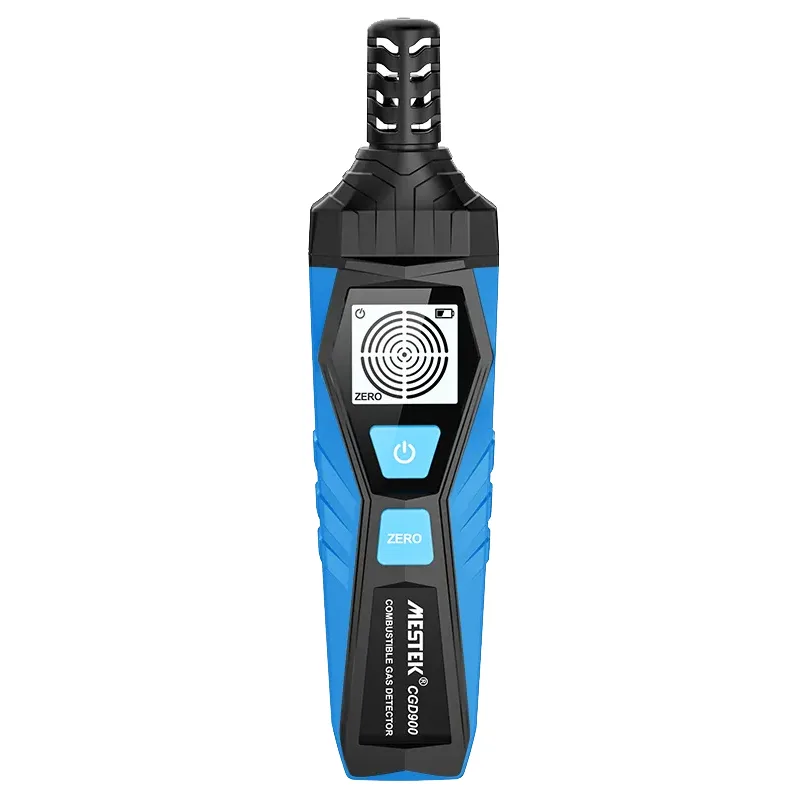
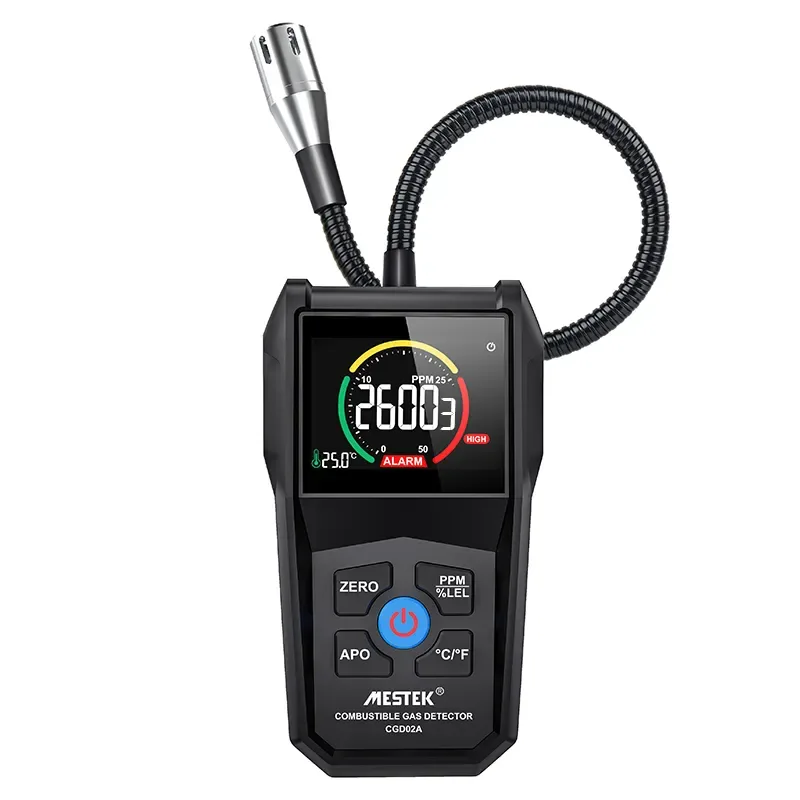
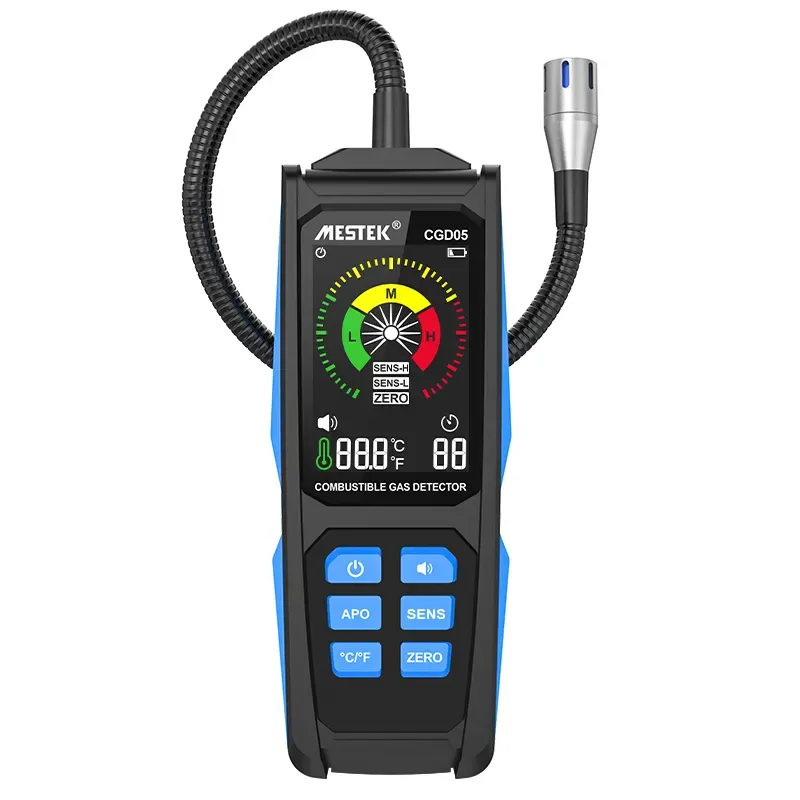
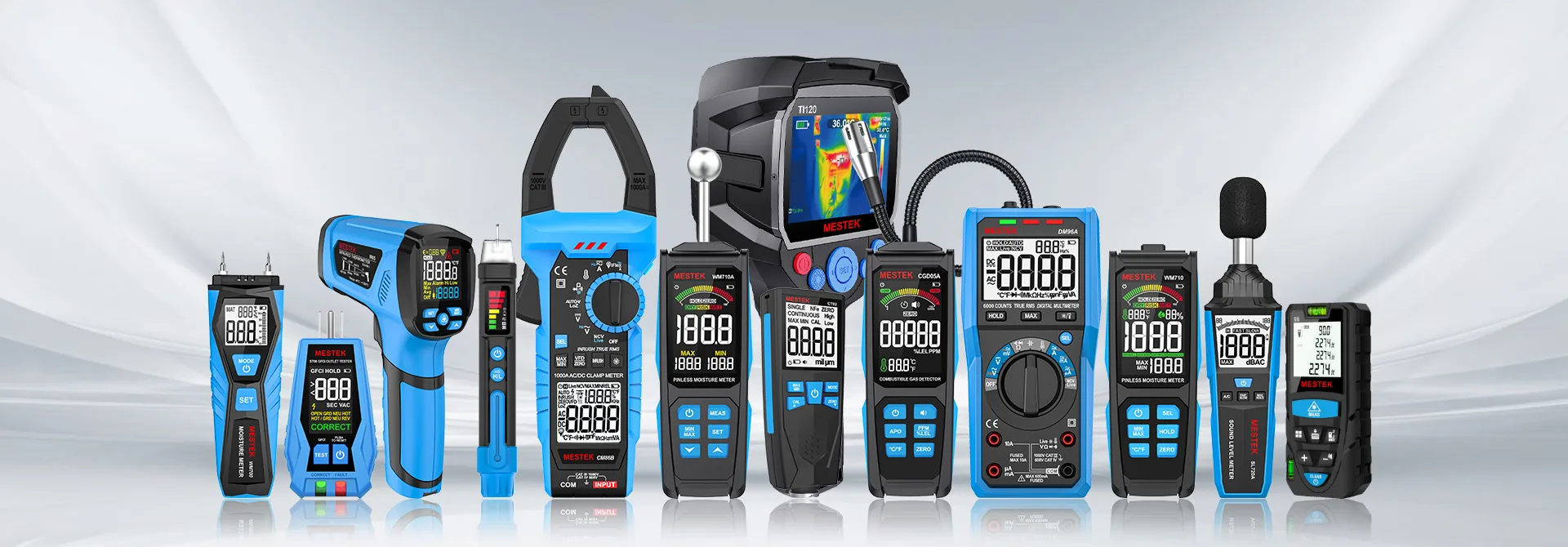
When selecting a Combustibles Gas Leak Detector, we should consider both measurement capability and design. Many detectors can display readings in both PPM (parts per million) and %LEL (Lower Explosive Limit). This dual-display option allows users to interpret gas concentrations more precisely.
In addition, design plays an important role. Some detectors come in a gooseneck design, which features a flexible probe that can reach tight spaces, while others are handheld models, which are more compact and convenient for quick inspections.
What is a Combustible Gas?
A combustible gas is any gas that can ignite and burn when mixed with air in the right concentration. Common examples include methane, propane, butane, and hydrogen. These gases are widely used in homes, kitchens, vehicles, and industries.
Without a Combustibles Gas Leak Detector, even a small leak can go unnoticed. Because many combustible gases are colorless and odorless, detection is difficult without technology. A detector ensures leaks are identified before they become life-threatening.
Who Should Use a Combustibles Gas Leak Detector?
- Homeowners – to monitor kitchens, stoves, and heaters.
- Contractors & Plumbers – to inspect pipelines and connections.
- Industrial Workers – to check gas storage tanks and manufacturing facilities.
- HVAC Technicians – to detect refrigerant and gas leaks in systems.
Essentially, anyone working around combustible gases should have a Combustibles Gas Leak Detector available.
How Does a Combustibles Gas Leak Detector Work?
A Combustibles Gas Leak Detector works by using a sensor that reacts to the presence of gas molecules.
Catalytic bead sensors – detect gases through oxidation reactions.
Infrared sensors – measure gas concentration by analyzing light absorption.
Once a leak is detected, the Combustibles Gas Leak Detector immediately triggers an alarm, usually with sound, flashing lights, or vibration, ensuring the user can act quickly.
What Does a Combustible Gas Leak Smell Like?
Most natural combustible gases are odorless. To help with safety, suppliers often add a strong sulfur-like odor (similar to rotten eggs) to gases such as natural gas and propane. This artificial odor helps users identify leaks early.
However, relying on smell alone is dangerous. A Combustibles Gas Leak Detector provides a reliable, accurate, and instant warning, even when gas concentrations are low and undetectable by human senses.
How to Tell If There Is a Combustible Gas Leak?
There are several signs of a potential gas leak:
- Smell of rotten eggs (added odorant).
- Hissing or whistling sounds near pipelines.
- Dead plants around gas lines.
- Headaches, dizziness, or nausea indoors.
While these signs can be helpful, a Combustibles Gas Leak Detector remains the most accurate and safe way to confirm the presence of a leak.
Do Carbon Monoxide Detectors Detect Gas Leaks?
The answer is no. Carbon monoxide detectors are designed specifically to detect carbon monoxide (CO), which is a toxic but non-combustible gas. They cannot detect propane, methane, or natural gas leaks.
For flammable gases, only a Combustibles Gas Leak Detector can provide accurate detection and warning. Relying solely on a CO detector is not safe.
Can You Detect a Gas Leak Just by Smell?
Sometimes you might notice a gas leak because utility companies add a strong odor, often compared to rotten eggs. But not every combustible gas has a smell, and even when it does, people with reduced sensitivity may not detect it.That’s why depending on smell alone is risky.
Conclusion
Gas leaks are dangerous threats that can cause fires, explosions, or poisoning. A Combustibles Gas Leak Detector is the most reliable way to stay safe at home or work.
By knowing how these devices work and choosing the right design, you can make a smarter decision for safety. For more information on high-quality gas leak detectors, contact Mestek Instruments today.