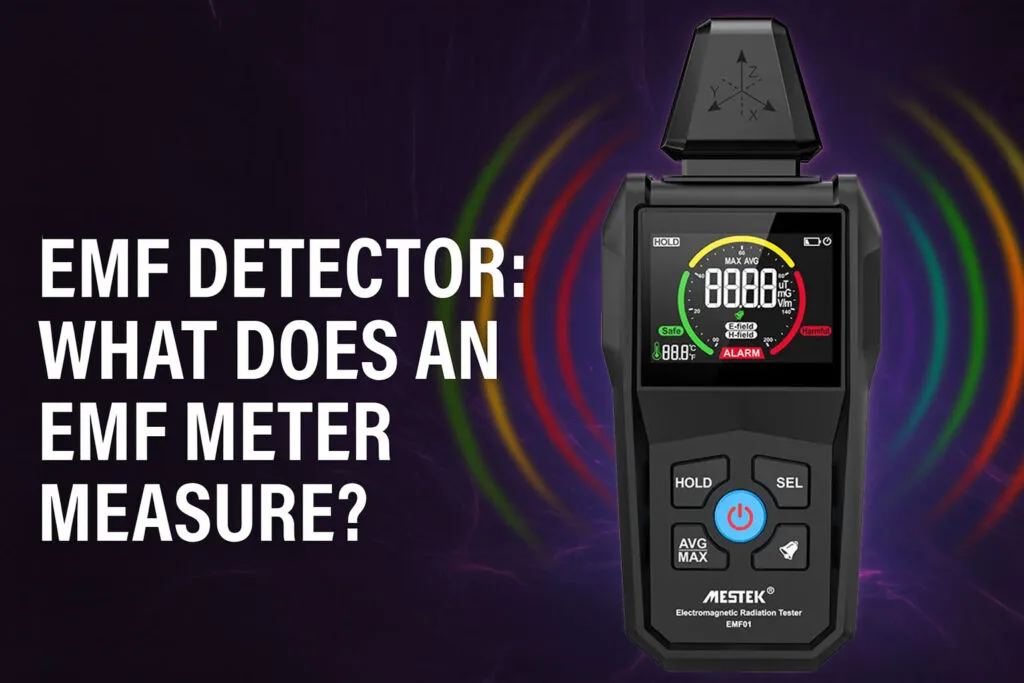
EMFs are all around us every day, generated by both natural sources and modern technology like power lines, Wi-Fi routers and household appliances. Invisible to the naked eye, these fields can affect our environment and potentially our health. This is where EMF detectors come in. These specialized devices measure electromagnetic fields and give us insight into their strength and type, measured in milligauss (mG) or microTesla (μT). Different types of EMF meters are built to measure magnetic fields, electric fields, and, in some cases, RF (radiofrequency) radiation. This article covers everything you need to know about EMF detectors, from the types of electromagnetic fields they measure to how to use them in your daily life.
For a deeper understanding of EMF basics, check out our guide: What is an EMF Meter?.
What Does an EMF Meter Measure?
An EMF meter is a specialized device that measures and detects electromagnetic fields in the surrounding environment. These devices measure three types of electromagnetic energy, each with its own characteristics and sources.
1) Electric Fields
Electric fields are generated from voltage differences and exist even when devices are not operating but are plugged in. These fields weaken with distance and can be blocked by many materials. It detects the strength of the electric field, typically measured in volts per meter (V/m). Common sources:
- Power lines
- Electrical outlets
- Household wiring
- Appliance cords (even when turned off).
Example: A power socket on your wall is a source of a low-frequency electric field. Even if nothing is plugged into it, the voltage creates an electric field around it.
2) Magnetic Fields
Magnetic fields are generated when electric current flows. Unlike electric fields, these pass through most materials and decrease in strength only with distance. These are measured in microtesla (µT) or milligauss (mG) and are usually at 50 to 60 Hz. Primary sources:
- Running electrical appliances
- Motors and transformers
- Power lines during peak usage
- Electrical panels
Example: Using a hairdryer generates a magnetic field due to the electric current flowing through it. EMF meters detect this and display the field strength.
3) Radio Frequency (RF) Field
Radio Frequency fields are part of the electromagnetic spectrum associated with wireless communication. RF EMFs are generated by devices that transmit data via radio waves. It is measured in milliwatts per square meter (mW/m²), volts per meter (V/m), or microwatts per square centimeter (µW/cm²). These fields come from:
- Wi-Fi routers
- Cell phones and towers
- Bluetooth devices
- Smart meters
- Microwave ovens
Example: A microwave oven gives off high-frequency RF radiation while heating food. If you bring an EMF meter close to it, you’ll see a high reading.
| Sample Reading | Caused By | Frequency Range | Type |
| Electric Field | Voltage (plugged-in electronics) | Low frequency (50–60 Hz) | 10–100 V/m near outlets |
| Magnetic Field | Flow of electric current | Low frequency (50–60 Hz) | 0.1–10 mG near refrigerators |
| Radio Frequency | Wireless signals, communication | High frequency (MHz–GHz) | 0.001–1 mW/cm² near a microwave |
Different models of EMF meters focus on detecting particular kinds of fields. Basic models typically focus on one field type, whereas professional-grade detectors often measure multiple field types with greater precision. Single-axis meters require taking readings from different angles, but tri-axis meters capture measurements from all directions simultaneously.
Knowing what your meter measures helps you gather relevant data about potential EMF sources in your environment. Also, knowing which type of electromagnetic energy you’re concerned about guides your choice of the right meter for your needs.
Common EMF Sources in Daily Life

Modern homes are filled with electromagnetic field sources that affect our daily lives. From kitchen appliances to communication devices, these EMF emitters surround us all the time.
Wi-Fi routers produce some of the most persistent radio frequency emissions in homes. These devices continuously broadcast signals, with EMF detectors showing stronger readings closer to the router.
Microwave ovens generate intense electromagnetic fields when in use. An EMF detector held near a working microwave will show its highest reading, with measurements dropping off a few feet away. This shows how quickly some fields dissipate with distance.
Kitchen appliances like refrigerators produce noticeable magnetic fields, especially around their motor components. Power cords, especially when bunched together, create concentrated electric fields that EMF meters can detect.
How Does an EMF Detector Work?
An EMF detector is like a “signal sniffer”. Just as your ears can hear sound waves, the detector is sensitive to invisible energy waves (electromagnetic fields) that these devices emit.
- Sensing Energy: When an appliance is on, it emits a small “energy signal” in the air. The EMF detector picks up these signals.
- Showing Strength: The closer you move the detector to the source (like your Wi-Fi router or microwave), the stronger the reading becomes, just like how a radio gets louder as you tune in to the right station.
- Visual Feedback: Most detectors show this energy as numbers on a screen or with color lights, so you can see how strong or weak the EMF is in that spot.
You don’t need to know the science behind it—the detector simply acts as a “translator”, turning invisible energy into something you can read and understand.
How to Use an EMF Detector at Home?
Getting accurate EMF readings at home requires proper technique and attention to detail. Using an EMF detector effectively involves more than just pointing it at suspected sources.
Basic Operation Steps:
- Power on the detector and let it calibrate for 30 seconds
- Select the right measurement mode (electric field, magnetic field or RF)
- Hold the device at arm’s length, keep your body away from the sensor area
- Move slowly towards suspected EMF sources, note how readings change
- Record baseline readings in different rooms for comparison
Important Tips for Accurate Readings
To ensure accurate measurements, follow these best practices:
- Stay Away from Large Metal Objects: Metals can distort EMF readings by reflecting or absorbing electromagnetic energy.
- Turn Off Nearby Electronics: Unrelated devices can create interference, making your readings inaccurate.
- Keep a Consistent Distance: When comparing different spots, hold the device at the same distance from the source each time.
- Avoid Touching Probes or Sensors: Contact can skew the measurements.
- Document Your Readings: Record measurements for different rooms and times of day for more accurate analysis.
Our Recommended Product
If you’re looking for top-of-the-line EMF and radiation detection solutions, our latest product has got you covered. Precision, reliability and user-friendly features for professionals and everyday users.
1) Professional EMF Meter – EMF01
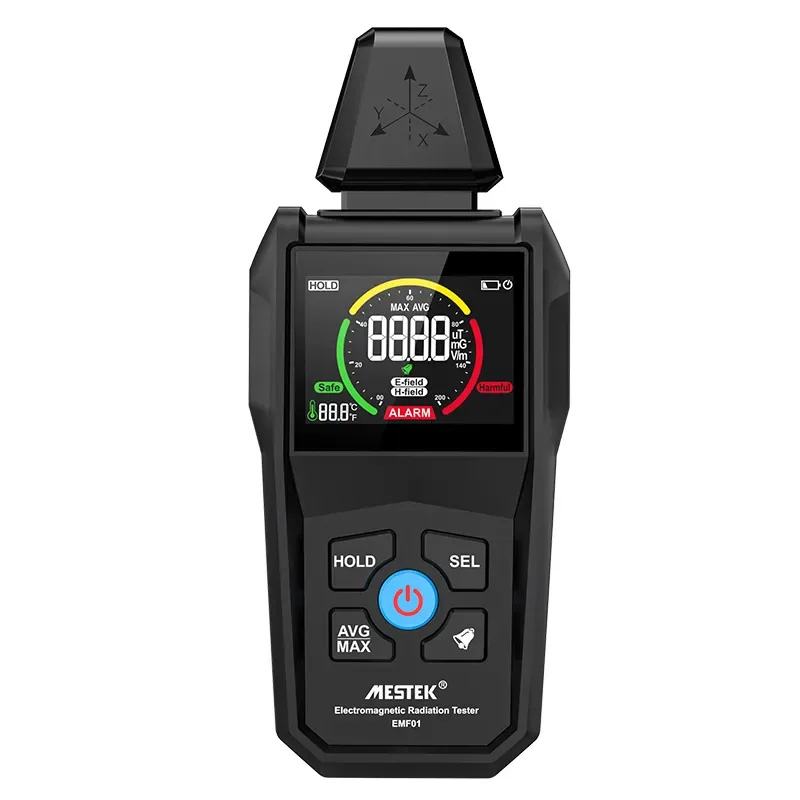
If you’re searching for a reliable EMF detector for your home, the EMF01 is the ideal solution. It is specifically designed for residential and personal use. The EMF01 has a broad frequency detection range of 5–3500 MHz so it can measure EMF from everyday sources like Wi-Fi routers, smartphones, microwave ovens and household electrical wiring.
The EMF01 measures both magnetic and electric fields with high accuracy. It can measure magnetic fields 0.1 to 199.9 milligauss (mG) or 0.01 to 19.99 microtesla (μT) and electric fields 1 to 1999 volts per meter (V/m). For user safety it has built in alarm thresholds that trigger when magnetic fields exceed 4.0 mG (or 0.4 μT) and when electric fields exceed 40 V/m.
Its high sensitivity with 1 V/m resolution means even subtle EMF sources can be detected and monitored. It operates in ambient temperatures 0 to 50°C so it’s perfect for everyday indoor use. Whether you want to reduce EMF around your wireless devices or find high field areas in your home the EMF01 combines precision, convenience and ease of use to help you take control of your electromagnetic environment.
Key Features:
- Measures magnetic (0.1–199.9mG / 0.01–19.99μT) and electric fields (1–1999V/m)
- Alarm triggers at >4.0mG, >0.4μT, >40V/m
- High sensitivity (1V/m resolution)
- Works in a 0–50°C temperature range
How to Choose the Best EMF Meter for Your Needs
Choosing the right EMF detector requires understanding your measurement needs. First and foremost, consider how you’ll use the device to determine which features matter most.
1) Home use vs professional use
Home users need user-friendly meters that measure common household EMF sources. For residential use, a 5-10% error rate is generally acceptable. Professional environments require higher precision instruments with calibration certifications for compliance testing. The EMF01 is tailored for home use, offering the perfect balance of sensitivity, affordability, and ease of use.
2) Ease of use and display features
The interface matters. Single-axis meters require manual rotation to find peak readings. Tri-axis meters (like the EMF01) measure all spatial dimensions simultaneously for faster and more accurate results. Look for clear digital displays, color-coded alerts and sound components to identify EMF sources. Data logging is useful for tracking exposure over time.
3) Accuracy and calibration standards
For most home users, the EMF01 has the level of accuracy you need without the complexity or cost of professional-grade calibration. Professional calibration ensures exact compliance with industry standards but is often unnecessary for everyday household use and can be expensive for consumer devices.
Factors That Affect EMF Meter Readings
Even the most advanced EMF detector can give inaccurate or inconsistent readings if certain factors come into play. Understanding these variables helps you interpret results correctly and avoid misdiagnosis of EMF exposure.
1) Measurement Sensitivity and Background Noise
Different meters have varying sensitivity levels. Highly sensitive devices can detect very low-level fields, which is great for precision but may pick up background interference (ambient EMF from distant power lines, nearby electronics, etc.). Always account for environmental noise and calibrate if needed.
2) Frequency Tuning and Response
EMF meters are typically designed to measure specific frequency ranges. Using a meter outside its optimal frequency range can result in misleading readings. For example, a meter calibrated for 50–60 Hz might not detect high-frequency RF waves accurately. Always check the meter’s supported frequency spectrum. The EMF01 is designed for home use and covers a broad range of 5–3500 MHz so it’s suitable for detecting common residential EMF sources.
3) Internal Noise and Device Limitations
The internal components of an EMF meter can sometimes introduce minor “noise” into readings. Budget meters often lack advanced shielding so they are more prone to inaccuracies compared to higher quality instruments. The EMF01 minimizes this issue and gives stable and reliable readings for everyday environments.
FAQs about EMF Detectors
1. Do EMF detectors measure radiation from cell phones?
Yes. EMF detectors measure RF radiation emitted by mobile phones when making calls or using data.
2. What’s a safe EMF level at home?
For electric fields, a value below 50 V/m is considered low. For magnetic fields, less than 2–4 mG is generally safe. RF exposure varies but should be as low as possible.
3. Can EMF detectors prevent radiation exposure?
No, they only measure exposure. But by identifying high EMF zones, you can move devices or reduce usage.
4. Are EMF detectors easy to use?
Yes. Models like the EMF01 come with sound/light alarms and auto-shutdown features for convenience.
Conclusion
Electromagnetic fields are everywhere but understanding what they are and how to measure them can help you reduce unnecessary exposure. EMF meters, especially advanced ones like MESTEK EMF01, make it easy to detect and monitor these fields in your home. Whether you want to check Wi-Fi radiation, measure appliance emissions or ensure your family’s safety, an EMF detector is a must have.
Ready to take control of your EMF exposure? Explore our full range of EMF meters at Mestek Instruments and find the one that fits you.