The moisture content of the wall is crucial to human health and building safety. Generally speaking, the appropriate wall moisture content is 6%~14%, which is suitable for most indoor wall environments. When we do not know the moisture content of the living environment, it may cause varying degrees of harm to the body. This short article introduces the moisture content of the wall, the humidity of the air, and how to measure it, and analyzes what is the normal standard in the form of data.
Drywall Moisture Content
Different regions have different climatic conditions and different standards for walls, and drywall is extremely sensitive to moisture. After taking into account the heating and precipitation factors of the region, the following is a more rational analysis of drywall moisture content data:
| Region | Normal moisture | Slightly damp | Possible mildew |
| Northern Europe | 12%~18% | >18% | >22% |
| Western Europe | 12%~17% | >17% | >20% |
| Southern Europe | 8%~13% | >13% | >16% |
| Eastern Europe | 10%~15% | >15% | >18% |
| Eastern United States | 10%~16% | >16% | >20% |
| Western United States | 5%~12% | >12% | >15% |
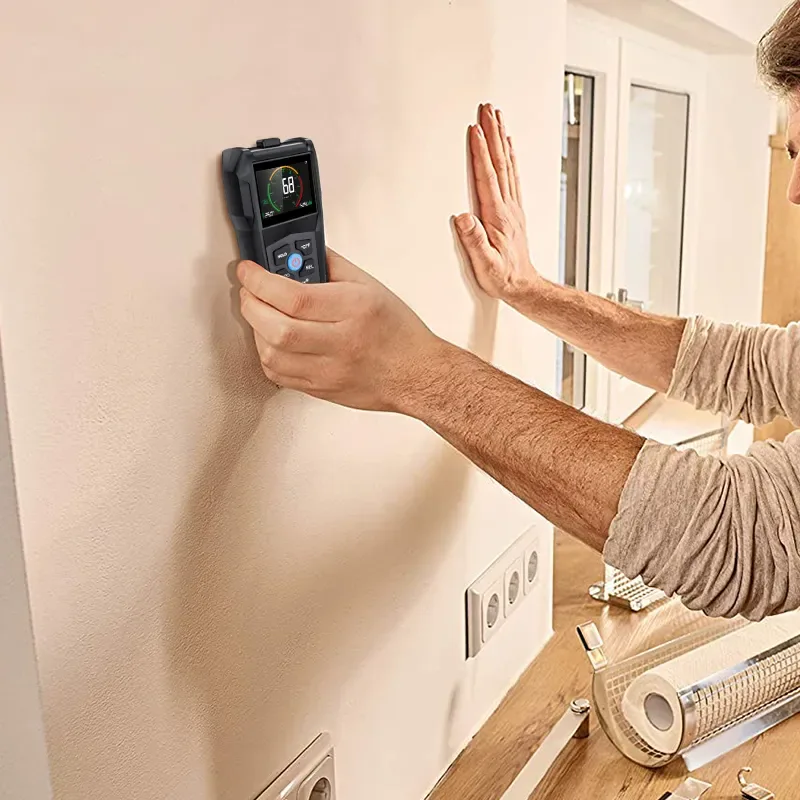
Compared to the north and west, which are colder and more humid, you should pay more attention to whether the wall has the risk of mold (drywall moisture meter), after all, this is a risk that can cause harm to your health. Southern Europe is the driest and has the lowest wall moisture content (8%~13%), but winter or coastal areas may be affected by humidity. In most areas, once the moisture content of drywall exceeds 20%, it may cause mold growth and structural damage.
Air humidity
We should pay attention to the humidity of the air because it is not only closely related to weather changes, but also affected by seasonal changes, geographical location and local environment. At the same time, the humidity level of the air is of great significance to human comfort, building and material maintenance. We found through the test of the moisture meter that the humidity of the air is proportional to the moisture content of the wall.
| Region | Normal moisture | Slightly damp | Possible mildew |
| Northern Europe | 45%~55% | >60% | >75% |
| Western Europe | 40%~55% | >60% | >70% |
| Southern Europe | 40%~50% | >60% | >70% |
| Eastern Europe | 45%~55% | >60% | >75% |
| Eastern United States | 45%~60% | >60% | >70% |
| Western United States | 35%~50% | >60% | >70% |

Why does air affect drywall? Our drywall moisture meter tests show that the material absorbs or releases moisture from the air, which directly affects its structure and performance. When humidity reaches a limit for drywall, especially if it remains above 70% for a long time, the surface of the drywall becomes damp, providing an ideal growth environment for mold and fungi.
How do you measure moisture content in drywall?
First, we can say that visual inspection is the easiest way. But when you can see the moisture of the drywall with your eyes, it means that it is very serious and the worst plan is to replace it. Secondly, we can use our nose to smell the musty odor of the drywall. Unfortunately, this also means that it is seriously damp.
The above method should only be taken when absolutely necessary, although it is very intuitive. Drywall moisture meters is your best choice. When using a moisture meter to measure on the wall, we can clearly see the moisture reading on the moisture meter screen.
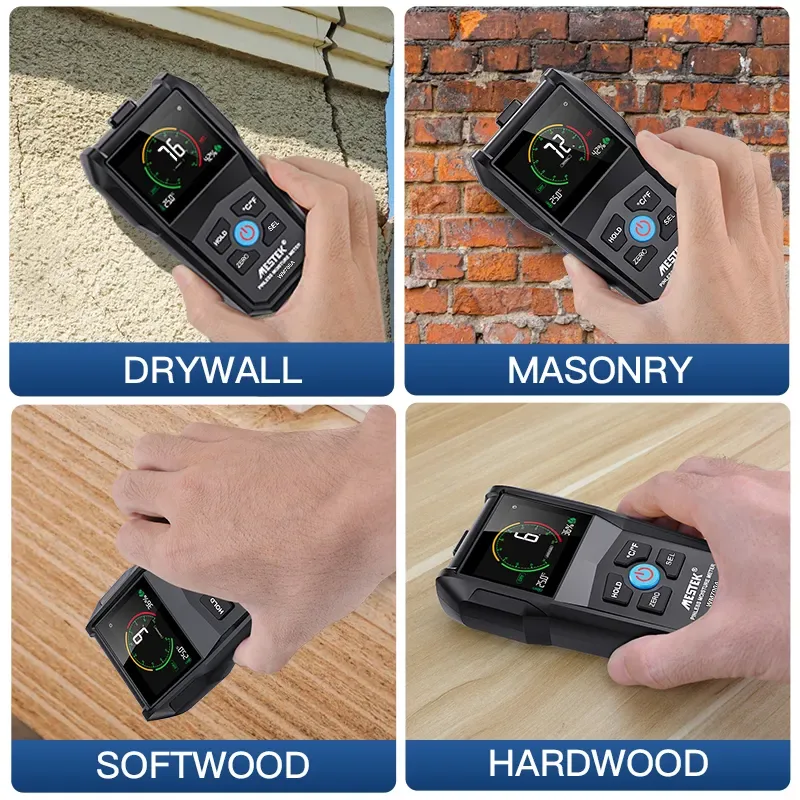
MESTEK drywall moisture meter is a pinless measurement, and we can measure without damaging the wall. At the same time, we can also use a moisture meter to measure the moisture content of concrete and wood. Using a drywall moisture meter, it is very simple to accurately measure the humidity. Just put it close to the drywall and read it.