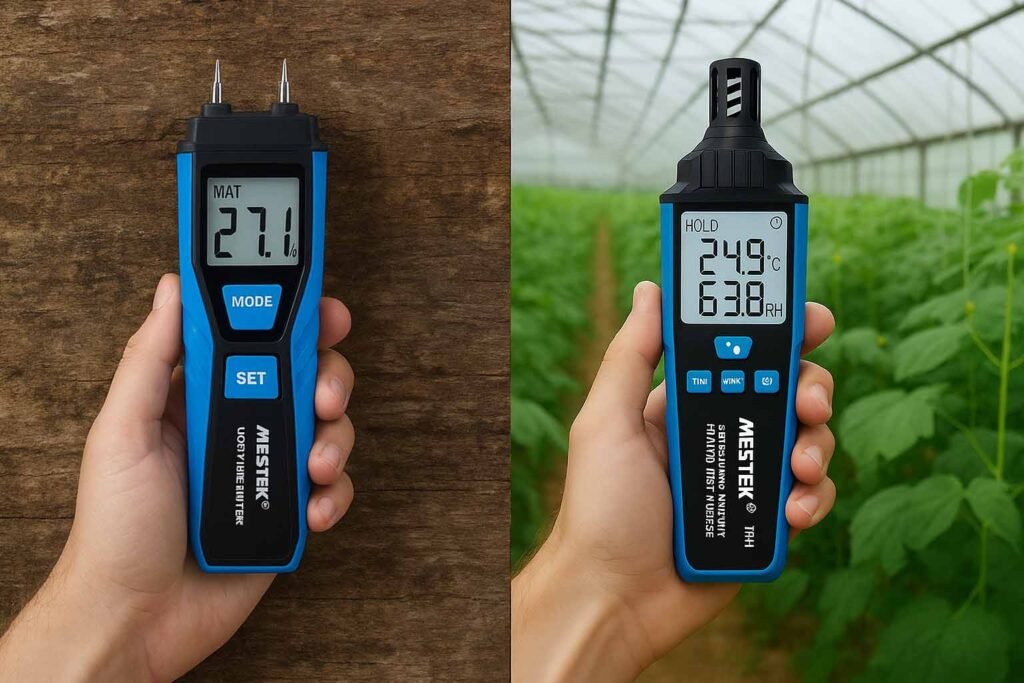
When dealing with humidity and moisture-related issues—whether in construction, home improvement, agriculture, or HVAC—selecting the right measuring tool is essential. Two commonly confused instruments are the hygrometer and the moisture meter. Although both deal with moisture, their functions, applications, and measurement methods are quite different.
What Is a Hygrometer?
In environments where controlling moisture is important—like in homes, greenhouses, or storage facilities—people often use hygrometer to monitor how humid the air is.In simple terms, it tells you how humid or dry the air feels by comparing the current amount of water vapor to the maximum the air can hold at that temperature. For example, if your hygrometer reads 50%, that means the air is holding half the moisture it’s capable of at that temperature.
Common Types of Hygrometers:
- Analog Hygrometers – Traditional dial-based tools that display relative humidity.
- Digital Hygrometers – More accurate, and often include features like temperature and dew point readings.
- Thermo-Hygrometers – Devices that measure both temperature and humidity simultaneously.
- Psychrometers – Use a wet and dry bulb thermometer combination to calculate humidity.
Hygrometer Use Cases:
- Greenhouses: A hygrometer helps maintain the proper humidity levels for plant health.
- Wine Storage: Ensures corks stay moist to prevent wine oxidation.
- Home Comfort: Tracks humidity levels in HVAC systems to avoid mold and maintain comfort.
- Art & Book Preservation: Controls moisture in museums and libraries to prevent material degradation.
Because a hygrometer only measures air humidity, it cannot detect water trapped inside materials like concrete, wood, or drywall. That’s where a moisture meter comes in.
What Is a Moisture Meter?
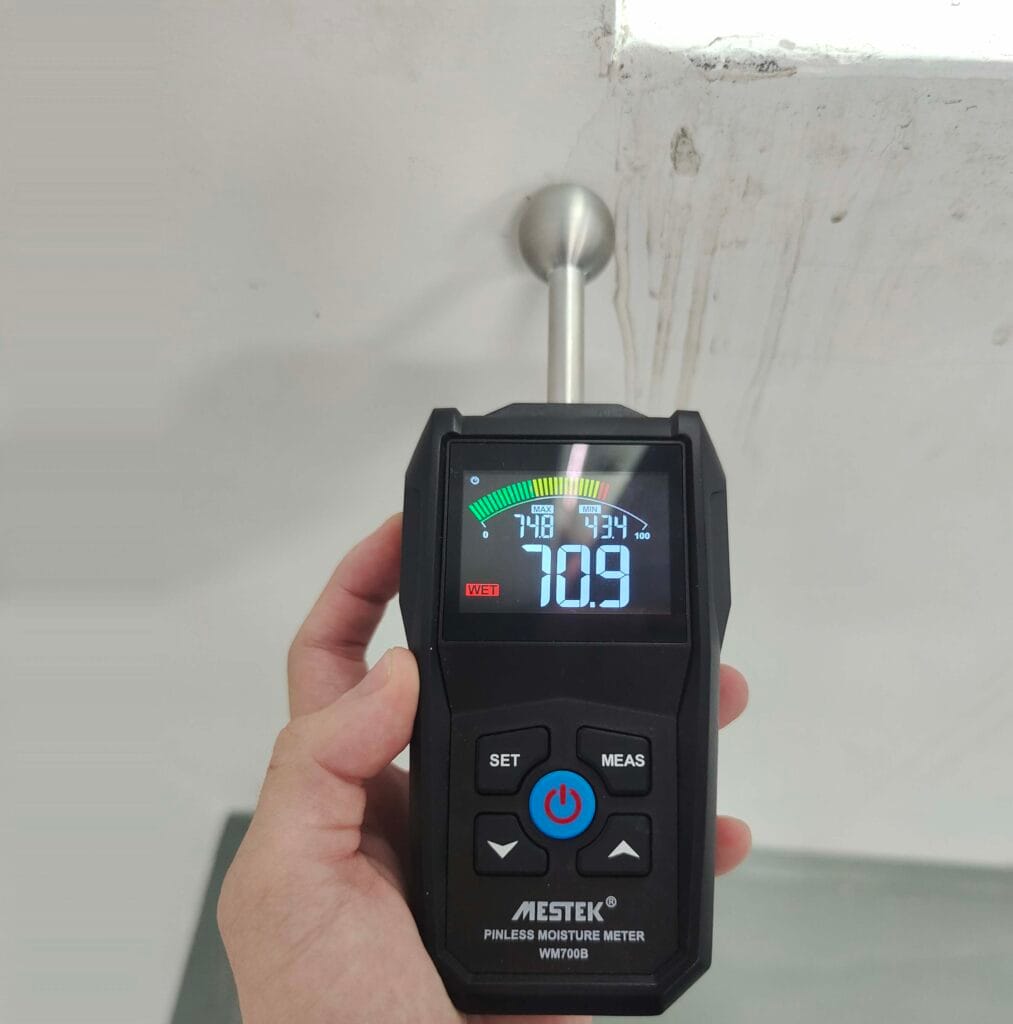
A moisture meter is used to measure the actual water content inside solid materials. Unlike a hygrometer, which monitors the air, a moisture meter helps you understand whether your floor, walls, or furniture contain excess moisture that could lead to mold or structural damage.
Types of Moisture Meters:
- Pin-Type: Uses metal probes inserted into materials to detect electrical resistance—more resistance means less moisture.
- Pinless: Uses radio waves or electromagnetic fields to scan beneath the surface—ideal for finished floors or materials that shouldn’t be punctured.
- Soil Moisture Meters: Specialized probes used in gardening and agriculture.
Moisture Meter Use Cases:
- Construction: Ensure drywall or cement is fully dry before painting or sealing.
- Flooring Installation: Check wood moisture content to prevent warping.
- Water Damage Restoration: Detect moisture behind walls after a flood or leak.
- Carpentry: Make sure wood is seasoned and ready for furniture making.
Moisture meters don’t measure air humidity—they tell you what’s happening inside the material itself. For example, wood that feels dry to the touch might still contain internal moisture, which can lead to rot or swelling.
Hygrometer vs Moisture Meter
| Feature | Hygrometer | Moisture Meter |
| Function | Measures relative humidity in the air | Measures moisture content inside materials |
| Measurement Unit | %RH (Relative Humidity) | % Moisture Content or arbitrary scale |
| Application | Air quality, HVAC, agriculture | Construction, flooring, restoration |
| Target Material | Air | Wood, drywall, concrete, soil |
| Measurement Method | Sensor-based (capacitance/thermal) | Electrical resistance or EM scanning |
| Typical Tool Type | Wall-mounted, portable, or digital units | Handheld pin-type or pinless tools |
Choosing the Right Tools
Scenario 1: Laying Hardwood Flooring
Hygrometer (×)
Checking the air humidity won’t help you avoid warped floorboards if the subfloor is wet.
Moisture Meter (√)
A pinless moisture meter quickly checks both the subfloor and the hardwood planks. You’ll know if the moisture levels are within safe limits for installation.
Scenario 2: Managing a Greenhouse
Hygrometer (√)
Plants like orchids or ferns require very specific humidity levels. A digital hygrometer helps you track and adjust environmental conditions in real time.
Moisture Meter (×)
Although soil moisture is also important, a moisture meter won’t help monitor the air’s humidity.
Scenario 3: Post-Water Damage Repair
Moisture Meter (√)
After a flood or leak, a moisture meter helps restoration teams detect hidden water in walls and floors that a visual inspection might miss.
Hygrometer (√)
You can also use a hygrometer to assess ambient humidity and monitor mold prevention.
When to Use a Hygrometer
- You want to monitor indoor air quality.
- You’re maintaining a wine cellar, storage room, or greenhouse.
- You work in HVAC or air balancing services.
- Using a hygrometer daily can help you avoid high-humidity conditions that promote mold or respiratory issues. It’s a simple tool that provides continuous feedback about your environment.
Can You Use Both?
In fact, many professionals use both a hygrometer and a moisture meter to get a complete picture of moisture conditions.A restoration technician might use a hygrometer to check room humidity and a moisture meter to test wallboard after water damage. A gardener could use a hygrometer for ambient humidity and a soil moisture meter to track watering needs.
Conclusion
While hygrometers and moisture meters both play a role in moisture management, they’re not interchangeable. A hygrometer gives you a real-time snapshot of air humidity. A moisture meter tells you whether solid materials are holding water insideWhether you’re a contractor, homeowner, or hobbyist, adding both tools to your toolkit ensures precision, safety, and long-term performance.
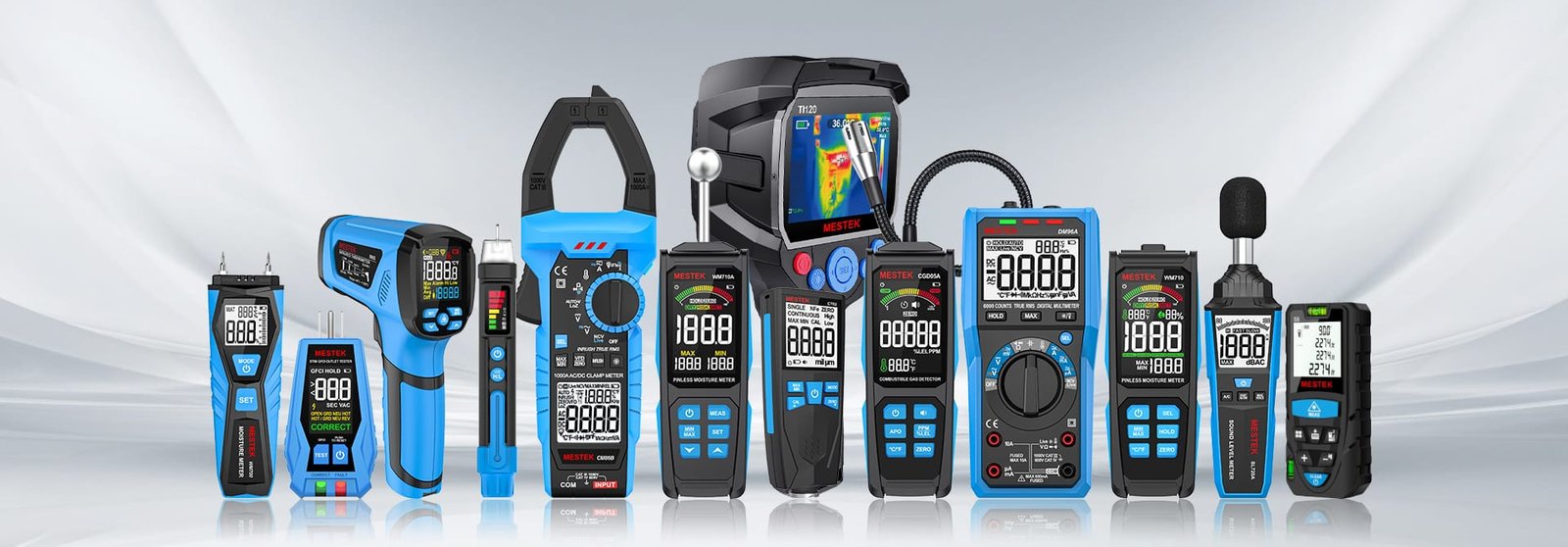
Looking for reliable humidity or material moisture testing tools? Mestek Instruments offers:
Advanced digital hygrometers for indoor and industrial use
High-precision moisture meters for wood, concrete, and drywall
Pinless and pin-type models depending on your needs
Browse our collection and choose the instrument that fits your workflow best.