When it comes to moisture meters, we have different choices in different usage scenarios. But what is the best moisture meter?
Our research
Let’s take the test wood as an example. They vary according to the specific properties of the material. In simple terms, the wood you bought is a batch of newly cut and manufactured boards. Since it has not been stored for a long time, although the manufacturer has dried the boards before leaving the factory, it is far from being as dry as the old wood itself. So when you use it to make furniture or decorate a house, the wood will gradually shrink in a dry environment, resulting in larger gaps. This is one situation.
Another special situation is that after we use dry wood to decorate the house, because we do not leave appropriate gaps between the wood, in the season when the weather gradually warms up, the wood will expand and contract due to heat and cold, and will be directly squeezed against each other, causing cracks or even deformation, which will have a great impact on the appearance. These two situations are the most common problems encountered in most house decorations. Having a moisture meter in our hands will greatly reduce the occurrence of this situation. Prevention is always more worry-free than repairing after damage.
Choosing the best moisture meter can help you do your project more easily. The moisture meter we recommend is the pinless moisture meter. I believe you will find those holes annoying.
TOP Moisture meter analysic!
Klein ET140
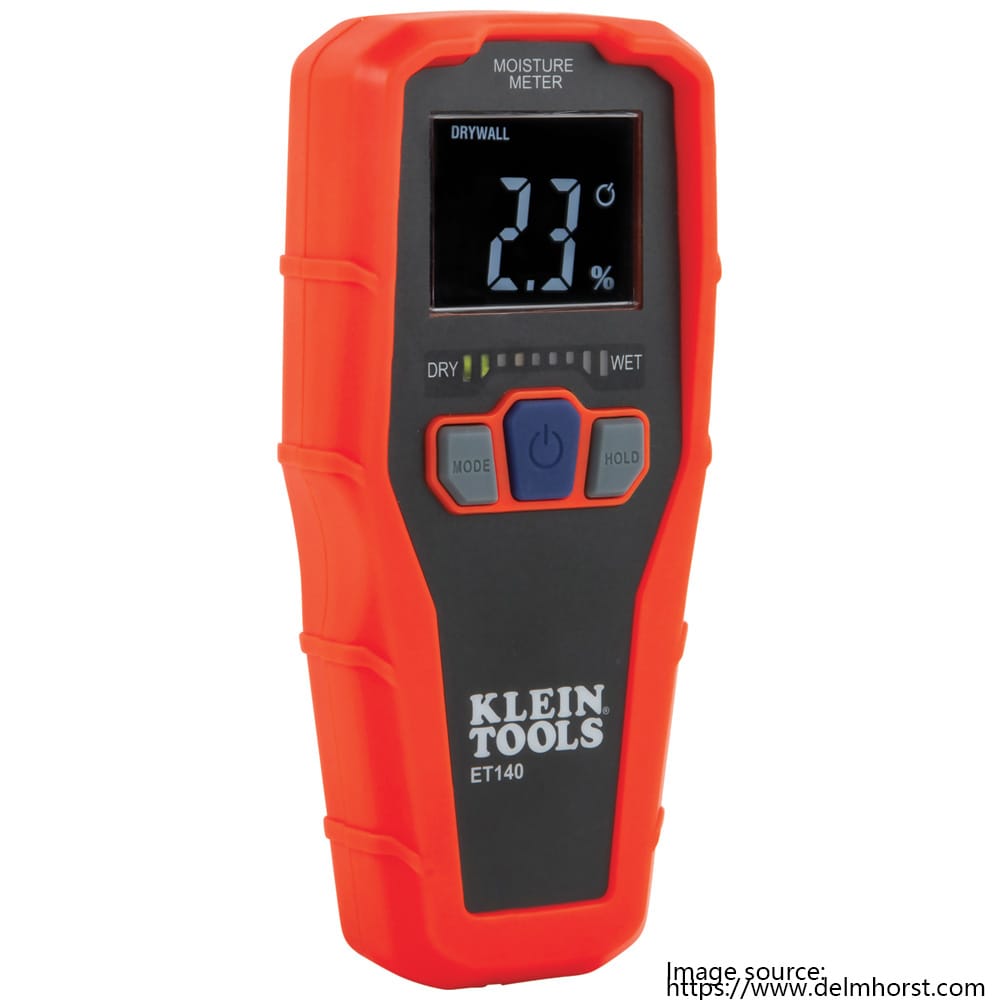
Klein 140 is one of the best moisture meter. It uses needle-free electromagnetic field technology to non-destructively detect the moisture content in building materials in a short time.
Detection depth: 3/4 inch
Backlit display
Sound and light alarm
Data retention
Low battery indication
Automatic shutdown
At the same time, it has four material detection types: drywall, masonry, hardwood, and cork. Interestingly, it has 9 LED light strips designed at the bottom of the screen to provide a visual reference for moisture content. When I carefully read the introduction of this pinless moisture meter, I saw this sentence: Just select the desired material mode and measure any dry area, and then compare the test area to confirm the moisture content. This is indeed a good way and it is easier to read. This is a relatively basic pinless moisture meter, and its functions meet the needs of people who love DIY houses.
Mestek WM700A
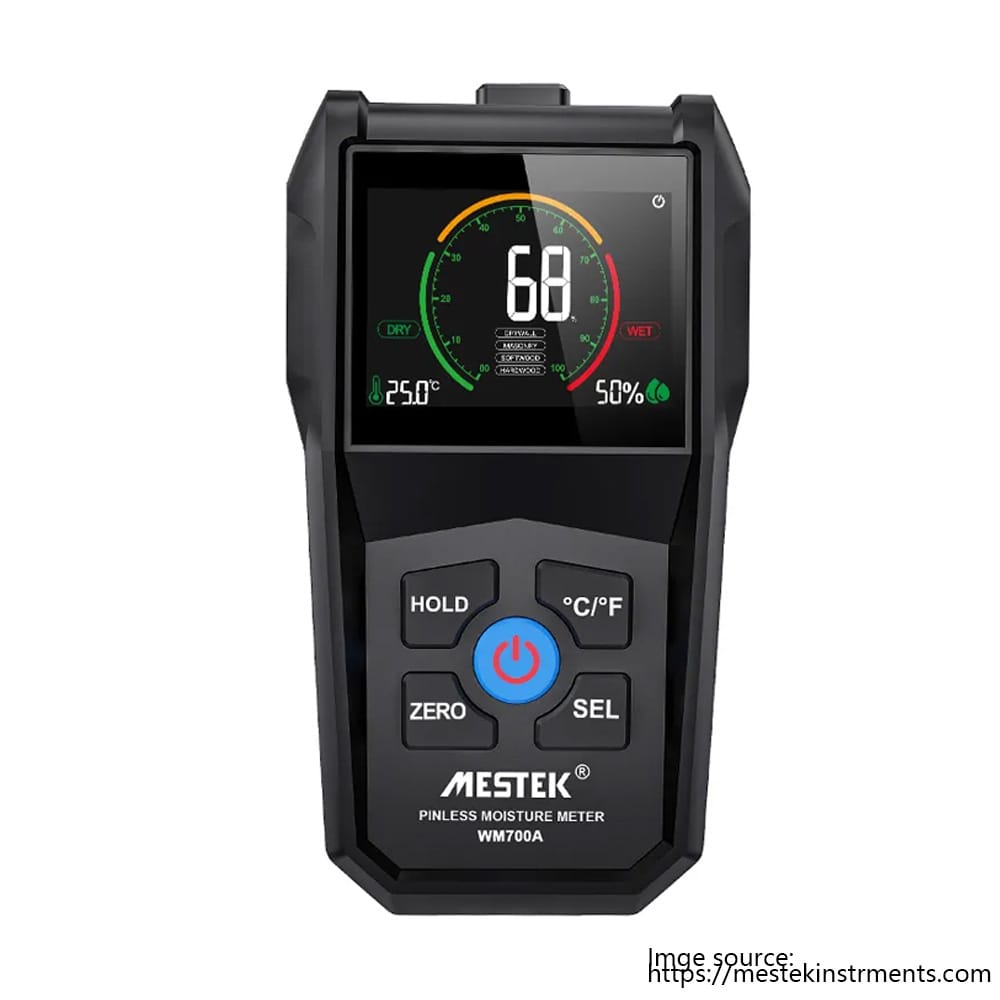
Mestek Electronics has been in the instrumentation industry for many years and is also very good at manufacturing environmental instruments. For the moisture meter WM700B, its product appearance design and performance have always been at the forefront.
Detection depth 3/4 inch.
Detection range 0~100.
Softwood detection range 0~55%.
Hardwood detection range 0~35%.
Auto shutoff function.
It also has four material tests: drywall, masonry, hardwood, and softwood. Its test is a non-invasive way to measure objects, and the display screen is in color. I think it is also one of the best moisture meter and deserves the praise.
Ligno-Scanner D
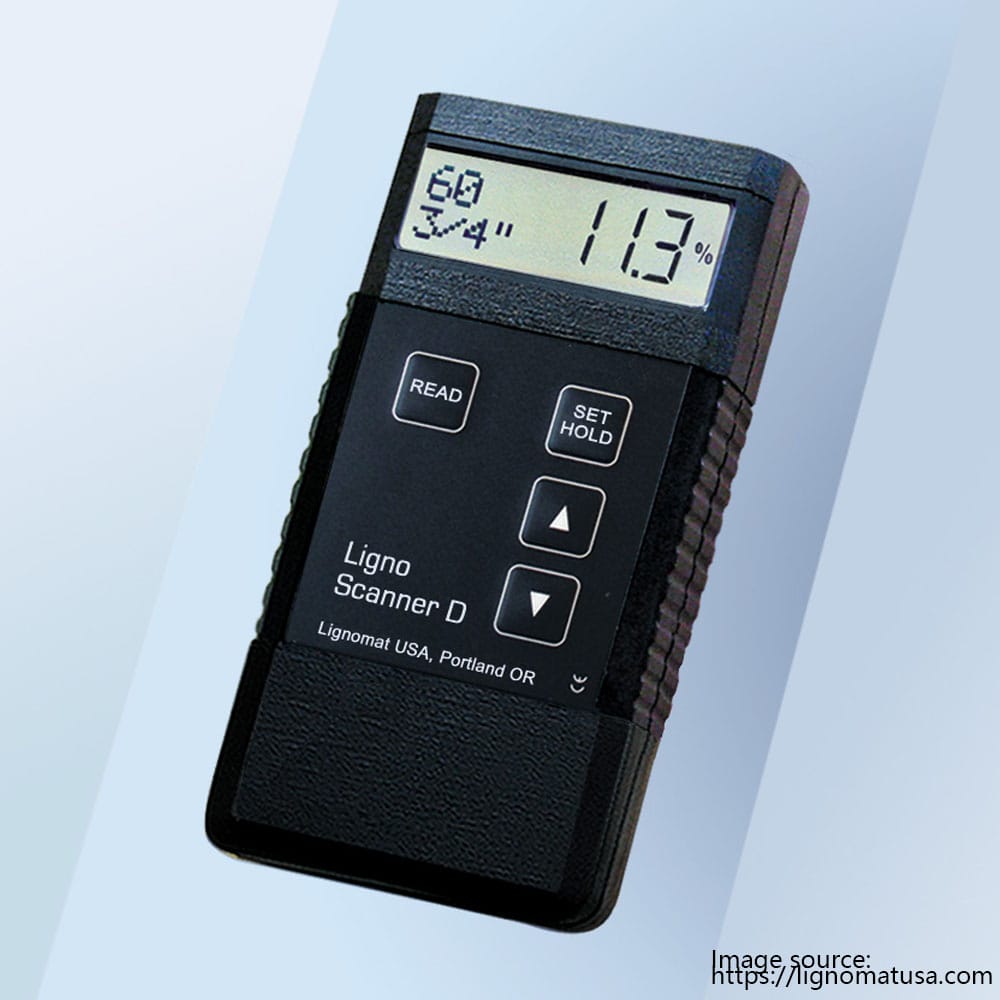
Ligno-Scanner D is a single-depth pinless moisture meter that looks like a rectangular box and is designed to be simple and easy to operate.
Detection depth 3/4 inch.
0~99 for non-wood building materials.
What I think makes it one of the best moisture meter is that it has 71 wood species settings, which allows it to measure most woods (including dense woods).
Extech MO280
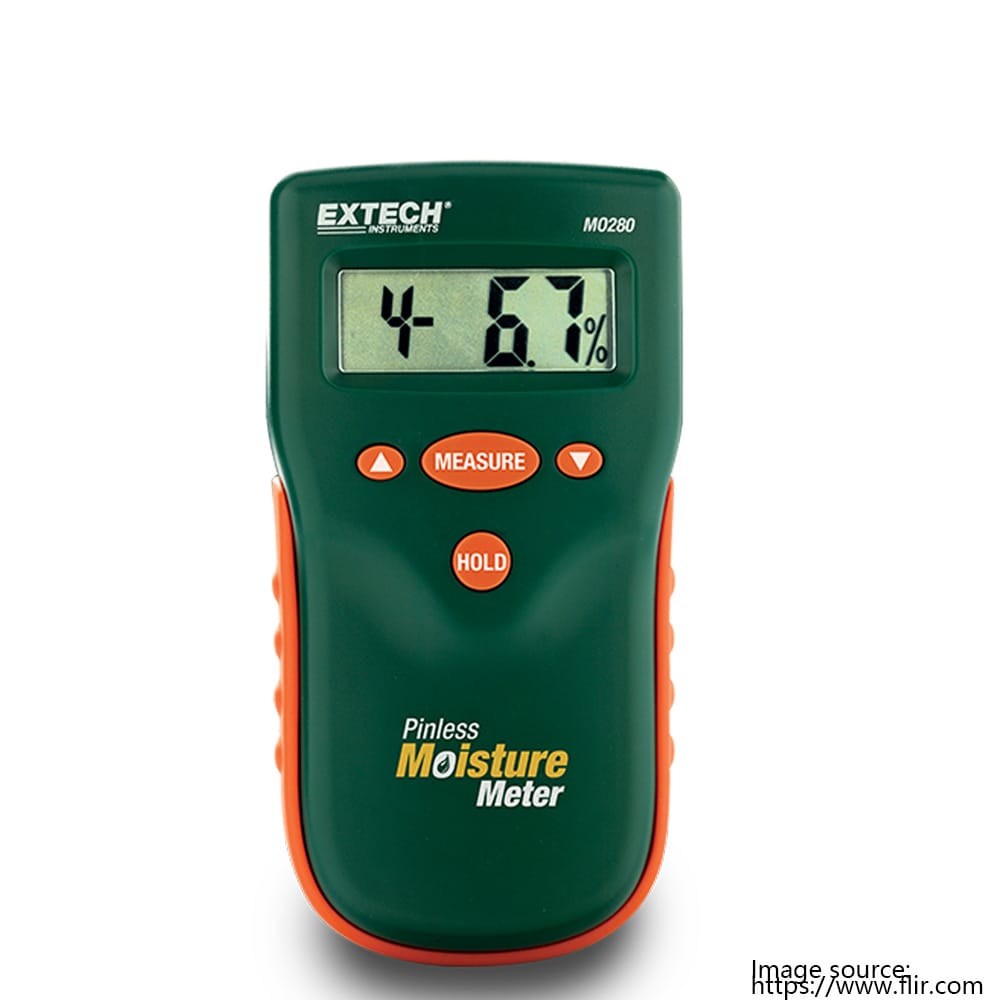
Extech MO280 is also a classic moisture meter. It has a non-penetrating electromagnetic sensing measurement mode that can quickly measure wood moisture.
Detects up to 0.75 inches deep.
Measuring range is 0-99%. Automatic internal testing and calibration.
Low battery indicator.
Data hold function.
On-screen display of moisture content.
I think the MO280 moisture meter is more suitable for home decoration testing, wooden furniture, building frames, etc.
GENERAL MMD7NP
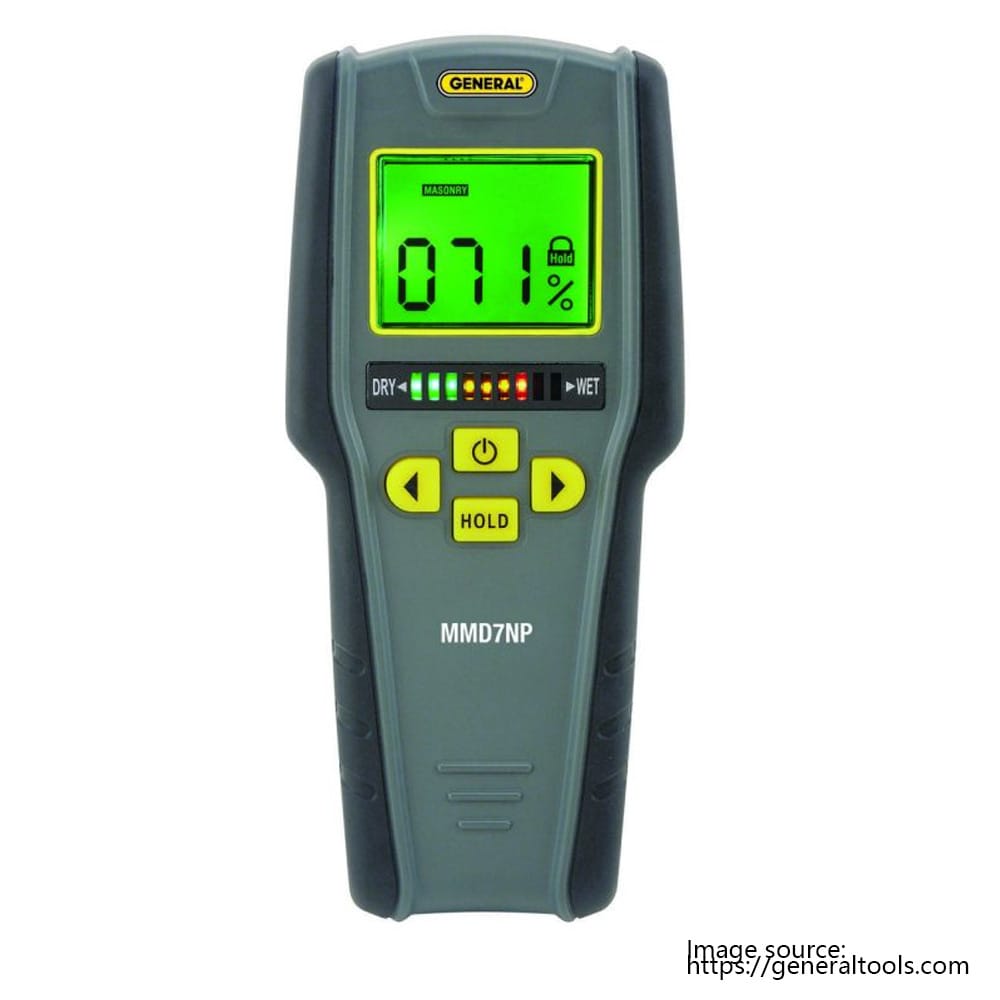
The MMD7NP moisture meter is a classic. Its portability makes it suitable for most scenarios.
It can detect moisture up to 3/4 inch deep.
It automatically shuts off when not in use.
An alarm is triggered when wood moisture exceeds 17% and drywall or masonry moisture exceeds 70%.
It includes data retention and automatic shut-off features.
For softwood, the detection range is 0-53%, while for hardwood, the detection range is 0-35%.
What I appreciate most is the green and black digital display, which ensures clear and easy reading even in dark environments.
We choose different moisture meters in different usage scenarios. And the best moisture meters in our minds are also different. The best moisture meter in the blog are shown after comparative data.