When choosing a clamp meter, one of the first decisions is whether you need to measure AC current, DC current, or both. An AC clamp meter can be an excellent choice for conventional electrical work, but it may not be suitable for battery systems, solar installations, automotive circuits, or other DC applications.
For us, the choice comes down to a simple question: “Is an AC clamp meter enough, or is an AC/DC clamp meter a better long-term investment?”
AC vs DC Clamp Meter: What Is the Difference?
The main difference is the type of current the meter can measure.
An AC clamp meter is designed to measure alternating current, which is commonly found in residential and commercial electrical systems. It can be useful for checking current in electrical panels, motors, HVAC equipment, and other AC-powered devices.
An AC/DC clamp meter can measure both alternating and direct current. This additional capability makes it more versatile for technicians who work with a wider range of electrical systems.
The important point is that an AC/DC clamp meter is not automatically better for every user. If you only work with standard AC circuits, an AC model may already provide everything you need.
When Is an AC Clamp Meter Enough?
For traditional electrical maintenance, an AC clamp meter can be a practical and cost-effective choice.
If your work mainly involves building wiring, distribution panels, AC motors, commercial equipment, or HVAC systems, you may rarely need to measure DC current. In these situations, an AC clamp meter can handle the most common current measurements without adding functions you may never use.
An AC model can also make sense when your work environment is highly specialized. For example, an electrician who spends most of the day inspecting conventional AC circuits may have little reason to pay extra for DC measurement capability.
The key is to look at the equipment you actually service rather than choosing features simply because they appear on a specification sheet.
When Do You Need an AC/DC Clamp Meter?
An AC/DC clamp meter becomes much more useful when your work involves both types of electrical systems.
Automotive electrical systems, battery-powered equipment, solar installations, DC power supplies, backup power systems, and industrial controls can all require DC current measurement. In these situations, an AC-only clamp meter cannot perform the job.
Solar is a particularly good example. Photovoltaic systems generate DC power before it is converted into AC. A technician working on the DC side of a solar installation needs a meter capable of measuring DC current as well as the appropriate voltage range for the system.
The same principle applies to batteries and DC power systems. Whether you are checking a battery bank, troubleshooting a DC circuit, or evaluating the current drawn by electronic equipment, DC measurement capability is essential.
For technicians who regularly move between AC and DC applications, buying an AC/DC clamp meter can also reduce the need to carry multiple instruments.
AC/DC Clamp Meters for Solar and Battery Applications
Solar installations and battery systems have changed the kind of current measurements technicians often need to make. DC current is now a regular part of many electrical testing jobs, rather than something limited to specialized applications.
For this type of work, DC current capability is only one part of the meter. The maximum voltage, current range, jaw opening, CAT safety rating, and the conditions in which the meter will be used can all affect whether it is suitable for the job.
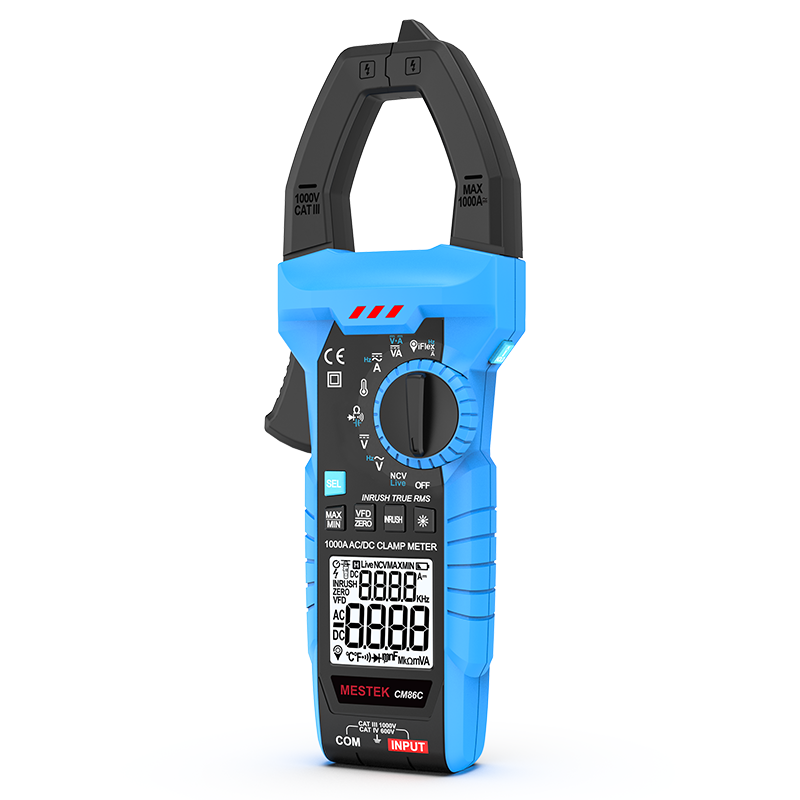
The MESTEK CM86C is built with photovoltaic applications in mind. It supports PV voltage measurements up to 1000V, which makes it suitable for technicians working with higher-voltage solar systems where a standard AC clamp meter may not be enough.
That makes the CM86C a different proposition from a basic AC clamp meter. When solar panels, battery banks, or other DC equipment are part of the work, it makes more sense to choose a meter based on those requirements instead of looking only at the maximum current rating.
AC/DC Clamp Meters for Industrial Equipment
Industrial equipment can combine AC motors, DC control circuits, variable-frequency drives, sensors, and other electrical components. This makes AC/DC capability increasingly useful during troubleshooting.
However, current type is not the only feature to consider. If you work with variable-frequency drives, for example, VFD compatibility and waveform handling can be more important than simply having a larger current range.
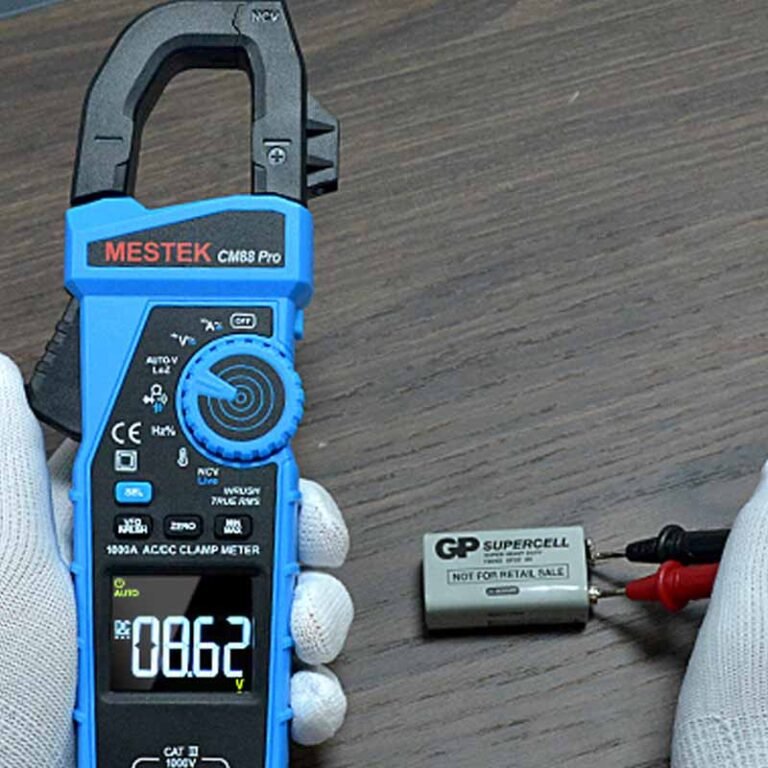
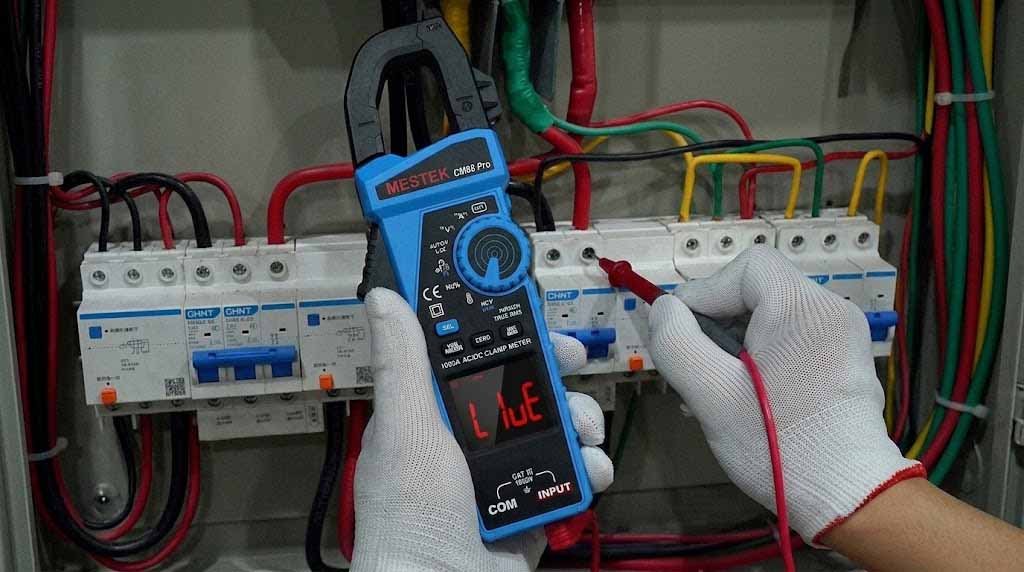
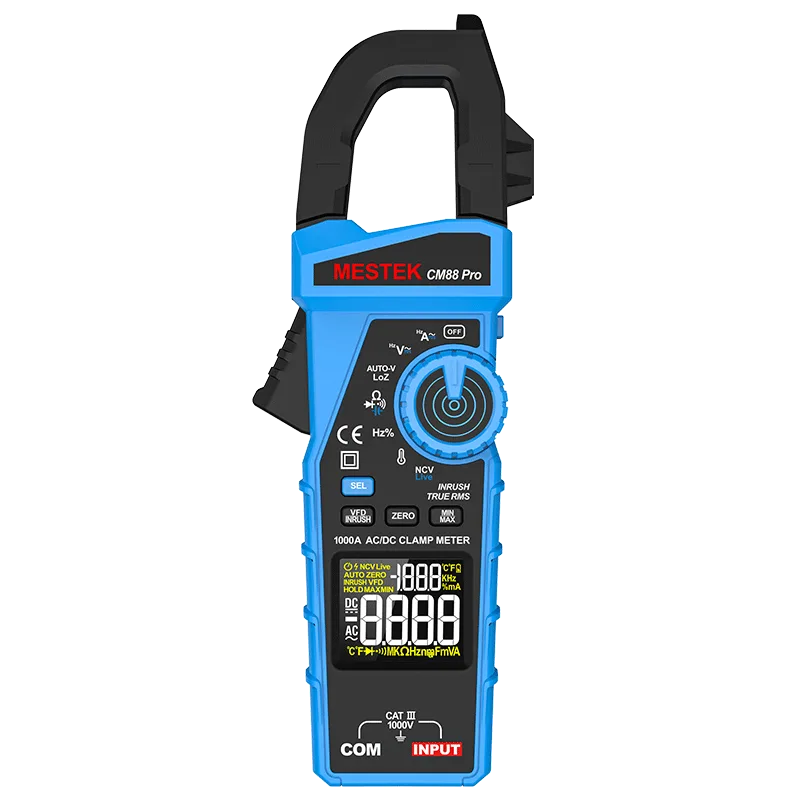
The MESTEK CM88 PRO offers AC/DC current measurement together with True RMS, VFD and 1000A inrush functions. It is better suited to technicians who want one professional clamp meter capable of covering a wider range of electrical troubleshooting tasks.
AC vs AC/DC Clamp Meter: Which Is Better?
The answer depends on your working environment.
If almost all of your measurements involve conventional AC electrical systems, an AC clamp meter may be the more practical choice. You do not necessarily need additional DC capability simply because it is available.
An AC/DC clamp meter makes more sense when your work crosses between AC and DC systems. Automotive technicians, solar installers, industrial maintenance teams, electronics technicians, and users working with batteries or DC power supplies are more likely to benefit from the added flexibility.
There is also a future-proofing advantage. Your current applications may only require AC measurement, but if you expect to work with solar, battery storage, electric vehicles, or DC equipment later, an AC/DC model can prevent the need to purchase another meter.
What Else Should You Consider?
Once you have decided between AC and AC/DC, other specifications become important.
Current range determines how much current the meter can measure, while jaw opening determines whether the conductor can physically fit inside the clamp. These factors should be considered together rather than separately.
True RMS can also be important when measuring non-linear electrical loads, while inrush measurement is useful for checking temporary startup current from motors and compressors.
Safety ratings should not be overlooked either. The correct CAT rating and voltage rating depend on the electrical environment where the meter will be used.
If you are still unsure about the required current capacity, see our guide on what current range you need in a clamp meter. For applications involving motor startup or temporary current spikes, our guide on how to test inrush current using a clamp meter provides more detail.
Which AC/DC Clamp Meter Should You Choose?
There is no single best clamp meter for every application.
For solar and photovoltaic work, the MESTEK CM86C is a natural option because it is specifically designed for PV applications and supports up to 1000V PV voltage testing.
For technicians who want a broader professional tool for mixed AC/DC applications, the CM88 PRO combines AC/DC measurement with True RMS, VFD and inrush capabilities.
The important thing is to match the meter to the systems you actually work on. An AC clamp meter is sufficient for many conventional electrical applications, while an AC/DC model becomes much more valuable once batteries, solar, automotive systems, DC power supplies, or industrial control circuits become part of the job.
Conclusion
The choice between an AC and AC/DC clamp meter ultimately depends on the type of current you need to measure.
For conventional residential, commercial, and industrial AC systems, an AC clamp meter can be a straightforward and practical solution. If your work includes solar, batteries, automotive systems, DC power supplies, or mixed electrical environments, an AC/DC clamp meter provides greater flexibility.
Rather than choosing based only on the current rating, consider the complete application: current type, voltage, jaw size, safety category, waveform requirements, and the additional functions you are likely to use.
For professionals working across multiple electrical systems, an AC/DC clamp meter can be a worthwhile investment because one instrument can cover a much broader range of testing requirements.