Electrical testing is an industry defined by two primary constraints such as time and safety. For electricians and maintenance technicians, the ability to quickly diagnose a circuit can mean the difference between a routine fix and a costly downtime event. Traditionally, the clamp meter has been the go to tool for non contact current measurement. However, a newer evolution in handheld test equipment is the Fork Meter. This evolution in handheld gear is now the top choice for pros who value speed. This article explains why fork meters are becoming the better tool for fast, reliable diagnostics.
What is a Fork Meter?
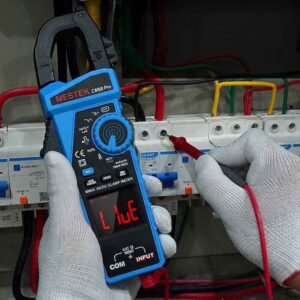
A fork meter, also called an “open jaw” tester. It is a specialized digital multimeter designed for measuring electrical current without the need to physically break the circuit or even “clamp” around a wire. Unlike a traditional clamp meter, which features a spring loaded circular jaw that must be opened and closed around a conductor, a fork meter has a fixed, U shaped “fork” design.
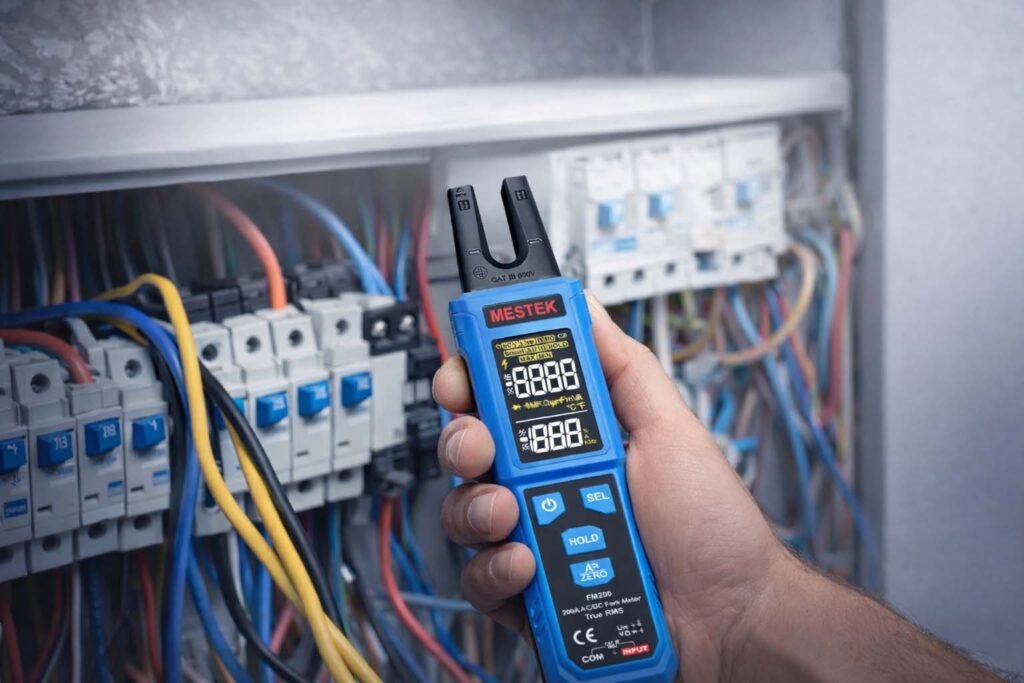
The main feature of a fork meter is this open jaw design. This design allows the user to simply slide the wire into the opening of the fork to obtain a current reading. There is no trigger to squeeze and no mechanical jaw to align. This “point and measure” capability is what sets it apart from traditional testers.
Despite the open design, these meters are highly accurate. They measure AC (and often DC) current by detecting the magnetic field generated by the electricity flowing through the conductor. In modern electrical environments where wires are often tightly packed and hard to access, fork meters offer unmatched convenience. They simplify the measurement process and improve workflow efficiency.
Fork Meters vs. Clamp Meters
Choosing between a fork meter and a clamp meter depends on your work needs. Each has its strengths:
- Space Adaptability: Clamp meters require 360° clearance to “loop” around a wire. Fork meters only need to slide onto the wire from one side. This is a lifesaver in cramped panel boxes where wires are bundled tightly together.
- Speed: Fork meters are faster for repetitive testing. You can move from wire to wire in seconds without the fatigue of constantly squeezing a heavy trigger.
- Monitoring vs. Troubleshooting: Clamp meters are better for long term monitoring because they can hang securely on a wire. Fork meters are designed for “point and shoot” troubleshooting, where the technician holds the tool.
- Amperage Limits: Clamp meters often handle up to 1000A (AC and DC). Fork meters usually stay under 200A (mostly AC), making them specialized for branch circuit testing rather than for heavy industrial mains.
Why Fork Meters are Better for Rapid Electrical Testing
The transition from clamp meters to fork meters is driven by core advantages that directly impact the speed and quality of work:
1. Rapid Testing and Throughput
In industrial maintenance, time is money. A fork meter allows for “scanning” a panel. You can move the fork from one wire to the next in a continuous motion. This is especially useful for identifying which branch of a circuit is overloaded without having to stop and “clamp” every single line.
2. True One-Handed Operation
Because there is no trigger to pull, your hand stays in a natural grip at the base of the tool. This frees up your other hand to hold a flashlight, move wires out of the way, or hold onto a ladder for safety.
3. Suitability for Confined Spaces
Modern electrical cabinets are increasingly crowded. Traditional clamp jaws require several centimeters of clearance to open. A fork meter, with its slim profile and fixed opening, can slide into gaps where a clamp simply won’t fit.
4. Enhanced Safety
Safety is paramount in electrical work. The user’s hand remains further away from the conductor by eliminating the trigger mechanism. Many fork meters also include Non Contact Voltage (NCV) detection, allowing you to check for the presence of voltage before you even attempt a current measurement.
5. Portability and Ergonomics
Fork meters are generally smaller and lighter than their clamp-style counterparts. They fit easily into a pocket or a small tool pouch, making them the best “everyday carry” tool for technicians who are constantly on the move.
Common Applications of Fork Meters
The Electrical Fork Meter is the star of field testing. Its versatility makes it indispensable in several sectors:
- Electrical Maintenance: Fast troubleshooting of residential and commercial breaker panels.
- Distribution Cabinet Inspection: Rapidly checking load balance across phases in industrial settings.
- HVAC Maintenance: The ability to measure both current and temperature makes it ideal for diagnosing furnace blowers and air-conditioning compressors.
- Industrial Inspection: Checking motor leads and control circuits in tight machinery housings.
How to Choose a Fork Meter
When buying a fork meter, consider these technical criteria:
- Measurement Range: Make sure it can handle the power you work with. A 200A limit is more than enough for most residential and light commercial jobs.
- AC/DC Support: If you work with solar panels or car batteries, ensure the meter can measure DC current.
- True RMS: This technology ensures accuracy when testing modern electronics.
- Jaw Size: A 10mm to 12mm opening is standard for most common wires.
- Safety Rating: Look for a “CAT III 600V” rating to ensure the tool is safe for professional use.
Recommended Fork Meter: Mestek FM200
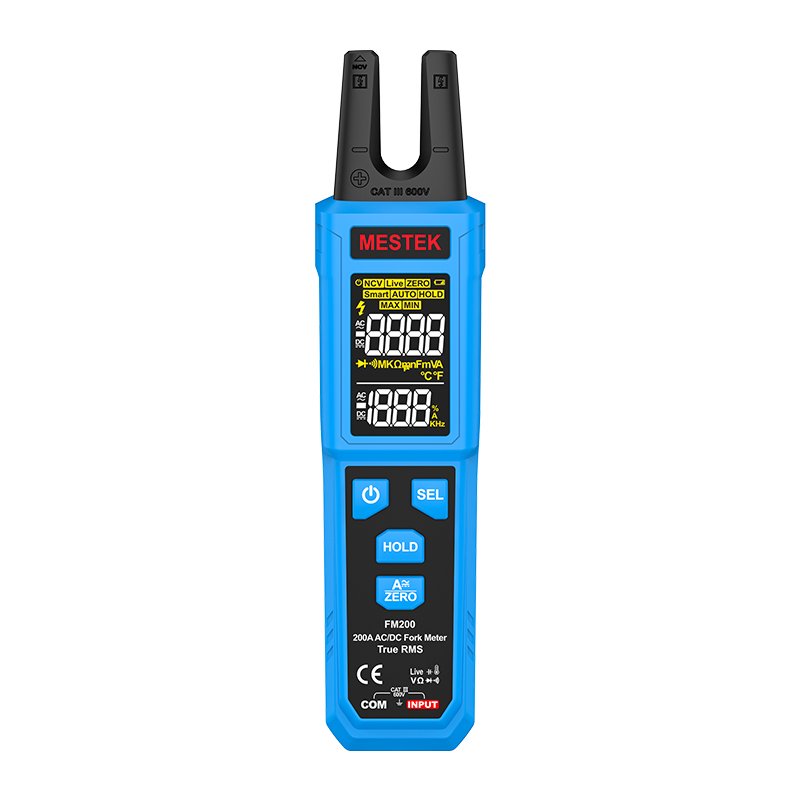
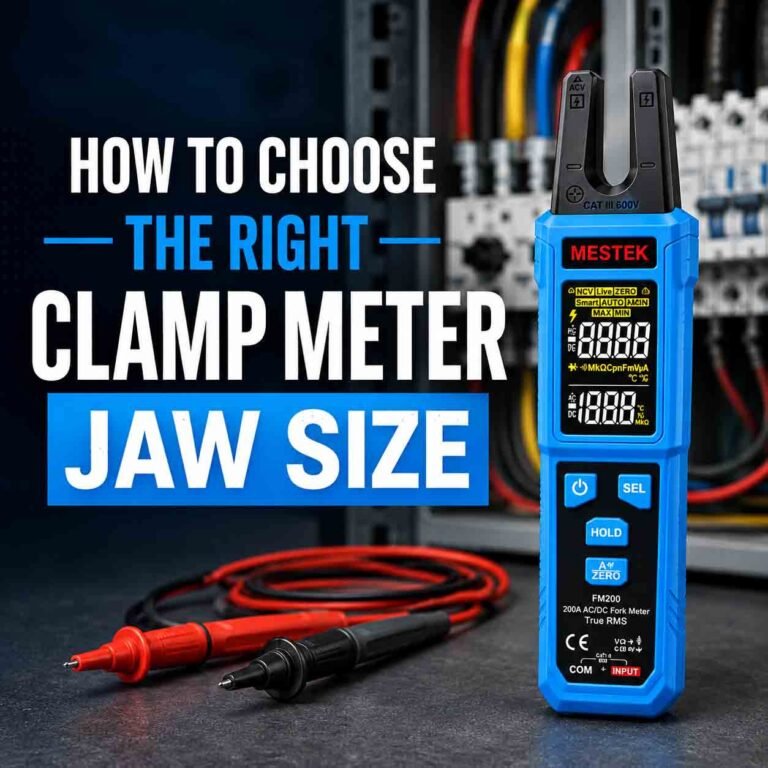
If you need a reliable and practical option, the Mestek FM200 Fork Meter is an excellent choice. It weighs only 120g, making it incredibly portable. Its 10mm jaw is specifically designed for tight spaces. This meter accurately measures both AC and DC current up to 200A. It uses True RMS technology to ensure precision even when handling complex electronic signals.
In addition to current, the FM200 measures voltage up to 600V, resistance, and capacitance. It also includes a K-type temperature probe for thermal diagnostics. The clear color display and backlight provide easy reading in any lighting condition. With a CAT III 600V safety rating and non contact voltage (NCV) detection, the FM200 is a reliable choice for professional field testing and diagnostics.
FAQs
1. Are fork meters as accurate as closed jaw clamp meters?
Yes, they are accurate enough for most field work. While closed jaw meters are slightly better at blocking outside interference, modern fork meters like the FM200 use smart digital chips. This keeps their accuracy well within professional standards for repairs and maintenance.
2. Can a fork meter measure both AC and DC current?
In the past, most fork meters only measured AC. However, advanced models like the Mestek FM200 use “Hall Effect” sensors. These allow the tool to measure both AC and DC current up to 200A. This is a huge benefit for solar, automotive, and industrial technicians.
3. Do I need to center the wire in the fork?
For the best results, try to slide the wire to the bottom of the “U” opening. However, fork meters are very easy to use. As long as the wire is anywhere inside the jaw opening, you will get a reliable reading for quick tests and safety checks.
Conclusion
In summary, fork meters are the superior choice for rapid electrical testing. They improve both efficiency and safety by allowing for one handed, “slide and read” current measurements in tight spaces where traditional clamp meters struggle.
Whether you are performing a routine inspection of a distribution cabinet or troubleshooting a complex HVAC system, a tool like the Mestek FM200 offers the perfect balance of portability and performance. If you want to improve your workflow and reduce the time you spend on repetitive measurements, choosing a quality fork meter is one of the easiest ways to upgrade your professional capabilities.