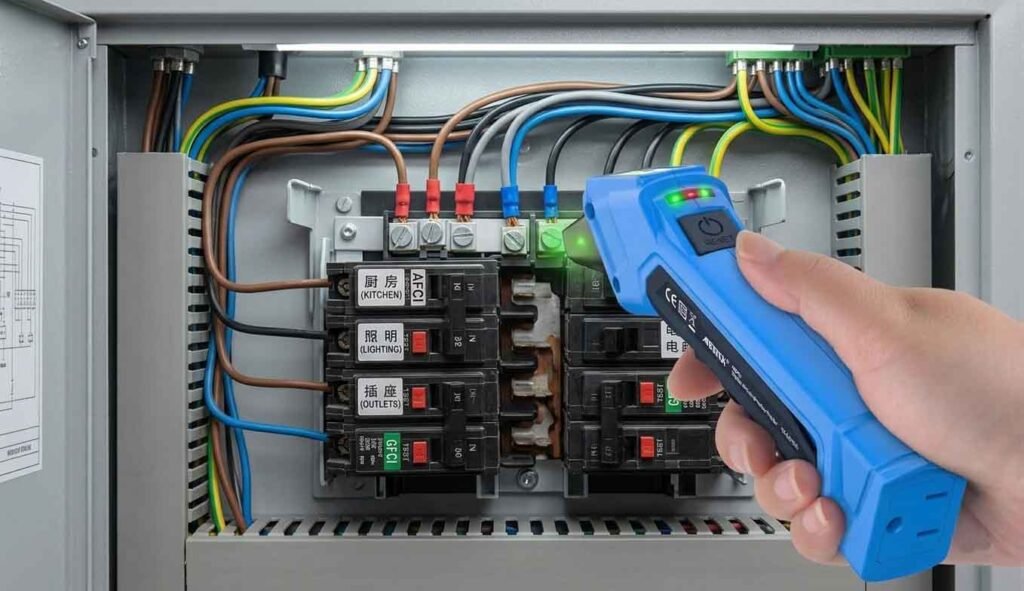
A circuit breaker finder is one of the easiest tools for identifying which breaker controls a specific outlet or circuit. However, many homeowners quickly discover that the tool does not always point to the correct breaker. Sometimes multiple breakers beep at the same time, while other times the receiver identifies a completely different circuit.
This problem is surprisingly common. According to discussions from electricians, DIY forums, and troubleshooting threads, false positives are usually caused by electrical interference rather than a defective breaker finder.
How a Circuit Breaker Finder Works
A typical breaker finder has two parts: a transmitter and a receiver. The transmitter plugs into an outlet and sends a signal through the circuit wiring. The receiver is then used at the electrical panel to detect which breaker carries that signal.
In ideal conditions, the receiver identifies one breaker with a stronger signal than the others. But in real-world electrical systems, things are rarely perfect.
Signal Bleed Between Adjacent Breakers
The most common cause of false positives is signal bleed.
Inside a breaker panel, wires and breakers are installed extremely close together. Because of this, the signal from the transmitter can sometimes “bleed” into neighboring breakers. The receiver may detect this leaked signal and incorrectly indicate multiple breakers.
This issue becomes more noticeable in crowded electrical panels or homes with complex wiring layouts.
If your breaker finder beeps on two adjacent breakers, signal bleed is usually the reason.
Shared Neutral Wiring
Another major cause is shared neutral wiring.
In some homes, especially older houses, two circuits may share the same neutral wire. This wiring method can confuse the signal path and make the receiver think multiple breakers belong to the same circuit.
Electricians frequently encounter this issue in older residential systems where wiring has been modified over the years.
Unfortunately, shared neutrals can make even professional-grade breaker finders less accurate.
AFCI and GFCI Breakers Can Affect Accuracy
Modern AFCI and GFCI breakers sometimes interfere with breaker finder performance.
These breakers contain internal electronic monitoring systems designed to detect electrical faults. Because the breaker finder relies on signal transmission, those electronic components can weaken, distort, or redirect the signal.
As a result, the receiver may produce inconsistent readings or indicate the wrong breaker entirely.
This does not necessarily mean the tool is defective. In many cases, the electrical protection technology itself is affecting the reading.
Old or Crowded Electrical Panels
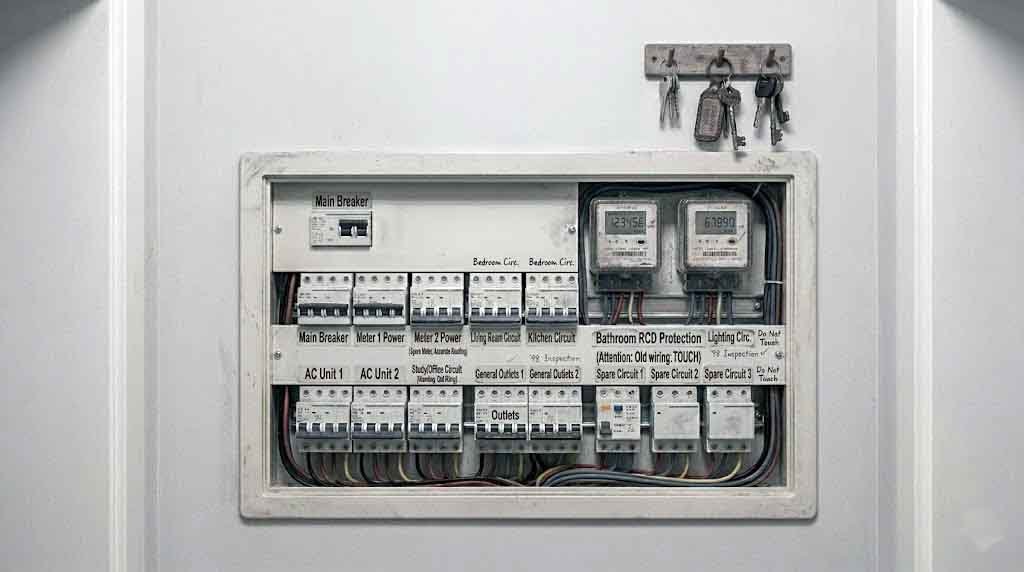
Older breaker panels are another common problem.
Many older homes have panels that were expanded over time without proper organization or labeling. Wires may overlap heavily inside the panel, increasing electrical interference.
Some panels also contain outdated wiring configurations that were common decades ago but are less compatible with modern diagnostic tools.
If your home has an old panel and the breaker finder keeps identifying random breakers, the panel layout itself may be contributing to the issue.
Incorrect Scanning Technique
Sometimes the problem is simply user technique.
A breaker finder should be scanned slowly across the breakers. Moving the receiver too quickly can cause inaccurate readings because the device does not have enough time to compare signal strength.
Other common mistakes include:
- Plugging the transmitter into a loose outlet
- Testing circuits with heavy appliance loads
- Scanning at inconsistent angles
- Ignoring weak signals and selecting the first beep
Many false positives happen because users stop scanning too early instead of identifying the strongest signal.
How to Improve Breaker Finder Accuracy
Although false positives are common, there are several ways to improve accuracy.
Scan Slowly
Move the receiver slowly across the panel and compare signal strength carefully.
Check Nearby Breakers
If two adjacent breakers respond, compare them multiple times before making a decision.
Verify Manually
After identifying a breaker, turn it off and confirm the outlet actually lost power.
Reduce Electrical Interference
Unplug large appliances or electronic devices during testing when possible.
Label the Panel
Once the correct breaker is identified, label it clearly to avoid future confusion.
When Manual Testing Is Better
In some situations, manual breaker testing is still the most reliable method.
Homes with old wiring, shared neutrals, crowded panels, or extensive renovations can produce confusing readings even with high-quality tools.
Professional electricians often combine breaker finders with manual verification rather than relying entirely on the receiver.
Final Thoughts
If your circuit breaker finder keeps picking the wrong breaker, the issue is usually caused by electrical interference, shared wiring, AFCI/GFCI technology, or crowded electrical panels—not necessarily a faulty tool.
Understanding these limitations can help you use the device more effectively and avoid common troubleshooting mistakes. In many cases, slower scanning and manual verification are enough to significantly improve accuracy.