Choosing the right electrical testing tool depends heavily on the type of work you do. While both fork meters and flexible clamp meters are designed for current measurement, they solve very different problems in real-world electrical environments.
A fork meter is typically designed for fast and convenient electrical diagnostics, while a flexible clamp meter is built for measuring high-current conductors in difficult-access environments. Understanding these differences can help electricians, HVAC technicians, and maintenance professionals choose the right tool for the job.
What Is a Fork Meter?
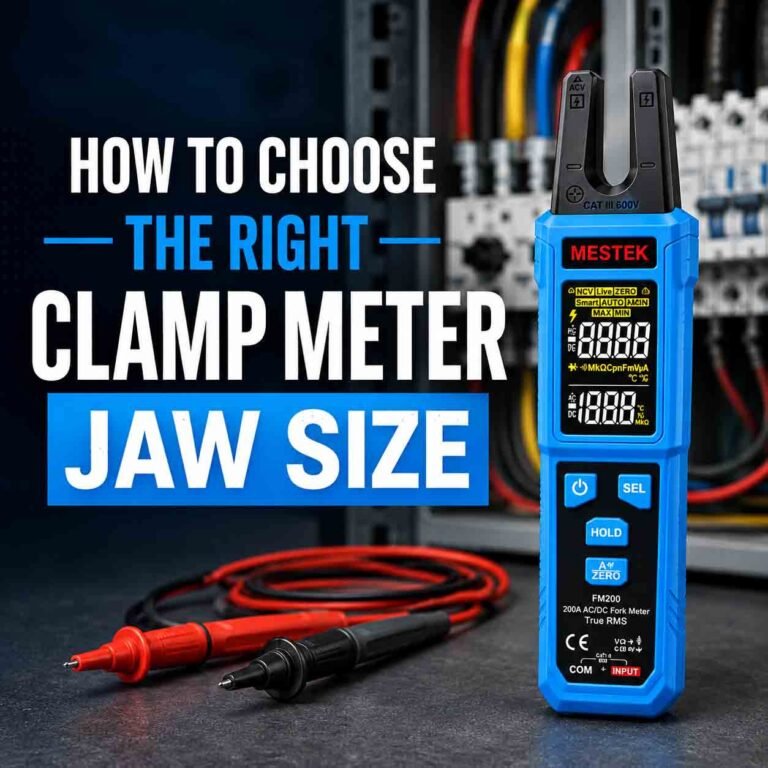
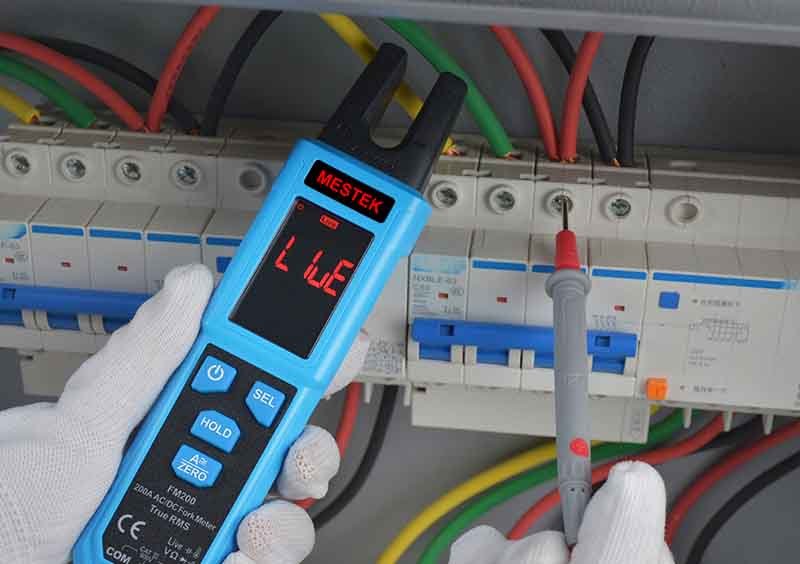
A fork meter uses an open-fork jaw design that allows electricians to measure current without fully enclosing the conductor. This makes testing faster and easier, especially in low-voltage troubleshooting environments.
Fork meters are commonly used for:
- residential electrical work
- commercial maintenance
- HVAC diagnostics
- quick breaker and conductor checks
Because the jaw does not fully close like a traditional clamp meter, technicians can test conductors quickly with one-handed operation.
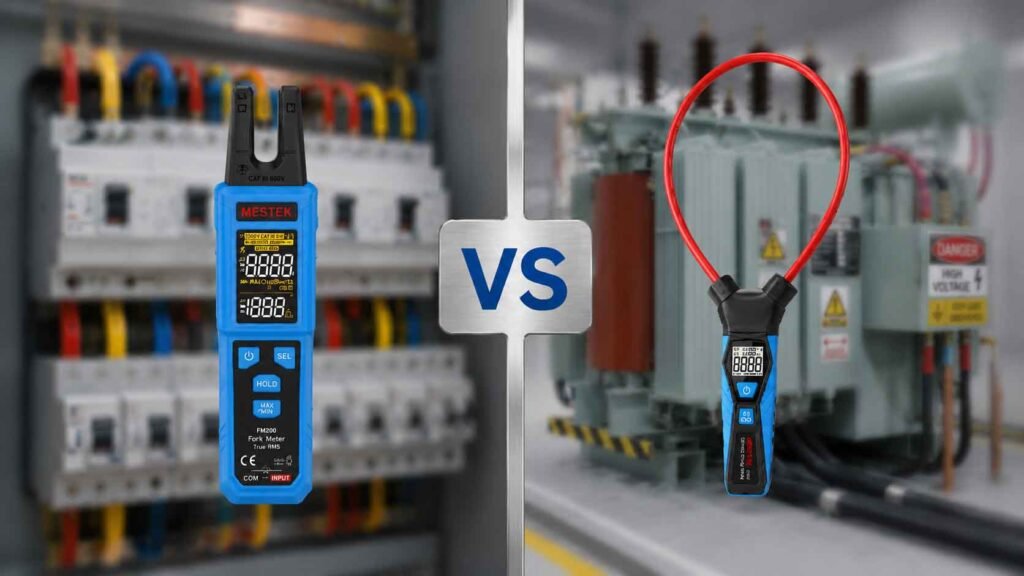
The MESTEK FM200 Fork Meter is designed for fast electrical troubleshooting and everyday diagnostic work where speed and accessibility matter.
What Is a Flexible Clamp Meter?
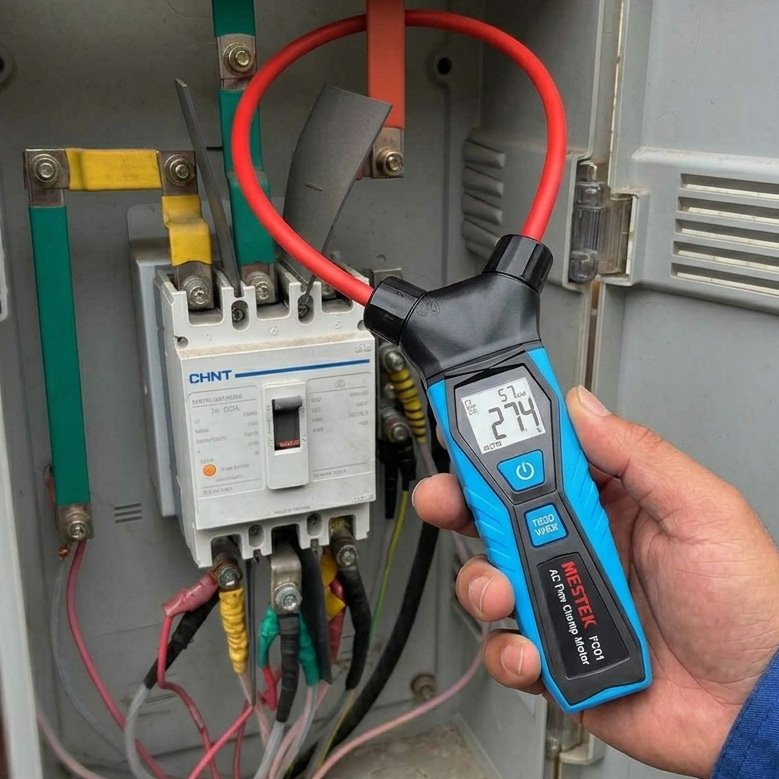
A flexible clamp meter uses a flexible Rogowski coil instead of a rigid clamp jaw. The flexible coil can wrap around large conductors or bundled cables that traditional clamp meters may struggle to access.
Flexible clamp meters are commonly used for:
- industrial electrical systems
- high-current measurements
- large feeder cables
- crowded switchgear
- three-phase systems
Unlike fork meters, flexible clamp meters are not mainly designed for rapid diagnostics. Their biggest advantage is accessibility in difficult measurement environments.
The MESTEK FC01 Flexible Clamp Meter is designed for high-current applications and large-conductor measurements where standard clamp meters may be difficult to position.
Accessibility Differences
One of the biggest differences between the two tools is how they access conductors.
Fork meters work best when conductors are exposed and easy to reach. Their open-jaw design is ideal for fast measurements on smaller conductors commonly found in HVAC and commercial electrical systems.
Flexible clamp meters, however, are designed for tight or difficult-access spaces. The flexible coil can route around large cables and crowded conductors inside industrial panels where rigid tools may not fit easily.
In simple terms:
- fork meters improve workflow speed
- flexible clamp meters improve conductor accessibility
Fork Meter vs Flexible Clamp Meter: Quick Comparison
| Functions | Fork Meter | Flexible Clamp Meter |
| Best For | Fast diagnostics | High-current systems |
| Measurement Style | Open-fork testing | Flexible coil measurement |
| Conductor Size | Small to medium | Large conductors |
| Environment | Residential / HVAC | Industrial / commercial |
| Advantage | Speed and convenience | Difficult-access measurements |
Which Tool Is Better for HVAC and Industrial Work?
For HVAC technicians and residential electricians, a fork meter is often the more practical choice because it simplifies quick troubleshooting and routine diagnostics.
For industrial electricians or maintenance engineers working around large conductors and three-phase systems, a flexible clamp meter is usually the better option.
Neither tool is universally “better.” They are designed for different electrical environments.
Final Thoughts
Fork meters and flexible clamp meters are built for different applications.
A fork meter like the FM200 is ideal for fast troubleshooting, HVAC diagnostics, and routine electrical testing where quick access matters most.
A flexible clamp meter like the FC01 is better suited for high-current measurements, large conductors, and crowded industrial environments where accessibility is the primary challenge.
Choosing the right tool depends less on the meter itself and more on the type of electrical work being performed.