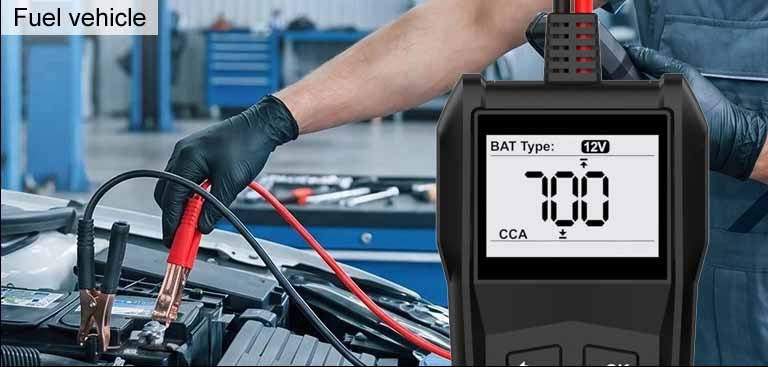
Modern vehicles rely heavily on electrical systems. The battery is at the center of everything from starting the engine to powering onboard electronics. Yet most drivers only think about their battery when the car refuses to start. That’s where a reliable diagnostic tool becomes essential.
Choosing the best battery tester for car batteries is not just about checking voltage. It’s about understanding your battery’s actual condition and its overall health. A good tester can help you avoid unexpected breakdowns, reduce repair costs, and extend battery life. This guide explores how to choose the best battery tester for car batteries and why advanced diagnostics matter more than simple readings.
Why Battery Voltage Alone Is Not Enough
Many car owners assume that checking voltage is enough to determine battery health. While voltage can give a basic idea of charge level, it does not reveal the full story.
A battery may show 12.6V and still fail under load. This happens because:
- Internal battery plates may be sulfated or damaged
- The battery may lack cranking power even if it appears “fully charged.”
- The alternator may not be charging properly
- Cold weather can reduce performance significantly
In short, voltage testing is only a surface level check. It cannot tell you whether your battery will actually start your car when needed. This is why investing in the best battery tester for car batteries is crucial. It gives you deeper insights such as cranking power, health status, and charging performance.
Check Battery Compatibility First
The first and most important rule when looking for the best battery tester for car batteries is ensuring it matches what is under your hood. Not all batteries are created equal, and using a tester designed only for standard lead acid batteries on a modern high performance battery can lead to inaccurate results.
Understanding Modern Battery Types
Before you buy, you must verify that the device supports these common types:
- Normal Flooded (Lead-Acid): These are the traditional batteries found in older vehicles. They use liquid electrolyte and are generally the most common.
- AGM (Absorbent Glass Mat) Flat Plate: Found in many modern cars with high electrical demands. They are spill proof and better at handling “deep cycles.”
- AGM Spiral: A variation of AGM where the plates are wound into a coil. They offer extremely high starting power and vibration resistance.
- GEL Batteries: These use a thickened, silica based electrolyte. They are common in marine and specialty automotive applications where deep discharge recovery is necessary.
- EFB (Enhanced Flooded Battery): Often found in vehicles with “Start Stop” technology. They are an entry level version of AGM, designed to handle frequent engine restarts.
Why Compatibility Matters
If you own a modern SUV with Start Stop technology, it likely uses an EFB or AGM battery. A basic tester might misinterpret the internal resistance of these batteries, giving you a “Fail” reading on a perfectly healthy unit. A versatile tester like the MESTEK BT10 is essential because it covers 6V, 12V, and 24V systems across all these chemistries, making it a “one and done” tool for your garage.
Look for CCA, SOH, and SOC Testing
When you look at the screen of a high quality diagnostic tool, you will see several acronyms. Understanding these is the secret to choosing the right device. The best battery tester for car batteries must provide clear readings for CCA, SOH, and SOC.
CCA: The Power to Start
Cold Cranking Amps (CCA) measure a battery’s ability to start an engine in cold temperatures (usually 0°F / -18°C). Over time, lead plates sulfate and internal resistance increases, causing the actual CCA to drop below its rated value. The best battery tester for car batteries will allow you to input the battery’s rated CCA (ranging from 100 to 2000) and compare it against the real time measured output.
SOH: The Life Expectancy
State of Health (SOH) is a percentage that compares the current condition of the battery to its original “as new” state. If your SOH drops below 40-50%, even if the car currently starts, the battery is on its last legs. Monitoring SOH allows for proactive replacement during scheduled maintenance rather than emergency repairs.
SOC: The Energy Reservoir
State of Charge (SOC) tells you how much energy is currently stored in the battery. While useful, remember that a high SOC does not guarantee a healthy battery. The SOH tells you if the battery can hold a charge, while the SOC tells you if it is currently holding one.
Internal Resistance (mΩ)
The best testers also measure internal resistance. As a battery ages, its internal resistance increases. High resistance generates heat and prevents the battery from delivering power efficiently. If your tester shows a significant spike in milliohms (mΩ), the battery is on its last legs.
Choose a Tester That Can Perform Cranking and Charging Tests
A car’s electrical system is a circle. The battery starts the engine, and the alternator charges the battery while the engine runs. If your car won’t start, the battery might be the victim, not the culprit. This is why you should look for a tester that does more than just “battery testing.”
Starter System (Cranking) Testing
A cranking test measures the voltage drop when you turn the key. If the voltage drops too low during the start, your starter motor might be drawing too much current, or the battery simply can’t handle the load. A dedicated cranking test tells you if your starter is failing before it leaves you stranded at a gas station.
Alternator (Charging) Testing
Once the engine is running, the alternator must take over and recharge the battery while powering the headlights, AC, and infotainment system. A comprehensive tester will measure the “Ripple Voltage” and the charging output. If the alternator is overcharging (above 15V) or undercharging (below 13V), even a brand-new battery will be destroyed within weeks.
Ease of Use Matters
Whether you are a professional mechanic or a DIYer, you don’t want to spend twenty minutes reading a manual just to check a battery. Usability is a massive factor in choosing the best battery tester for car batteries.
- Clear Display and Speed: Look for an LCD screen that is easy to read in direct sunlight or a dark engine bay. The results should be instantaneous. Modern testers can process the internal resistance and CCA data in under three seconds.
- Portability and Durability: Engine bays are cramped, greasy, and hot. You need a device that is compact enough to fit in a glove box but rugged enough to survive a drop on concrete. Durable alligator clips are a must. They need to bite through terminal corrosion to get a solid electrical connection.
- No Internal Battery Required: The best testers are powered directly by the battery they are testing. This means you never have to worry about the tester itself being “dead” when you need it most.
Recommended Battery Tester for Most Automotive Users: MESTEK BT10
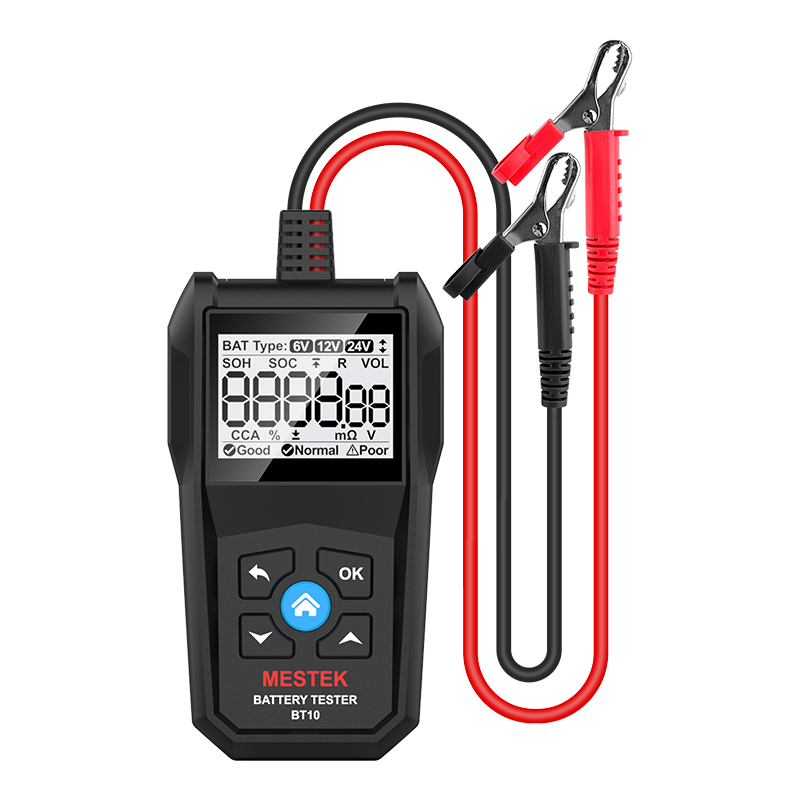
If you are looking for a device that checks every box, the MESTEK BT10 stands out as a premier solution. It is designed to bridge the gap between professional grade diagnostics and consumer level ease of use.
The BT10 is a heavy hitter in a compact frame. It supports a massive range of battery capacities from tiny 2Ah motorcycle batteries to massive 220Ah commercial vehicle units. Whether you are maintaining a 6V vintage car, a 12V sedan, or a 24V heavy duty truck, this device handles it all.
Key Technical Highlights:
- Comprehensive Range: It tests CCA from 100 to 2000, making it suitable for everything from a lawnmower to a diesel truck.
- Multi Chemistry Support: It accurately analyzes Normal Flooded, EFB, AGM (Flat and Spiral), and GEL batteries.
- Precision Diagnostics: It provides 0.01V resolution and measures internal resistance down to 0.01mΩ.
- Full System Analysis: It doesn’t just stop at the battery. It performs cranking and charging system tests to give you a total health report of your vehicle’s electrical “circulatory system.”
With its clear LCD display and lightweight 250g design, it is the perfect companion for anyone who wants to avoid the “dead battery surprise.”
Conclusion
Choosing the best battery tester for car batteries comes down to four fundamental pillars: Compatibility, Deep Health Analysis, System Testing, and Ease of Use. Don’t settle for a tool that only gives you a voltage reading. To truly protect your vehicle and your wallet, you need a device that understands SOH and SOC, evaluates the alternator, and handles modern AGM or EFB batteries.
The MESTEK BT10 offers this full suite of features in a reliable, portable package. By making battery testing a part of your regular maintenance routine, you ensure that your vehicle is always ready to go when you are. Remember, a few seconds of testing today can save you hours of waiting for a jump start tomorrow.