What Is a Sound Level Meter?

Noise is everywhere—and excessive noise can impact productivity, health, and even safety. That’s where a sound level meter comes in handy. A sound level meter is a sound measuring instrument that quantifies sound pressure levels in decibels (dB). Professionals use it to evaluate workplace noise, environmental noise pollution, and audio system performance. Whether you’re an engineer, building inspector, or audio enthusiast, understanding how this noise measuring instrument works is the first step to accurate sound measurement.

                What Is a Sound Level Meter Used For?

                A sound level meter serves as a noise measuring instrument across multiple industries:

                Occupational Safety – Ensures workers are not exposed to harmful noise levels in factories or construction sites.
                Environmental Monitoring – Measures traffic, airport, or industrial noise that may impact nearby communities.
                Audio System Testing – Optimizes speaker setups in theaters, studios, or event venues for balanced sound.
                Building Acoustics – Identifies areas with poor insulation or excessive noise leakage.

                In simple terms, this sound measuring device translates the invisible pressure of sound waves into numbers that you can analyze and act upon.

                How Does a Sound Level Meter Work?

                A digital sound level meter works by capturing sound waves and converting them into electrical signals. The process involves:

                        • Microphone Capture – The microphone senses sound pressure in the air.
                        • Signal Conversion – An internal circuit converts the acoustic energy to an electrical signal.
                        • Weighting and Time Filtering – Filters adjust the reading based on human hearing sensitivity.
                        • Display Output – The processed value is shown in decibels (dB) on the screen.

                        Modern digital sound level meter like the MESTEK SL750B feature AC-weighting, fast/slow response settings, and data hold functions, making field measurement faster and more reliable.

                        Time Weighting in Sound Measurement

                        Time weighting refers to how quickly the level meter responds to changes in noise levels. There are two common settings:

                        • Fast (F / 125ms) Captures quick sound fluctuations; ideal for machinery or sudden noise.
                        • Slow (S / 1000ms) Averages out fluctuations; useful for steady environmental noise.

                        Selecting the correct time weighting ensures that your measurements match the type of noise you are analyzing.

                        Tips: Selecting the correct time weighting ensures that your measurements match the type of noise you are analyzing.

                        Frequency Weighting Explained

                        Not all sound frequencies are equally harmful or noticeable to humans. Frequency weighting is applied to adjust measurements to better reflect perceived loudness.

                        A-Weighting (dBA)

                        • Mimics the human ear’s sensitivity.
                        • Best for workplace noise or general environmental studies.

                        C-Weighting (dBC)

                        • Less filtered, captures low-frequency noise.
                        • Useful for measuring machinery or bass-heavy sounds.

                        Z-Weighting (dBZ)

                        • Flat response across the entire range.
                        • Preferred for professional acoustic analysis.

                        A/C Dual Weighting

                        • Provides both human-perceived and low-frequency impact data, which is why many modern digital sound level meters support this mode.

                        Frequency Analysis for Noise Measuring Instruments

                        Frequency analysis allows users to identify which frequencies dominate the environment. For example:

                        • Low Frequencies (20–200Hz): HVAC systems, heavy vehicles
                        • Mid Frequencies (200–2,000Hz): Human speech, general machinery
                        • High Frequencies (2kHz+): Whistles, alarms, high-speed tools

                        Professional engineers often rely on frequency analysis to design noise control solutions or verify building acoustics.

                        Sound Level Meter Display And Reading
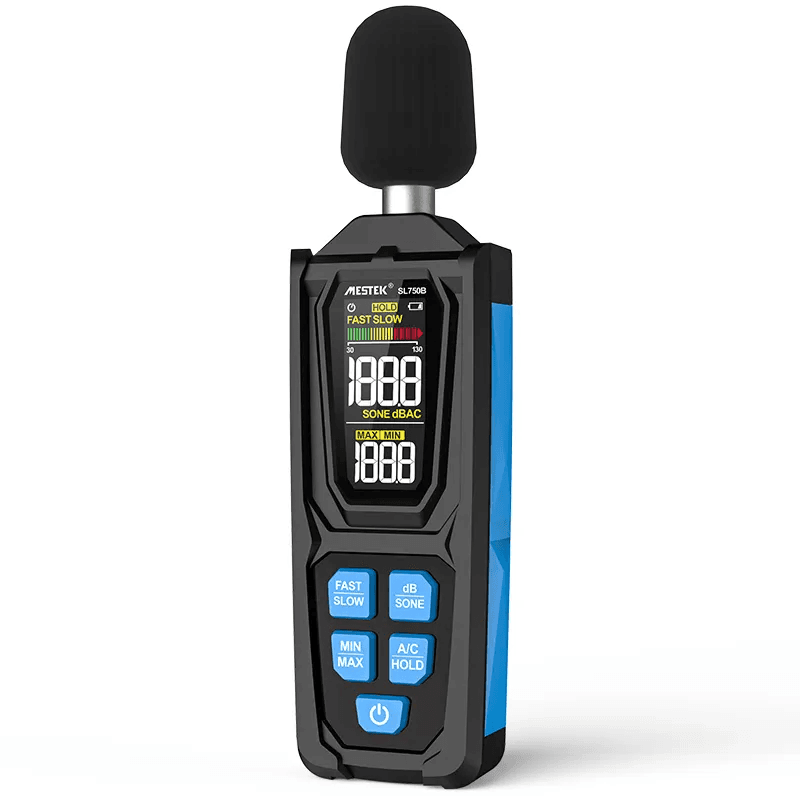
                        Noise meter SL750B features A&C weighting, making it ideal for a wide range of sound measurements.

                        Modern sound measuring devices provide real-time data through:

                        • 4-digit LCD display for precise readings (resolution 0.1dB)
                        • Data hold to freeze readings for recording
                        • Auto-ranging to switch between low (<100dB) and high (>100dB) sound levels

                        The MESTEK SL750B incorporates all these features, making it ideal for home, office, or basic industrial monitoring without excessive complexity.

                        Calibration of a Sound Level Meter

                        Accurate measurement depends on regular calibration:

                        Field Calibration – Using a portable calibrator before measurement sessions.
                        Factory Calibration – Recommended annually to maintain accuracy within ±2dB.

                        Conclusion

                        Whether you are monitoring environmental noise, workplace safety, or home acoustics, a reliable noise measuring instrument ensures that your decisions are based on accurate data.

                        If you’re starting your journey in sound measurement, consider a digital sound level meter like the MESTEK SL750B—compact, accurate, and designed for everyday use.
                        Share our interesting knowledge and stories on social media

                        Have questions? Get a quote

                        Want to learn more? Click the button now.

                        More Posts>>>

                        Automotive engineers are using the MESTEK BT10 battery tester to test 12V batteries in automobiles.

                        How to Choose the Best Battery Tester for Car Batteries: A Complete Guide

                        Modern vehicles rely heavily on electrical systems. The battery is at the center of everything from starting the engine to powering onboard electronics. Yet most drivers only think about their battery when the car refuses to start. That’s where a reliable diagnostic tool becomes essential.  Choosing the best battery tester for car batteries is not just about checking voltage. It’s about understanding your battery’s actual condition and its overall health. A good tester can help you avoid unexpected breakdowns, reduce

                        Fork Meter vs Flexible Clamp Meter: Which One Should You Use?

                        Fork Meter vs Flexible Clamp Meter: Which One Should You Use?

                        Choosing the right electrical testing tool depends heavily on the type of work you do. While both fork meters and flexible clamp meters are designed for current measurement, they solve very different problems in real-world electrical environments. A fork meter is typically designed for fast and convenient electrical diagnostics, while a flexible clamp meter is built for measuring high-current conductors in difficult-access environments. Understanding these differences can help electricians, HVAC technicians, and maintenance professionals choose the right tool for the

                        Flexible Clamp Meter is testing cables.

                        How Flexible Clamp Meter Simplify High Current Measurements

                        Traditional clamp meters face significant limitations when measuring high current in industrial settings. Large conductors, limited panel access, and densely packed switchgear create scenarios where rigid jaw designs simply do not work. Electricians and maintenance teams working on three phase systems or crowded electrical panels often struggle to position standard meters around oversized cables. The flexible clamp meter addresses these challenges directly. It offers a practical solution for difficult measurement environments where precision and accessibility matter most. This article explores

                        MESTEK circuit breaker finder is diagnosing the cause of false alarms.

                        Why Is My Circuit Breaker Finder Picking the Wrong Breaker?

                        A circuit breaker finder is one of the easiest tools for identifying which breaker controls a specific outlet or circuit. However, many homeowners quickly discover that the tool does not always point to the correct breaker. Sometimes multiple breakers beep at the same time, while other times the receiver identifies a completely different circuit. This problem is surprisingly common. According to discussions from electricians, DIY forums, and troubleshooting threads, false positives are usually caused by electrical interference rather than a

                        Get more information

                        mestek product collection