
Halogen gases such as R22, R32, and R134a are common in HVAC and cooling systems. When they leak, performance drops and risks increase. A Halogen Leak Detector provides a fast way to locate and fix problems before they cause damage.
What Is a Halogen Leak Detector?
A halogen leak detector is a handheld device designed to identify refrigerant leaks containing halogen-based gases like CFCs, HCFCs, HFCs, and HFOs. The device is widely used by HVAC technicians, automotive service providers, and industrial maintenance teams. They help prevent refrigerant loss, reduce environmental impact, and ensure safe working conditions.
How Does a Halogen Leak Detector Work?
Most halogen leak detectors rely on sensitive semiconductor or infrared sensors that react to halogenated gases in the air. The sampling is usually diffusion-based, meaning the device senses the surrounding atmosphere for trace levels of refrigerant. Additionally, when gas is detected, the detector provides alerts through beeping alarms, screen display, or even vibration signals.. With response times often under 10 seconds, technicians can locate leaks quickly and accurately.
Key Features of a Halogen Leak Detector
- Wide Gas Compatibility: Detects common refrigerants such as R22, R32, and R134a.
- High Sensitivity: Capable of detecting leaks as small as 0.5 ounces.
- Dual Sensitivity Modes: Switch between high sensitivity (50PPM–1000PPM) and low sensitivity (500PPM–1000PPM) for versatile applications.
- Fast response: Typically response time is within 10 seconds.
- Reliable Alarm System: Beep alarm combined with visual indicators ensures no leak goes unnoticed.
These features make halogen leak detectors ideal for professional repair personnel in the HVAC, automotive, and refrigeration industrie s.
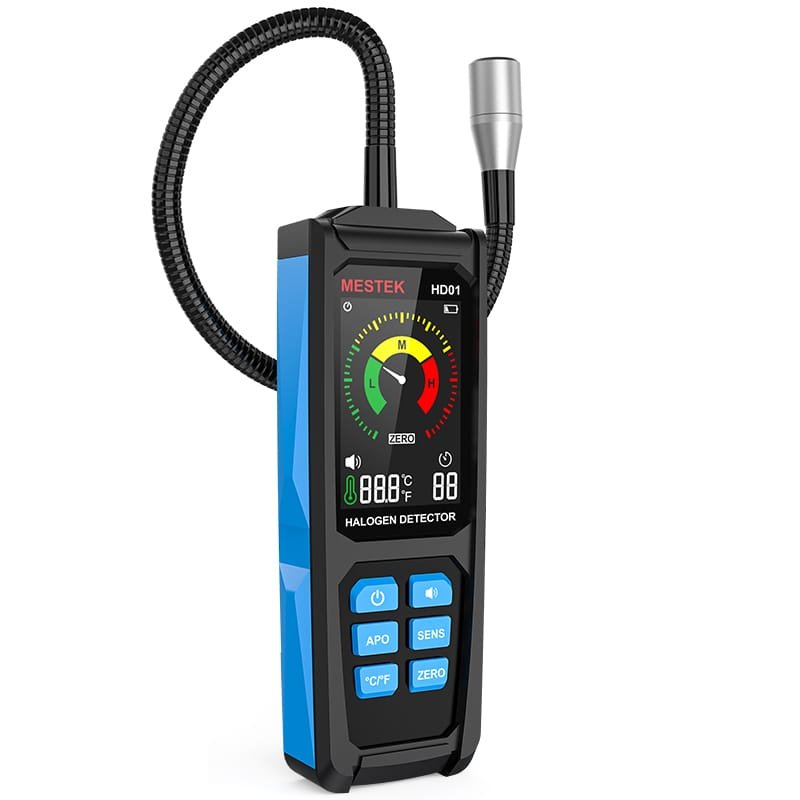
[See Mestek Halogen leak detector HD01]
Applications of Halogen Leak Detectors
HVAC Systems – Locate refrigerant leaks in air conditioning units to ensure cooling efficiency and compliance with safety regulations.
Automotive Air Conditioning – Detect refrigerant loss in car AC systems to prevent costly repairs and performance issues.
Industrial Cooling – Protect cold storage warehouses, food processing plants, and laboratories from hazardous leaks.
Environmental Protection – Reduce harmful refrigerant emissions that contribute to ozone depletion and global warming.
Usage and Maintenance Tips
- Always preheat the device for around 30 seconds before use.
- Move the probe slowly around suspected areas for accurate detection.
- Avoid using the detector in high airflow zones that may disperse the gas.
- Recharge or replace the power source regularly to maintain accuracy.
- Calibrate periodically according to manufacturer guidelines.
FAQ
1. What gases can a halogen leak detector detect?
It detects halogen-based refrigerants such as R22, R32, R134a, as well as CFCs, HCFCs, HFCs, and HFOs.
2. How sensitive are modern halogen leak detectors?
Many can detect leaks as small as 0.5 ounces per year, with dual sensitivity modes ranging from 50PPM to 1000PPM.
3. Can you use a halogen detector in a car’s air conditioning system?
Yes, technicians widely use it to diagnose refrigerant leaks in car air conditioning systems.
4. How long does it take for the detector to respond?
Most models respond in less than 10 seconds after a 30-second preheating calibration.