Multimeters have different functions, but most can measure basic functions such as voltage, current, resistance, and capacitance. This article will introduce the 7 best digital multimeters and analyze their features for you to choose from.
Fluke 87V
Fluke 87V is a high-precision industrial multimeter for industrial applications that can quickly identify complex signal problems. It supports accurate measurement of VFDs using a low-pass filter and captures intermittent events at speeds up to 250 µS using the peak capture function.

Pros:
High-precision industrial applications
With temperature measurement function
Low input impedance mode
Cons:
The price is high, and the High Precision Industrial Multimeter has too many functions for ordinary users.
| True RMS | DC Voltage | AC Voltage | DC Current | AC Current |
| √ | 1000V | 1000V | 10A | 10A |
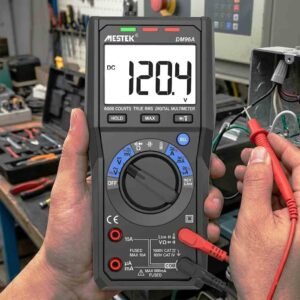
Mestek DM96A
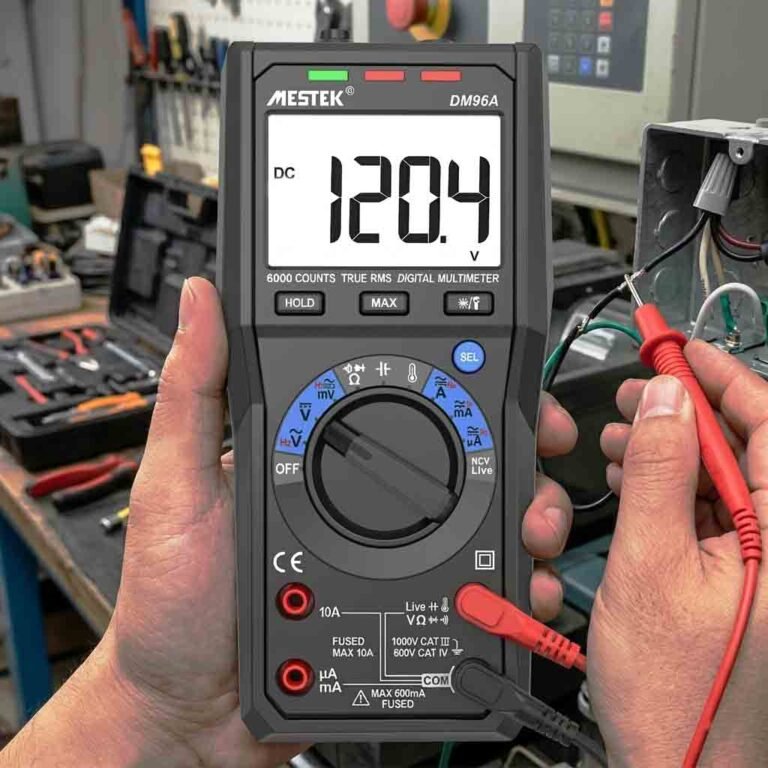
Mestek DM96A is an automatic industrial multimeter equipped with a maximum value lock button and temperature measurement function. It has diode test and continuity test alarms.
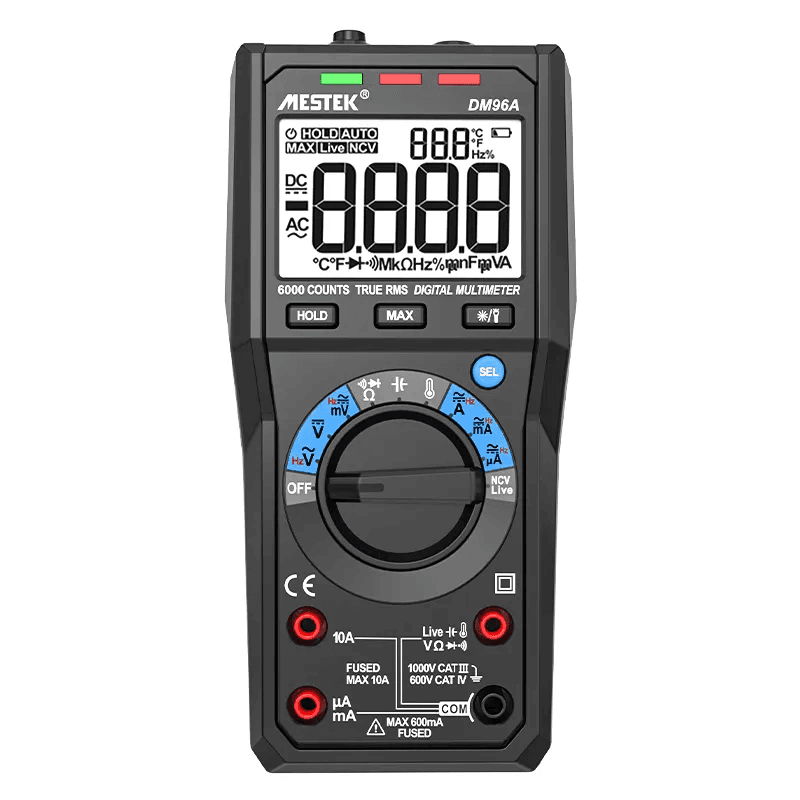
Pros:
High-resolution digital display
Data retention function
High cost performance
Cons:
Non-compact industrial multimeter, large size, not suitable for carrying around.
| True RMS | DC Voltage | AC Voltage | DC Current | AC Current |
| √ | 1000V | 750V | 10A | 10A |
Hioki DT4282
The Hioki DT4282 is a high accuracy 60,000 count digital multimeter with direct 10A input and all the functions and features required for advanced testing in laboratories and R&D departments.

Pros:
Fast sampling rate
Suitable for dynamic signal measurement
High-precision display of 60,000 counts
Cons:
The price is relatively expensive, the volume is large, and it is not suitable for carrying around.
| True RMS | DC Voltage | AC Voltage | DC Current | AC Current |
| √ | 1000V | 1000V | 10A | N/A |
Kyoritsu 1051
Kyoritsu 1051 is also a high-precision industrial multimeter with a low-pass filter for motor drive measurement and a terminal shield to prevent the wrong test lead from being inserted into the current terminal.

Pros:
0.02% high-precision measurement
Multiple measurement modes
Suitable for laboratories and high-end electronic engineering
Cons:
Not suitable for beginners or those on a tight budget.
| True RMS | DC Voltage | AC Voltage | DC Current | AC Current |
| √ | 1000V | 1000V | 10A | 10A |
Keysight U1253B
The Keysight U1253B has a built-in frequency counter and programmable square wave generator, internal rechargeable lithium battery, data logging and USB connectivity.

Pros:
0.025% high accuracy
High resolution OLED display
Cons:
OLED screens have poor visibility under strong light, and the lifespan of OLED displays is limited.
| True RMS | DC Voltage | AC Voltage | DC Current | AC Current |
| √ | 1000V | 1000V | 10A | 10A |
EX505A
The EX505A is a heavy-duty, true-rms industrial multimeter ideal for electricians, HVAC professionals and technicians who want to test electrical equipment for accuracy, durability and safety.

Pros:
IP67 waterproof and dustproof
Durable and drop-resistant
High cost performance
Cons:
Non-compact industrial multimeter with average range switching speed.
| True RMS | DC Voltage | AC Voltage | DC Current | AC Current |
| √ | 1000V | 1000V | 10A | 10A |
UNI-T UT61E+
The UNI-T UT61E+ multimeter has rich functions and a high safety rating of C AT IV 600 V, it is suitable for advanced electronic and electrical users.

Pros:
22,000 count high resolution display
USB connectivity
Data logging
Cons:
The display contrast is average and the functions are relatively complicated.
| True RMS | DC Voltage | AC Voltage | DC Current | AC Current |
| √ | 1000V | 1000V | 10A | 10A |