Infrared Thermometer vs Thermal Camera: What’s the Difference

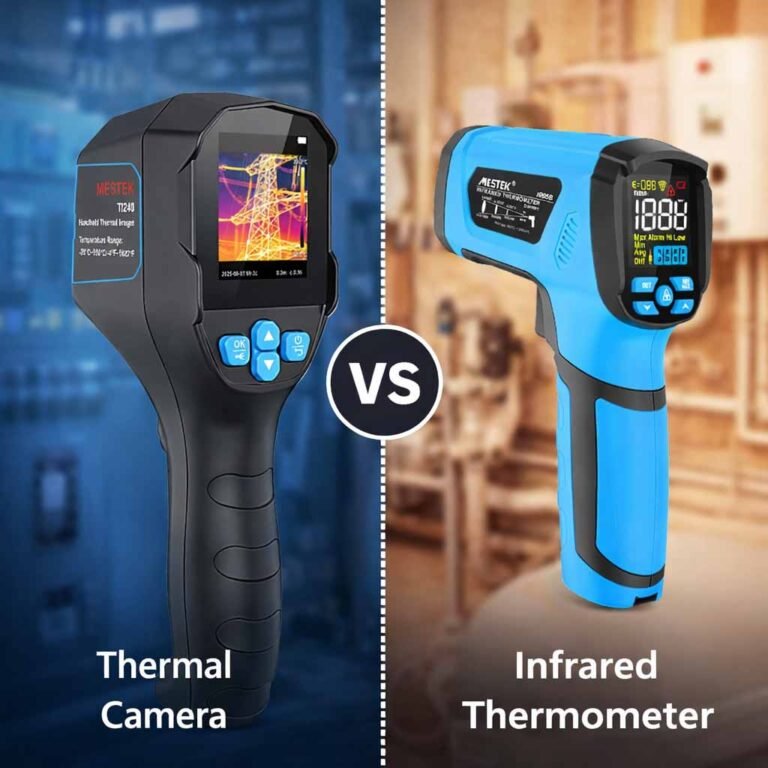
When comparing an infrared thermometer vs thermal camera, both tools measure temperature without contact, but they serve different purposes. Understanding the difference helps you choose the right tool for HVAC, electrical work, or industrial inspection.

What Is an Infrared Thermometer?

An infrared thermometer measures temperature at a single point by detecting infrared radiation. It provides a quick reading and is ideal for fast checks.

These devices are commonly used for HVAC systems, engine diagnostics, cooking surfaces, and basic electrical inspections. They are affordable, portable, and easy to use.

What Is a Thermal Camera?

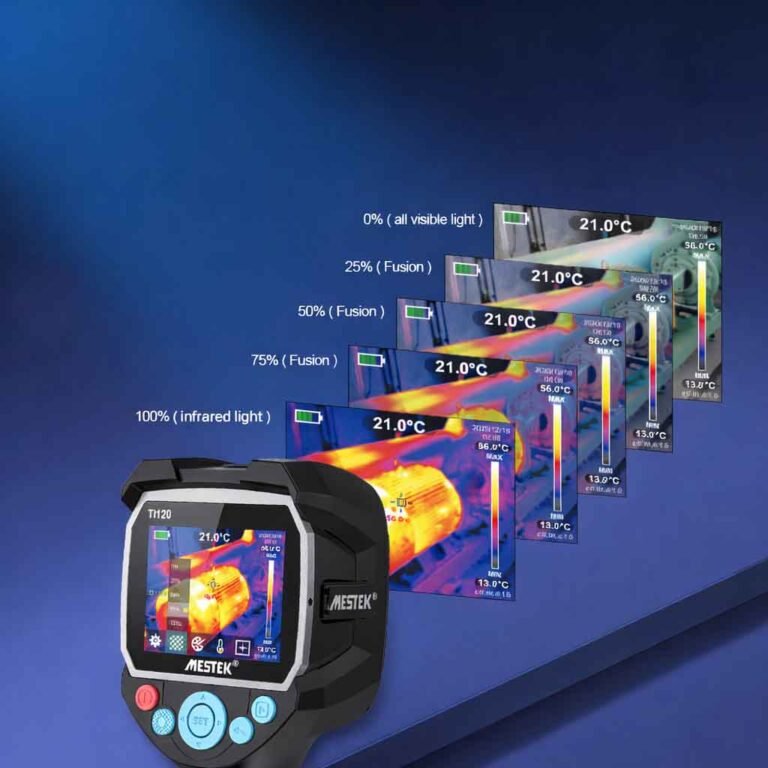
A thermal camera captures a full thermal image instead of a single reading. It shows temperature distribution using color variations, helping users identify hot and cold areas instantly.

Thermal cameras are widely used in building inspection, electrical diagnostics, and predictive maintenance, where identifying hidden issues is critical.

Key Differences Between Infrared Thermometer and Thermal Camera

Measurement Type

Infrared thermometers measure a single point, while thermal cameras capture thousands of points to create a full image.

Visualization

Infrared thermometers provide only a number. Thermal cameras display a visual heat map, making it easier to detect problems.

Accuracy in Complex Situations

In simple tasks, both tools work well. However, in complex systems, thermal cameras are more effective because they reveal hidden hotspots.

Coverage

Infrared thermometers rely on distance-to-spot ratio, meaning accuracy depends on distance. Thermal cameras use a wider field of view, allowing faster scanning of large areas.

Cost(H3)

Infrared thermometers are budget-friendly and suitable for everyday use. Thermal cameras are more expensive but offer advanced diagnostic capabilities.

When Should You Use an Infrared Thermometer?

Use an infrared thermometer when you need fast, simple measurements. It works best when the target is clear and only one point needs to be measured.

Common uses include checking equipment temperature, HVAC systems, and quick inspections.

When Should You Use a Thermal Camera?

A thermal camera is better for detecting hidden problems and analyzing temperature patterns. It is ideal for electrical systems, building insulation, and industrial maintenance.

Which One Should You Choose?

Choosing between an infrared thermometer vs thermal camera depends on your needs. For quick checks and affordability, an infrared thermometer is sufficient. For detailed diagnostics and large-area inspection, a thermal camera provides more value.

Final Thoughts

Infrared thermometers and thermal cameras serve different roles. One provides fast point measurements, while the other offers a complete thermal picture. Selecting the right tool ensures better efficiency and more accurate results.
Share our interesting knowledge and stories on social media

Have questions? Get a quote

Want to learn more? Click the button now.

More Posts>>>

Learn how to identify line and load wires safely. Use a multimeter or voltage tester to understand wiring differences and avoid hazards.

How to Identify Line and Load Wires Safely and Accurately

Understanding the difference between line and load wires is essential for anyone working with electrical systems. Whether you are installing a switch, replacing an outlet, or troubleshooting a circuit, correctly identifying line and load wires helps prevent electrical hazards, equipment damage, and wiring errors. What Are Line and Load Wires Before identifying wires, it is important to understand their roles in an electrical circuit. What Is a Line Wire? The line wire carries electrical power from the power source (such

The image shows what an infrared thermal imager is.

What Is an Infrared Thermal Imaging Camera?

What if you could see heat instead of light? An infrared thermal imaging camera makes that possible. It detects invisible heat energy and turns it into a visual image of temperature differences. Unlike regular cameras that rely on visible light, thermal cameras work in total darkness. They can also operate in smoke, fog, and other low-visibility conditions. Thermal cameras are widely used in electrical inspections, industrial maintenance, and building diagnostics. They help professionals detect problems the naked eye cannot see,

The picture depicts a worker using a multimeter to check for socket malfunctions.

How to Use a Multimeter to Check a Faulty Socket

Household sockets can stop working for several reasons, including loose wiring, a blown fuse, tripped circuit breakers, or worn out internal connections. Sometimes the problem is obvious, but often it requires proper testing to confirm whether the socket itself is faulty. That’s where understanding how to use a multimeter to check a faulty socket becomes essential. A multimeter is one of the easiest and most reliable tools for diagnosing electrical outlet problems. It can measure voltage, resistance, and continuity, helping

The diagram illustrates the tools needed to test a relay using a multimeter.

How to Test a Relay with a Multimeter

Relays are small but essential components used in cars, appliances, HVAC systems, industrial equipment, and countless electronic devices. Their job is simple: they use a low power signal to safely and efficiently control a higher power circuit. Because relays switch electrical loads, they experience wear over time. Burnt contacts, damaged coils, or internal mechanical failure can cause them to stop working correctly. When a device suddenly stops turning on or won’t turn off, a faulty relay is often the cause.

Get more information

Scroll to Top