Infrared thermometer that challenge high temperatures

In high temperature environments, traditional contact thermometers have been unable to cope with these complex challenges. Some infrared thermometer also endanger the safety of operators in high temperature, high corrosion, or high pressure environments because the measurement distance is too close.
IR05B Infrared thermometer

Demand from industrial production

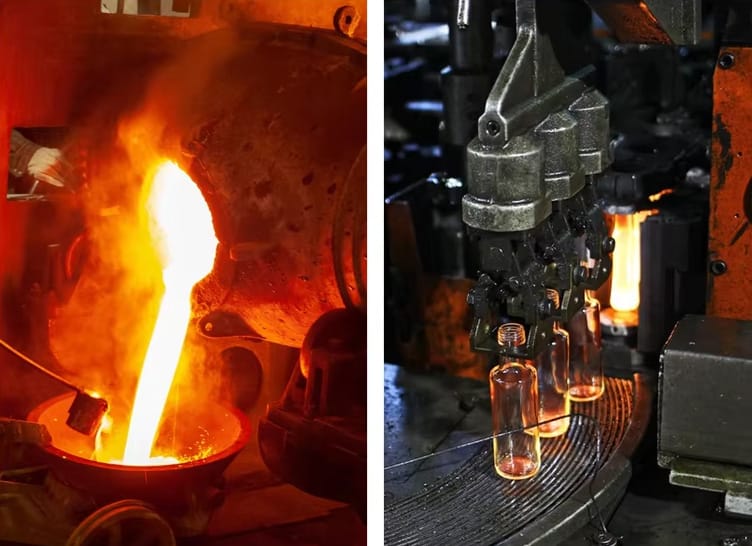
In industrial working environments, the surface temperature of steel can reach over 1000~2000°C. And the overheating problem of high-temperature equipment is the most important issue for operators. At this time, an infrared thermometer that can detect high temperatures is very important.

Safety warning

Infrared thermometers can continuously monitor and quickly respond to industrial production scenarios such as high temperature and high pressure environments, explosions, and leakage of overheated equipment and instruments.

Accuracy and calibration

In high temperature scenarios, the inside of the infrared temperature gun is easily affected by metal materials (containers for storing liquid steel) and cause measurement errors. We all know that this kind of environmental error is of the essence.

Applicability to extreme environments

After eliminating pollution, high temperature, and electromagnetic interference environments, we need to see real data during the measurement process. At this time, the measurement deviation of the infrared thermometer is particularly important.

Research and development of MESTEK infrared thermometer for high temperature characteristics

In response to all the above pain points. MESTEK has developed a series of non-contact infrared thermometers that can detect high-precision and high-temperature conditions: the IR05 series of industrial infrared thermometers. In particular, the IR05B model of infrared thermometer can perform accurate measurements and early warnings in high-temperature, high-pressure, and high-risk environments.

IR05A Infrared Thermometer - 50:1 Distance-to-Object Ratio

The IR05 series infrared thermometer has a (50:1 distance ratio). IR05: -40°C~1200°C, IR05A: -40°C~1600°C, IR05B: -40°C~2000°C. Different models can meet the needs of different scenarios and different operators.
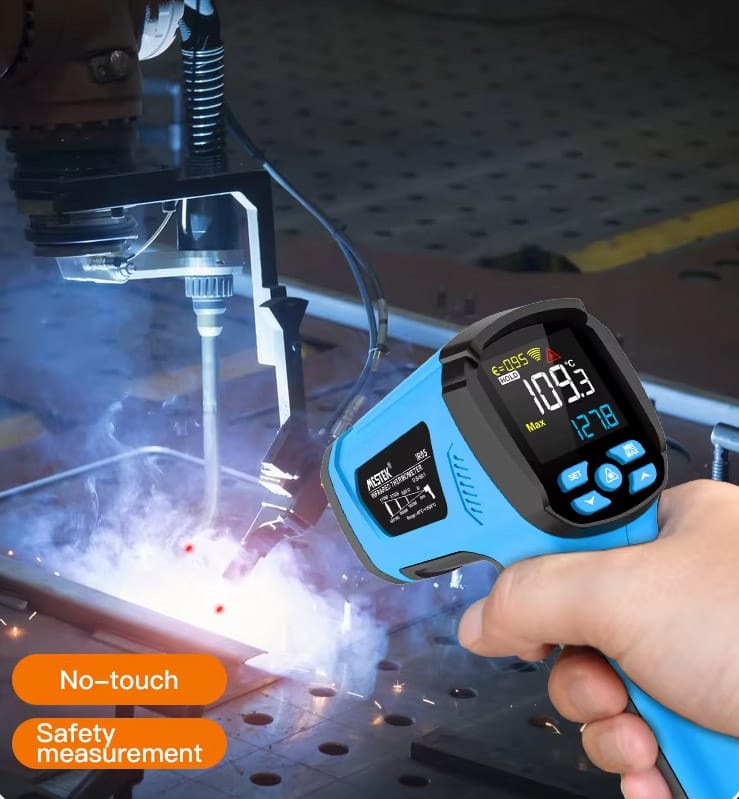
The IR05 series infrared thermometer has a response rate of 0.5 seconds.This a data obtained by the engineering team in the continuous adjustment of the equipment. It allows operators to measure the temperature of the environment in a very short time, which greatly reduces the risk of working in a high-risk environment. At the same time, the measurement resolution of the IR05 model is 0.1°C.
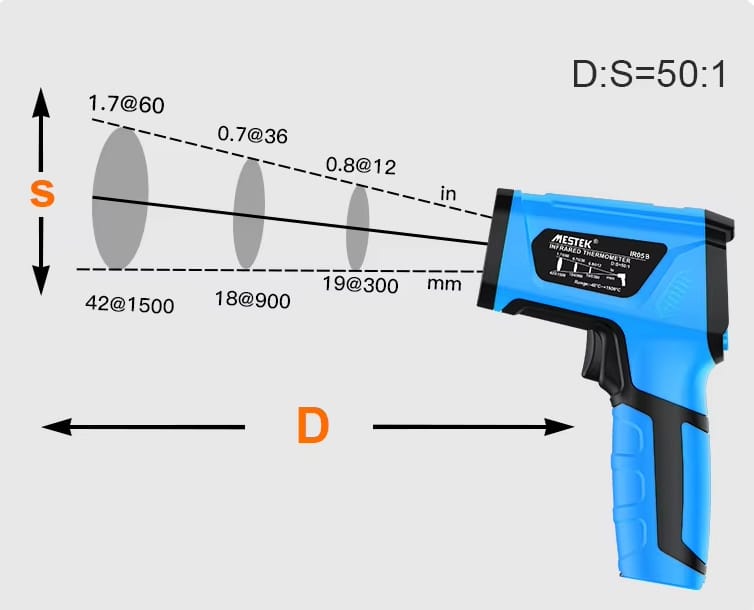
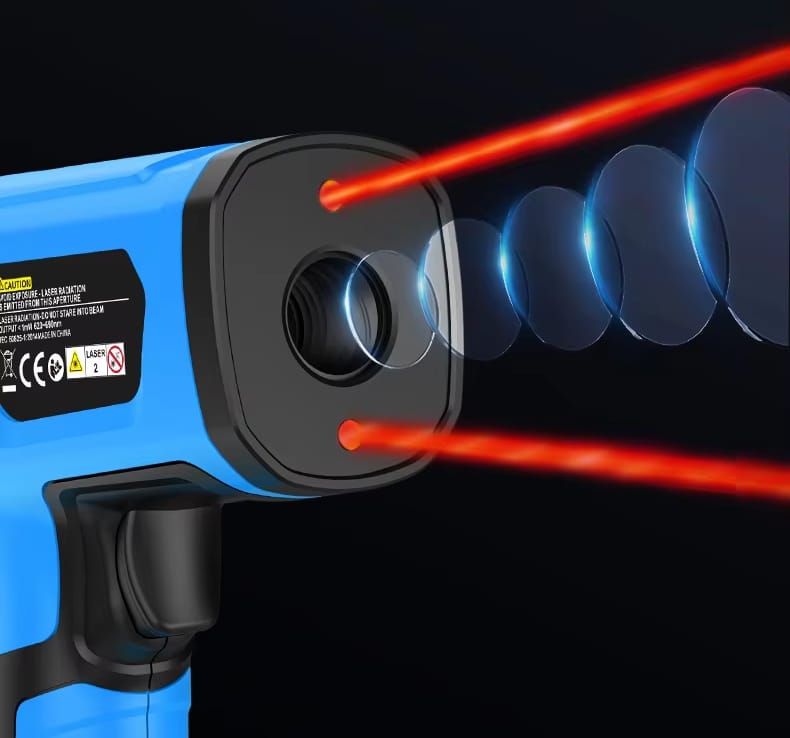
In practical applications, the dual-range laser indicator can measure the temperature of objects very accurately. Solving the problem of long-distance aiming deviation. Its 0.1~1.0 emissivity can be adjusted as needed. This infrared thermometer series has high and low temperature warnings. And can automatically record the maximum, minimum, average and deviation values ​​in terms of data.

In the current high-temperature working environment.MESTEK infrared thermometer is not only a temperature measurement tool, but also a guardian of safe production.
Share our interesting knowledge and stories on social media

Have questions? Get a quote

Want to learn more? Click the button now.

More Posts>>>

Learn how to identify line and load wires safely. Use a multimeter or voltage tester to understand wiring differences and avoid hazards.

How to Identify Line and Load Wires Safely and Accurately

Understanding the difference between line and load wires is essential for anyone working with electrical systems. Whether you are installing a switch, replacing an outlet, or troubleshooting a circuit, correctly identifying line and load wires helps prevent electrical hazards, equipment damage, and wiring errors. What Are Line and Load Wires Before identifying wires, it is important to understand their roles in an electrical circuit. What Is a Line Wire? The line wire carries electrical power from the power source (such as a breaker panel) to a device. It is the incoming energized conductor that supplies voltage to switches, outlets, or

The image shows what an infrared thermal imager is.

What Is an Infrared Thermal Imaging Camera?

What if you could see heat instead of light? An infrared thermal imaging camera makes that possible. It detects invisible heat energy and turns it into a visual image of temperature differences. Unlike regular cameras that rely on visible light, thermal cameras work in total darkness. They can also operate in smoke, fog, and other low-visibility conditions. Thermal cameras are widely used in electrical inspections, industrial maintenance, and building diagnostics. They help professionals detect problems the naked eye cannot see, such as overheated wires or hidden heat loss. This guide explains how infrared thermal imaging works, what it can detect,

The picture depicts a worker using a multimeter to check for socket malfunctions.

How to Use a Multimeter to Check a Faulty Socket

Household sockets can stop working for several reasons, including loose wiring, a blown fuse, tripped circuit breakers, or worn out internal connections. Sometimes the problem is obvious, but often it requires proper testing to confirm whether the socket itself is faulty. That’s where understanding how to use a multimeter to check a faulty socket becomes essential. A multimeter is one of the easiest and most reliable tools for diagnosing electrical outlet problems. It can measure voltage, resistance, and continuity, helping you determine whether power is reaching the socket and whether the internal wiring is intact. This article explores everything you

The diagram illustrates the tools needed to test a relay using a multimeter.

How to Test a Relay with a Multimeter

Relays are small but essential components used in cars, appliances, HVAC systems, industrial equipment, and countless electronic devices. Their job is simple: they use a low power signal to safely and efficiently control a higher power circuit. Because relays switch electrical loads, they experience wear over time. Burnt contacts, damaged coils, or internal mechanical failure can cause them to stop working correctly. When a device suddenly stops turning on or won’t turn off, a faulty relay is often the cause. Fortunately, diagnosing a relay is not complicated. A digital multimeter is the easiest and most reliable tool for checking relay

Get more information

Scroll to Top