How to Choose a Laser Range Finder for Home Renovati

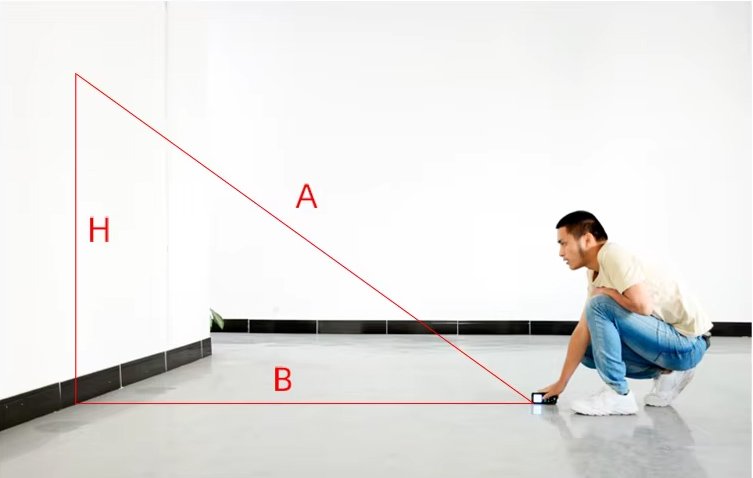
The image depicts workers using a laser rangefinder.

Whether you’re remodeling your kitchen, redesigning a living room, or upgrading an entire floor, precision is everything. That’s where a laser range finder comes in. Unlike traditional tape measures, laser measuring tools offer fast, accurate, and hassle-free measurements—especially when working alone or measuring awkward spaces.

But with so many models on the market, how do you choose the right laser range finder for home renovation? Instead of overwhelming you with technical jargon, this guide gets straight to the point—what the specs mean, how the features perform, and which tool makes the most sense for your job.

Why a Laser Range Finder is Ideal for Home Renovation

Laser range finder are not just tools—they’re time-savers. Here’s why they’re perfect for interior projects:

One-person operation: No need for an extra pair of hands to hold the tape.

Long-distance accuracy: Measure across rooms, high ceilings, or diagonals with ease.

Speed: Get instant measurements with one click.

Compact and portable: Fits in your pocket—no bulky reel to carry.

Key Specifications to Consider

When choosing a laser measuring tool for your renovation project, focus on these core specs:

FeatureWhy It Matters
Measuring RangeFor most home projects, a range of 30–100 meters (98–328 feet) is ideal. It covers standard room and floor distances.
AccuracyLook for a tolerance of ±2mm (±0.08 inches) or better for precise cuts and spacing.
Display TypeA backlit or color display improves visibility in low-light or busy job sites.
Measurement ModesUseful modes include area, volume, continuous measurement, and Pythagorean mode for indirect measurement.
Memory & StorageBuilt-in memory lets you save multiple measurements for later use—ideal for room-by-room planning.

Top Features to Look For

When comparing laser rangefinders, focus on features that improve your actual workflow:

  • Fast response time (<0.25s) for rapid measuring
  • User-friendly interface with minimal button presses
  • Auto shut-off to save battery life
  • Supports switching between digital units

Spec-Based Comparison Example

Here’s how a laser range finder like the MESTEK S6 stacks up for home use:

FeatureMESTEK S6(100m)
Measuring Range0.05m-100m
Accuracy±2mm (±0.08 inches)
DisplayDigital display screen
Measurement FunctionsDistance, area, volume, Pythagoras, add/subtract
Storage Memory20 sets
Laser Type<1mW, Class 2
UnitsMeters/inches/feet

This combination of long range, compact form, and multi-functionality makes it ideal for room layout, cabinetry, flooring installation, and more.

Final Tips Before You Buy

  • Match tool to task: Small room jobs? A 40m model is fine. Whole-home renovations? Go 80m–100m.
  • Check lighting: For dim interiors, prioritize a tool with a bright or backlit display.
  • Stick with trusted brands: Ensure quality and post-purchase support.
Share our interesting knowledge and stories on social media

Have questions? Get a quote

Want to learn more? Click the button now.

More Posts>>>

Automotive engineers are using the MESTEK BT10 battery tester to test 12V batteries in automobiles.

How to Choose the Best Battery Tester for Car Batteries: A Complete Guide

Modern vehicles rely heavily on electrical systems. The battery is at the center of everything from starting the engine to powering onboard electronics. Yet most drivers only think about their battery when the car refuses to start. That’s where a reliable diagnostic tool becomes essential.  Choosing the best battery tester for car batteries is not just about checking voltage. It’s about understanding your battery’s actual condition and its overall health. A good tester can help you avoid unexpected breakdowns, reduce

Fork Meter vs Flexible Clamp Meter: Which One Should You Use?

Fork Meter vs Flexible Clamp Meter: Which One Should You Use?

Choosing the right electrical testing tool depends heavily on the type of work you do. While both fork meters and flexible clamp meters are designed for current measurement, they solve very different problems in real-world electrical environments. A fork meter is typically designed for fast and convenient electrical diagnostics, while a flexible clamp meter is built for measuring high-current conductors in difficult-access environments. Understanding these differences can help electricians, HVAC technicians, and maintenance professionals choose the right tool for the

Flexible Clamp Meter is testing cables.

How Flexible Clamp Meter Simplify High Current Measurements

Traditional clamp meters face significant limitations when measuring high current in industrial settings. Large conductors, limited panel access, and densely packed switchgear create scenarios where rigid jaw designs simply do not work. Electricians and maintenance teams working on three phase systems or crowded electrical panels often struggle to position standard meters around oversized cables. The flexible clamp meter addresses these challenges directly. It offers a practical solution for difficult measurement environments where precision and accessibility matter most. This article explores

MESTEK circuit breaker finder is diagnosing the cause of false alarms.

Why Is My Circuit Breaker Finder Picking the Wrong Breaker?

A circuit breaker finder is one of the easiest tools for identifying which breaker controls a specific outlet or circuit. However, many homeowners quickly discover that the tool does not always point to the correct breaker. Sometimes multiple breakers beep at the same time, while other times the receiver identifies a completely different circuit. This problem is surprisingly common. According to discussions from electricians, DIY forums, and troubleshooting threads, false positives are usually caused by electrical interference rather than a

Get more information

mestek product collection