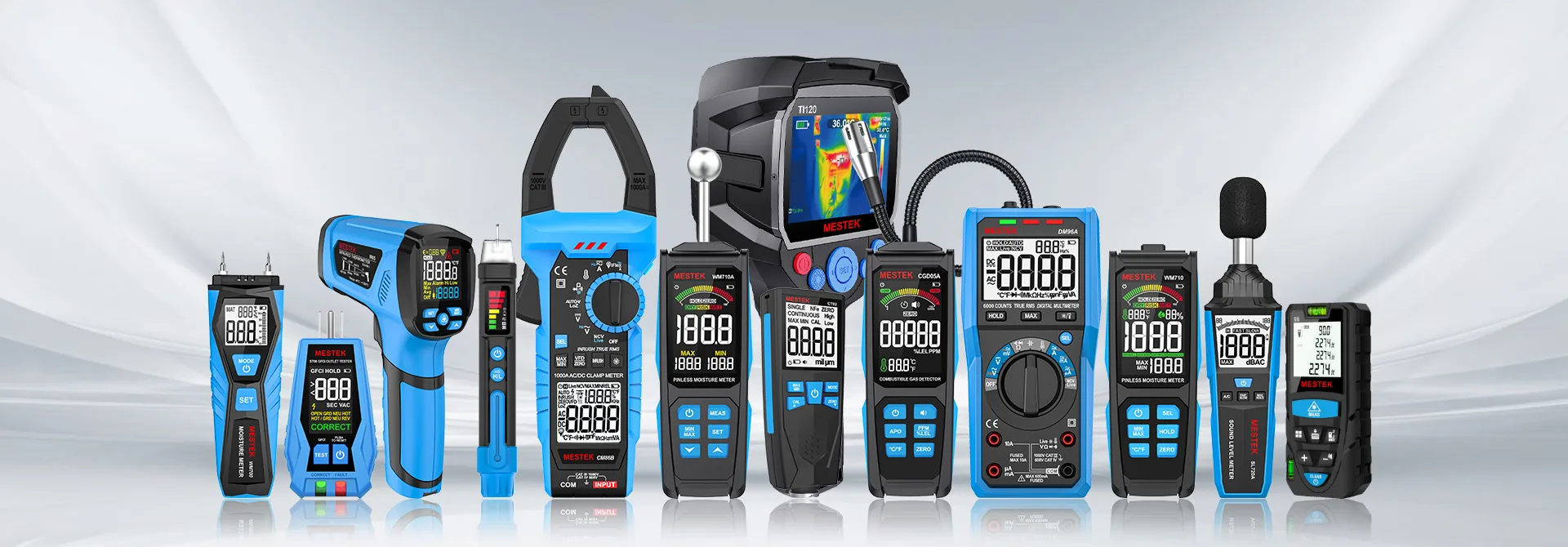
When working on electrical systems, technicians often need to check both voltage and current without interrupting the circuit. A clamp voltage meter makes this task easier because it can measure current by clamping around a single conductor and also read voltage through its test leads. This allows electricians to check outlets, panels, or automotive wiring without disconnecting anything, reducing downtime and the chance of wiring errors.
How a Clamp Voltage Meter Works
A clamp meter uses an open jaw (clamp) to detect current flowing through a conductor using the principle of electromagnetic induction. Modern clamp voltage meters combine current and voltage functions, meaning you can:
- Measure AC/DC current without breaking the circuit
- Test AC/DC voltage through standard test leads
- Perform continuity, resistance, and sometimes frequency checks
- This makes clamp meters an all-in-one solution for home, automotive, and light industrial applications.
Best Practices for Measuring Voltage
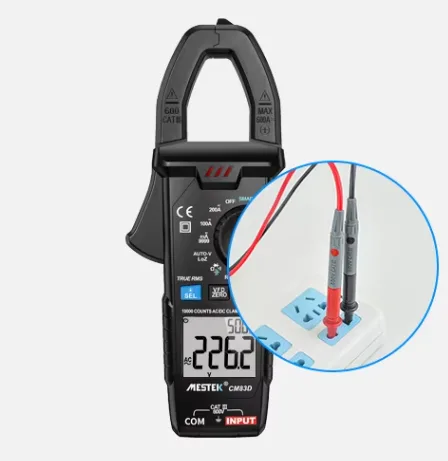
To ensure accuracy and safety, keep these best practices in mind:
Choose the Right Mode
Use the voltage function for AC or DC testing.
Make sure the range covers your target voltage (e.g., 0–600V AC for most home and industrial tasks).
Connect Test Leads Correctly
Plug the black wire into the COM port and the red wire into the Input port.
Attach the leads to the two test points (neutral and live for AC, positive and negative for DC).
Avoid Contact with Bare Wires
Always hold the insulated parts of the probes.
Stand on dry surfaces and avoid wet environments.
Wait for a Stable Reading
Hold the probes steadily until the display stabilizes.
For fluctuating signals, use the Hold or Max/Min function if your clamp meter supports it.
Where to Use a Clamp Voltage Meter
Different electrical tasks require different approaches. Here are the most common usage scenarios:
1. Home Electrical Maintenance
Checking wall outlets (110V or 220V)
Verifying breaker outputs and light switch wiring
Troubleshooting appliances or small devices
Tip: Choose a meter with CAT III 600V safety rating for home use
2. Automotive & Low-Voltage DC Circuits
Testing 12V car batteries or 24V truck systems
Checking voltage drop across fuses or relays
Maintaining small solar systems (12V/24V/48V)
Tip: DC voltage measurement is critical for diagnosing battery health
3. Industrial & Commercial Equipment
Monitoring 380V three-phase motors
Verifying voltage in control panels or distribution boxes
Diagnosing equipment failures or voltage imbalances
Tip: Choose a robust clamp meter with clear display and multiple test functions
Recommended Tool for Everyday Voltage Testing
The MESTEK CM83D clamp meter is ideal for home and light industrial users. It offers the following features:
- AC/DC voltage measurement up to 600V
- AC/DC current measurement without disconnecting the circuit
- Resistance and diode testing
- NCV function
- Auto-off to conserve battery power
Its compact design makes it ideal for electricians, automotive repair, and DIY troubleshooting.
Final Thought
Using a clamp voltage meter correctly improves both safety and efficiency in electrical work. Whether you are checking outlets at home, diagnosing a car battery, or maintaining industrial equipment, following proper measurement practices ensures reliable results.
If you’re looking for a reliable tool to handle all these scenarios, a model like MESTEK clamp voltage meter CM83D provides a practical balance of accuracy, safety, and ease of use—perfect for everyday electrical diagnostics.