Circuit breakers are essential safety devices that protect homes and businesses from electrical hazards. When the power suddenly goes out in part of a building, finding the correct circuit breaker quickly becomes a priority. These electromechanical devices interrupt electrical current when it exceeds safe limits, helping prevent overheating and electrical fires.
However, locating the exact breaker that controls a specific outlet, room, or appliance can be confusing, especially in homes with unlabeled panels. Using a circuit breaker finder can make the process easier, particularly for homeowners unfamiliar with their electrical layout. This guide explains how to find a circuit breaker safely, how circuit breaker finder tools work, and how to label your panel correctly for future use.
Understanding Circuit Breakers
A circuit breaker acts as a guardian for your home’s electrical system, automatically interrupting current flow when it detects problems. A circuit breaker is an electrical safety device designed to protect circuits from damage caused by excessive current. It serves as an automatically operated electrical switch that interrupts current flow after protective mechanisms detect a fault.
Inside each breaker, you’ll typically find either a spring-loaded mechanism held in place by an electromagnet or a bimetallic strip. When electrical power enters your home through a service panel, it is distributed through individual breakers, each controlling the flow of electricity to a specific area of your house.
Why circuit breakers trip
Circuit breakers trip for three primary reasons.
- First, circuit overloads occur when too many devices draw more current than a circuit is designed to handle. For instance, running multiple high-power appliances simultaneously on the same circuit can exceed its rating.
- Second, short circuits happen when a hot wire touches a neutral wire, creating a dangerous surge with very little resistance. This situation causes extremely high current flow, potentially leading to fires.
- Third, ground faults occur when a hot wire contacts a ground wire or a grounded portion of an appliance or junction box. Both short circuits and ground faults must trigger an immediate breaker response to prevent electrical fires.
Difference between fuses and breakers
Fuses and circuit breakers both protect electrical systems, but they operate differently. Fuses melt and break the circuit when overloaded. They work once and must be replaced. Circuit breakers trip internally and can be reset and reused.
Fuses typically react faster (about 0.002 seconds), while circuit breakers respond in roughly 0.02–0.05 seconds. Circuit breakers also provide broader protection, can act as on/off switches, and may include features such as ground fault protection.
If you are using a circuit breaker finder tool, the first step is to check whether your electrical panel has fuses or circuit breakers before starting any electrical work.
How To Find a Circuit Breaker?
Finding the correct circuit breaker is crucial when performing electrical work, resolving a power issue, or enhancing home safety. Whether you’re replacing a light fixture, troubleshooting a dead outlet, or responding to a tripped breaker, knowing how to locate and identify the right breaker saves time and prevents accidents.
Follow the steps below to do it safely and efficiently.
Step 1: Locate the Circuit Breaker Panel
The first step is to locate the circuit breaker panel, which controls the electrical circuits in your home. This panel may also be referred to as a breaker box, electrical panel, load center, or service panel, but all serve the same purpose.
Most homes place the panel in:
- Garages
- Basements
- Utility rooms
- Laundry areas
- Hallway or storage closets
Apartments and condos often have panels in entry closets, behind doors, or kitchen cabinets. Older buildings may use shared electrical rooms.
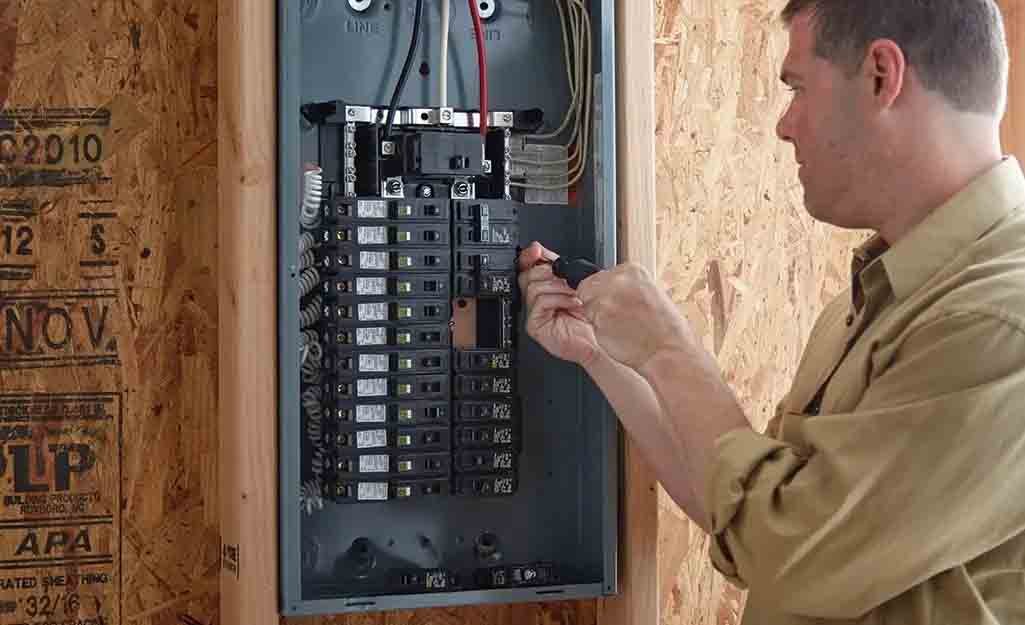
The panel is typically a metal box with a hinged door. Inside, you will see rows of switches that may be labeled or unlabeled. A larger switch at the top or bottom is usually the main breaker, which shuts off power to the entire building.
Safety reminder: Do not remove the panel cover or touch any exposed wiring. Only operate the breaker switches.
Step 2: Identify the Right Breaker Manually
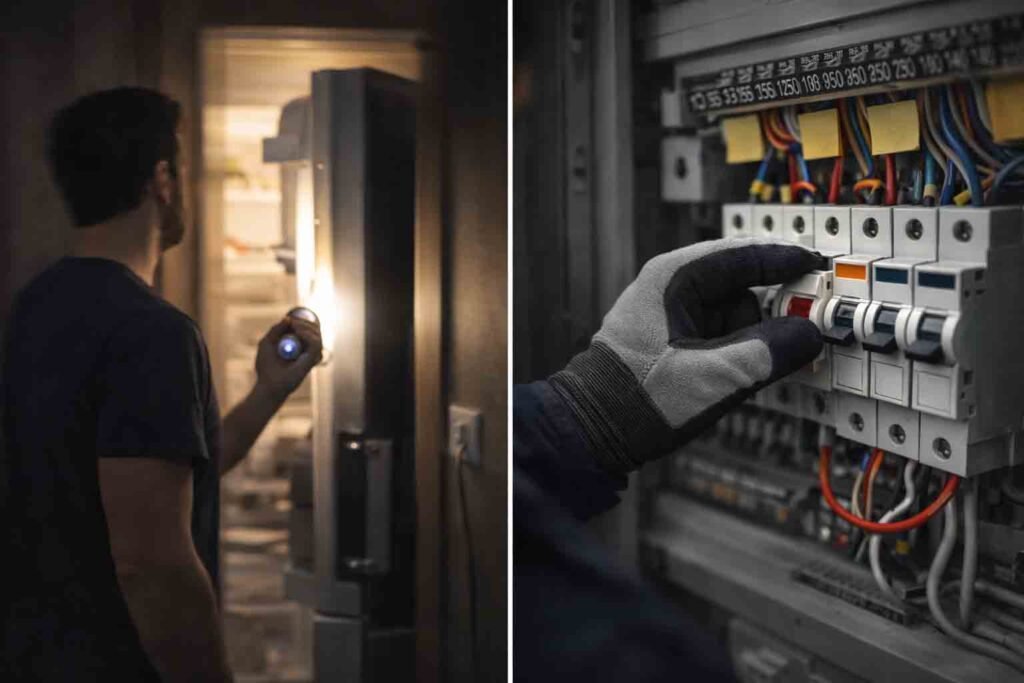
If your panel is unlabeled or poorly labeled, you can still find the correct breaker using a simple manual method.
The Two-Person Method
This approach works best with two people.
- Turn on the light, appliance, or outlet you want to work on.
- One person stays in the room to observe the device.
- The second person flips the breakers off one at a time.
- Once the device shuts off, you’ve identified the correct breaker.
- Turn the breaker back on and label it.
This method costs nothing and helps you understand how your circuits are distributed.
Doing It Alone
If you’re working solo, the same process applies, but you’ll need to walk back and forth between the panel and the room. While effective, it can be time-consuming in larger homes.
Step 3: Use a Circuit Breaker Finder for Faster Results
A Circuit Breaker Finder is one of the most efficient ways to locate the correct breaker without trial and error. It’s especially helpful in homes with complex wiring or when you don’t want to shut off multiple circuits.
How a Circuit Breaker Finder Works
The tool consists of two parts:
- Transmitter: Plugs into a live outlet or light socket
- Receiver: Scans breakers inside the panel
The transmitter sends a signal through the circuit. When the receiver detects that signal at the panel, it alerts you with a sound or visual indicator. This method allows you to pinpoint the correct breaker quickly without turning off power to unrelated areas.
How To Use Circuit Breaker Finder Tools Correctly
Accuracy depends on proper technique. Following proven methods for using a circuit breaker finder effectively ensures reliable results.
Basic Steps
- Plug the transmitter into a powered outlet on the circuit you want to identify.
- Go to the breaker panel with the receiver.
- Slowly scan each breaker from top to bottom.
- Note the breaker that triggers the strongest response.
- Flip that breaker off and confirm the outlet or device loses power.
If the outlet turns off, you’ve found the correct breaker.
Some users rely on digital breaker finders like the US standard Circuit breaker finder CBF01 Mestek when working with multiple outlets or unfamiliar panels.
Lights and Outlets on Different Circuits
In some homes, ceiling lights and wall outlets are wired separately. If the outlet turns off but the light stays on, the light is on a different circuit. Using a light socket adapter allows the transmitter to connect directly to the lighting circuit.
Step 4: Finding a Tripped Breaker
Sometimes you don’t need to test anything at all. If power is out in one area, the breaker may already be tripped.
How to Spot a Tripped Breaker
- The switch sits between ON and OFF
- A colored indicator may be visible
- The breaker feels loose compared to others
How to Reset It Safely
- Turn off or unplug devices on that circuit.
- Push the breaker firmly to OFF.
- Flip it back to ON in one smooth motion.
- Check if power is restored.
If it trips again right away, stop and check for an underlying issue before trying again. Repeated trips often indicate overloaded circuits, damaged cords, or wiring issues.
Step 5: Label Your Breaker Panel Properly
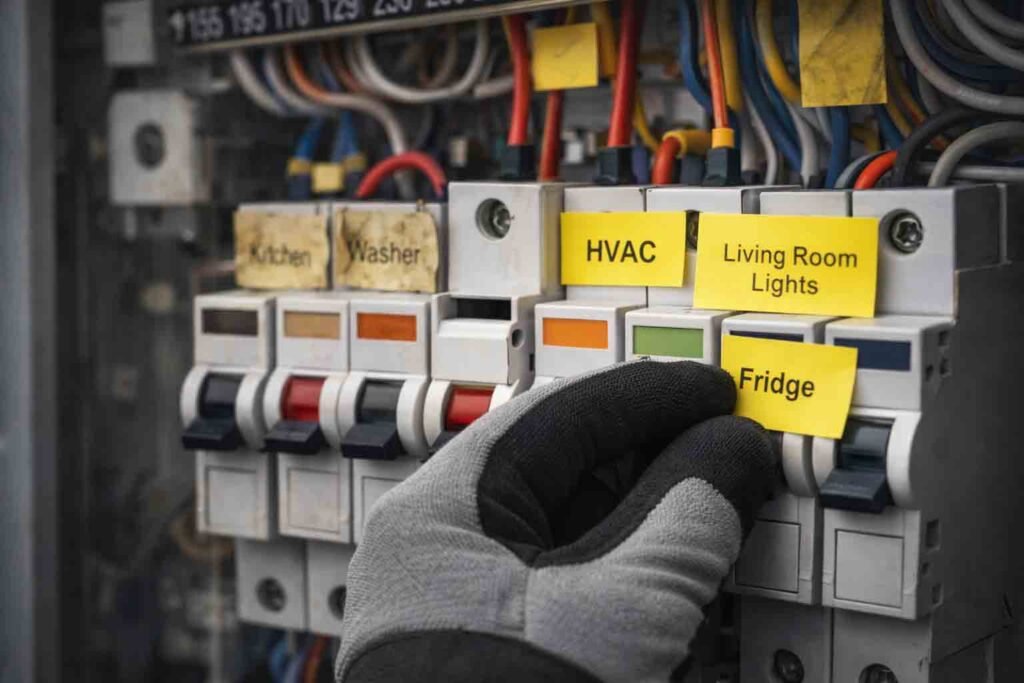
Once you’ve identified your breakers, labeling them correctly is one of the best long-term improvements you can make.
How to Label Effectively
- Use room names instead of vague labels
- Include major appliances (fridge, HVAC, washer)
- Avoid writing “outlets” without context
- Update labels if renovations are done.
You can stick labels right on the breakers, or tape a detailed circuit list to the inside of the panel door for quick reference. Digital notes on your phone also work well.
Clear labeling saves time during emergencies and makes future repairs much easier.
Safety Tips When Working With Breaker Panels
Working around electricity always requires caution.
- Always stand to the side when resetting breakers
- Never touch a panel with wet hands
- Keep the panel area clear and accessible
- Do not force a breaker that won’t reset
- Avoid repeated unnecessary switching
- Shut off the main breaker before major work
If you notice burning smells, buzzing sounds, or scorch marks, stop immediately and seek professional help.
When to Avoid DIY and Call an Electrician
Some situations require professional expertise:
- Breakers trip immediately after resetting
- Lights flicker throughout the house
- Outlets feel warm
- You hear crackling or buzzing from the panel
- Wiring appears damaged
- You need to open the panel or modify circuits
Electrical problems can escalate quickly. Safety should always be the top priority.
FAQs about Circuit Breaker Finder
1. What is the easiest way to find a circuit breaker?
The easiest method is using a Circuit Breaker Finder, as it eliminates guesswork and reduces the need to turn off multiple breakers manually.
2. What causes a circuit breaker to trip?
Overloaded circuits, short circuits, damaged cords, or faulty appliances are the most common causes of electrical issues.
3. Why does one breaker control multiple outlets?
Many homes use shared circuits to reduce wiring complexity. This is common in older buildings and requires careful identification.
4. Is it dangerous to flip breakers repeatedly?
Frequent unnecessary switching can stress breakers over time and disrupt sensitive electronics connected to the circuit.
5. Should I relabel my breaker panel after finding circuits?
Absolutely. Accurate labeling improves safety, speeds up future repairs, and helps others understand your electrical layout.
Conclusion
Finding the right circuit breaker doesn’t have to be confusing or risky. You can identify circuits quickly and safely by understanding how your electrical panel works, using systematic methods, and applying tools like a circuit breaker finder when appropriate. Once your breakers are labeled and documented, future electrical tasks become easier and safer to perform. Taking time to learn your breaker panel today delivers long-term peace of mind, especially when the lights suddenly go out.