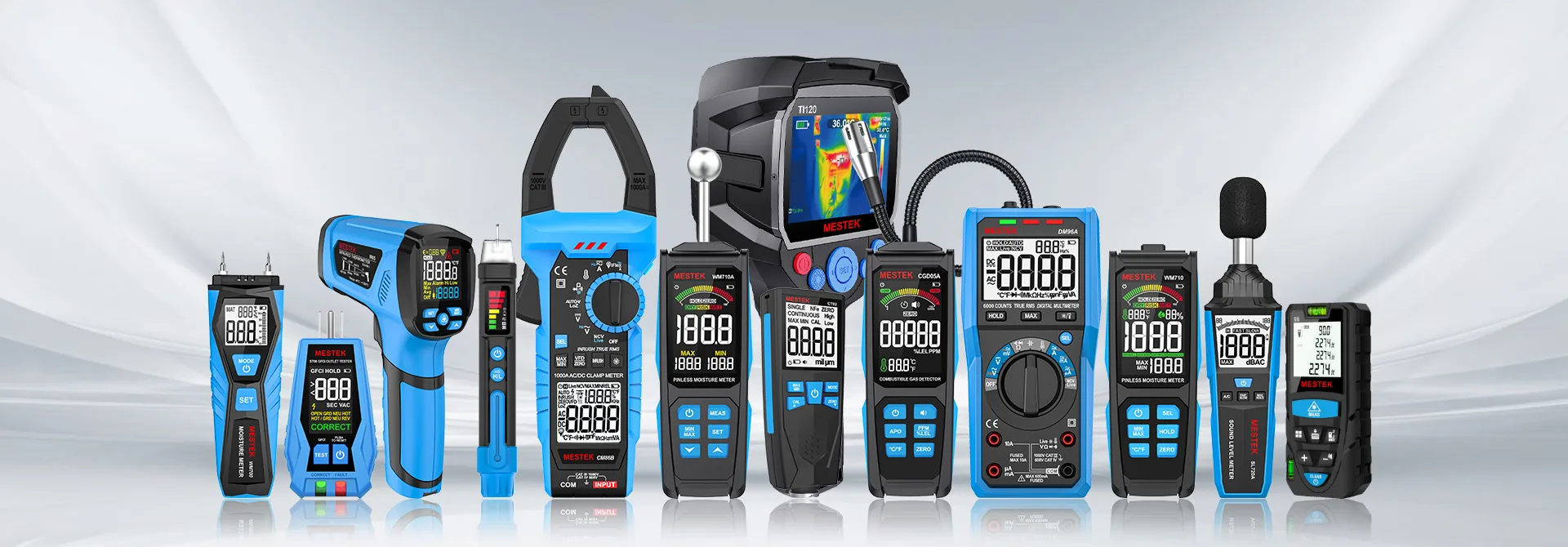
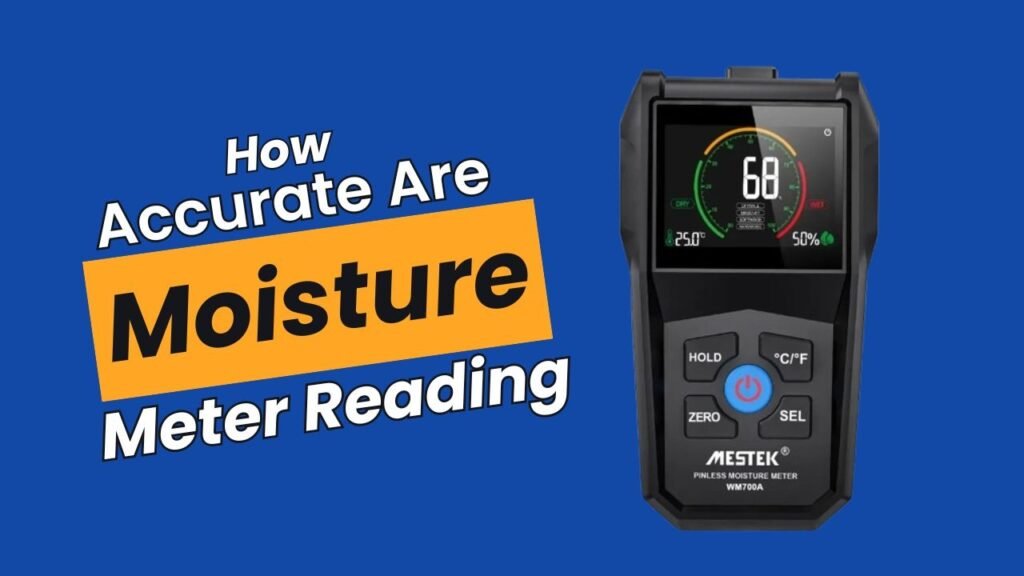
Moisture meters are widely used to detect hidden water problems, but many people still ask: How accurate are moisture meter readings, really? While high quality meters can deliver very precise results, not all devices perform the same. Accuracy depends on the meter type, the material being tested, and how correctly the tool is used. Small reading errors can lead to missed leaks, mold growth, or unnecessary repairs. Understanding what affects moisture meter accuracy helps homeowners and professionals trust their results. This article explores how moisture meters work, what accuracy you can realistically expect, and how to get more reliable readings in real world use.
What Does “Moisture Meter Accuracy” Mean?
Moisture meter accuracy describes how close a moisture meter’s reading is to the material’s true moisture content. This is often confused with precision, which simply means getting the same reading repeatedly. A meter can be very precise but still inaccurate if it consistently shows the wrong value. This is a common industry misconception. Many users assume consistent readings equal correct readings, which isn’t always true.
So, how accurate are moisture meters really? The answer depends on the material, calibration, and environment. Most professional moisture meters offer accuracy within a few percentage points relative to calibrated reference samples, under ideal conditions. These figures are typically based on laboratory testing, not real world job sites.
Different instruments measure moisture in different ways. Pin type meters measure electrical resistance between probes, making them more reliable for depth specific readings. This is why professionals often ask, Are moisture meters accurate for drywall? Pin type meters usually perform better for drywall, especially when moisture is behind the surface. Pinless meters, on the other hand, use electromagnetic signals and are better for quick surface scans.
When it comes to wood, species matters. Are wood moisture meters accurate? Yes, but only when the meter is properly calibrated for the specific wood type, since electrical properties vary widely between species.
How Moisture Meter Work
Many people ask how a moisture meter works and why the readings sometimes vary. Basically, the principle of working of moisture meters lies in the fact that water conducts electricity better compared to dry materials. In general, the accuracy of these moisture measuring devices depends on several key factors that users need to understand for reliable readings.
One key factor is material type. Different materials conduct electricity differently, which can lead to reading variations. Another factor is resistance. As moisture increases, electrical resistance usually decreases.
The measurement point depth also matters. Surface moisture may not show the real condition inside. Environmental factors like temperature and humidity could affect the readings, which means that any moisture reader needs proper calibration against such environmental conditions.
Pin vs Pinless Technology
Pin type meters measure electrical resistance between two pins inserted into the material. Accordingly, they provide direct readings at specific depths where moisture might be hiding.
In contrast, how do pinless moisture meters work? A pinless moisture meter, in contrast, uses electromagnetic waves to scan materials without leaving holes. Although convenient, they typically measure average moisture content over a larger area and can be affected by surface density variations.
Choosing between pin vs pinless moisture meters depends on the accuracy needs and surface sensitivity.
Material Differences and Effects
Different materials respond uniquely to moisture detection methods. For instance, a wood moisture reader or firewood moisture meter must account for species specific characteristics, as density greatly influences electrical resistance.
The Drywall moisture meter needs calibration adjustments because gypsum conducts electricity differently than wood. Notably, concrete presents particular challenges due to its varying composition and the presence of additives that can skew readings.
The depth of measurement also contributes significantly to accuracy. Surface moisture often differs from internal moisture levels.
Common Mistakes & Misinterpretations
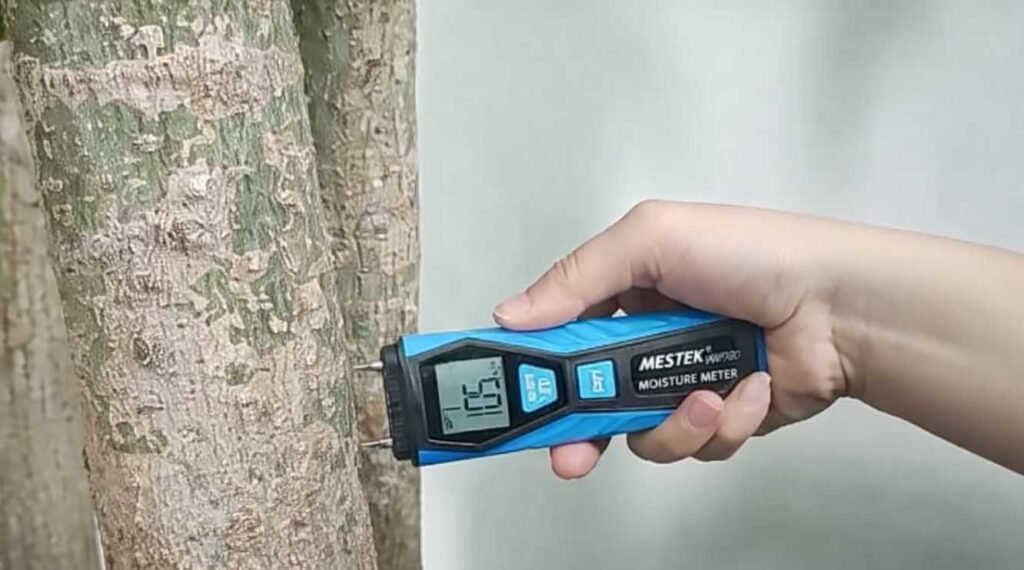
Many inaccurate moisture measurement results come from simple user errors rather than faulty devices. One of the most common mistakes is testing freshly painted, sealed, or treated surfaces. These coatings change electrical conductivity and can cause a moisture meter reading machine to show higher moisture than actually present. Surface condensation is another issue. It often makes dry materials appear wet.
Incorrect use of the moisture meter probe also leads to unreliable readings. Pinless meters must be held flat against the surface, while pin type probes need consistent insertion depth. Even small factors, such as nearby metal objects (keys, nails, or screws), can interfere with electromagnetic signals, especially with meters commonly sold as a moisture reader at Lowe’s.
Users also misinterpret results by:
- Not selecting the correct material setting (wood type, drywall, concrete)
- Ignoring temperature and humidity effects
- Taking only one reading instead of multiple spots
- Confusing surface moisture with deeper core moisture
Environmental conditions play a major role. High humidity, recent rainfall, or sudden temperature changes can temporarily skew readings. Finally, skipping regular calibration checks is a critical oversight. Over time, even high quality meters drift from factory accuracy, leading to consistently high or low readings.
Tips to Improve Accuracy
Achieving reliable results with moisture meters requires attention to proper testing techniques.
- Regular calibration is vital to ensure measurement accuracy. To assure baseline accuracy, meter readings should always be checked against a calibration block before taking actual readings or by following the manufacturer’s instructions on calibration.
- Taking repeat measurements greatly enhances the reliability when compared to single point testing. Professionals say that at least three readings for small areas and five or more for larger surfaces are essential. This helps them to establish both the localized wet spots and the general moisture level.
- Temperature also has a large effect on readings. Ideally, the meter and the material would be at room temperature for best results. Very high humidity environments, similarly, can impact measurements, and ambient conditions should therefore be considered when reporting results.
- Always test with the grain, not across the grain, when testing wood, as electrical resistance is directional. For drywall and building materials, set the testing instrument at consistent depths and distances from potential sources of water:
- Battery condition is important, too. Weakening batteries can give misleading readings. Replace them regularly to maintain instrument accuracy in professional applications; high quality meters from trusted manufacturers are available from Mestek Instruments for the most accurate results.
- Lastly, keep detailed records of readings over time, especially in ongoing projects. This helps in establishing trends and verifying if the moisture problems are getting better or worse with the remedy operations.
Interpreting Results by Material
When using a device to measure moisture in walls, it’s important to understand that moisture readings vary by material. Knowing the correct reference values helps homeowners avoid misjudging problems like hidden leaks or mold risk. Modern moisture sensors for home use have calibrated scales so users can clearly interpret readings for drywall and wood without professional tools.
Drywall Interpretation
Drywall is highly sensitive to moisture, so even small increases matter. With good drywall moisture meter accuracy, normal drywall readings typically fall between 0–1%. Levels above 1% may indicate elevated humidity, while 2% or higher often signals water intrusion or leaks that need attention.
A quality drywall moisture meter with specialized settings helps ensure accurate interpretation, as standard wood scales don’t translate directly to gypsum materials.
Wood Interpretation
Wood naturally contains moisture, so acceptable ranges are higher. Proper wood moisture reader interpretation considers the environment and wood type. For interior finished wood, readings between 6 to 10% represent optimal conditions. Exterior wood typically ranges from 9 to 14% in most climates.
Readings exceeding 15 to 17% signal potential decay risk, whereas levels above 20% indicate conditions favorable for rot and fungal growth. Various wood species absorb moisture differently, which affects interpretation. Hardwoods like oak generally tolerate slightly higher moisture percentages than softwoods.
For deeper guidance on normal levels, see this reference on drywall moisture levels. Choosing a dependable Wood moisture meter ensures accurate, material specific readings and better long term protection.
When to Use Which Meter Type
Selecting the best moisture meter type for a specific job dramatically impacts measurement accuracy. The choice between pin and pinless technologies often depends on the material being tested and the level of precision required.
Pin type moisture meters are best when you need precise and deep measurements. They work well for:
- Finding moisture at specific depths
- Testing layered materials like subfloors and hardwood flooring
- Checking wooden beams, joists, or furniture
- Locating exact water intrusion points
- Situations where small pin holes are acceptable
Because the pins penetrate the material, these meters give more accurate core moisture readings.
Pinless moisture meters are ideal for fast and non-invasive testing. Use them when:
- Scanning large areas quickly
- Testing finished or delicate surfaces
- Taking repeated measurements over time
- Checking uniform materials like drywall
- Doing initial inspections before deeper testing
For professionals, having both types provides flexibility throughout various jobs. To most homeowners, the preference for pinless models is due to ease of use and no surface damage.
Material density matters as well. Dense materials may require special calibration options. This moisture meter selection guide narrows the choices, but a proper recommendation for a moisture reader should be applicable to your specific application, whether for a do-it-yourself project or a professional restoration job.
For reliable recommendations on which is the best moisture meter for your particular need, visit Mestek Instruments where experts will guide you on a number of options that best suit your unique application requirements.
FAQs
What affects moisture meter accuracy?
Material type, density, temperature, surface conditions, calibration, and user technique are factors affecting accuracy. The most common causes of error are incorrect settings and environmental interference.
Are pinless meters less accurate than pin meters?
Not necessarily. Pin meters offer more depth specific accuracy, while pinless meters provide fast, non destructive scanning. Each serves different purposes.
How do I interpret a moisture meter reading?
Compare the readings to the known dry reference values for the same material. Percent readings are different from relative scales; context counts.
Which moisture meter is best for walls?
Pinless meters work well for initial wall scanning, while pin meters are better for identifying depth specific moisture. Digital meters with multiple modes offer the best versatility.
Can moisture meters detect hidden moisture?
Yes, within limits. Pin meters detect moisture at probe depth, while pinless meters sense subsurface moisture averages. Combining both methods gives the best results.
Conclusion
So, how accurate are moisture meter readings, really? The answer depends on understanding the tool, the material, and the method. High quality moisture meters can deliver reliable and repeatable results, but only when used correctly and interpreted properly.
Moisture meters are not absolute truth machines. They are diagnostic tools. Their effectiveness depends on calibration, environmental awareness, and informed decision making. When combined with visual inspection and material knowledge, they become indispensable assets.
Explore moisture measurement solutions at Mestek Instruments for dependable tools designed for real world accuracy. With the right approach, moisture meters become powerful allies in protecting structures, preventing damage, and ensuring long term material performance.