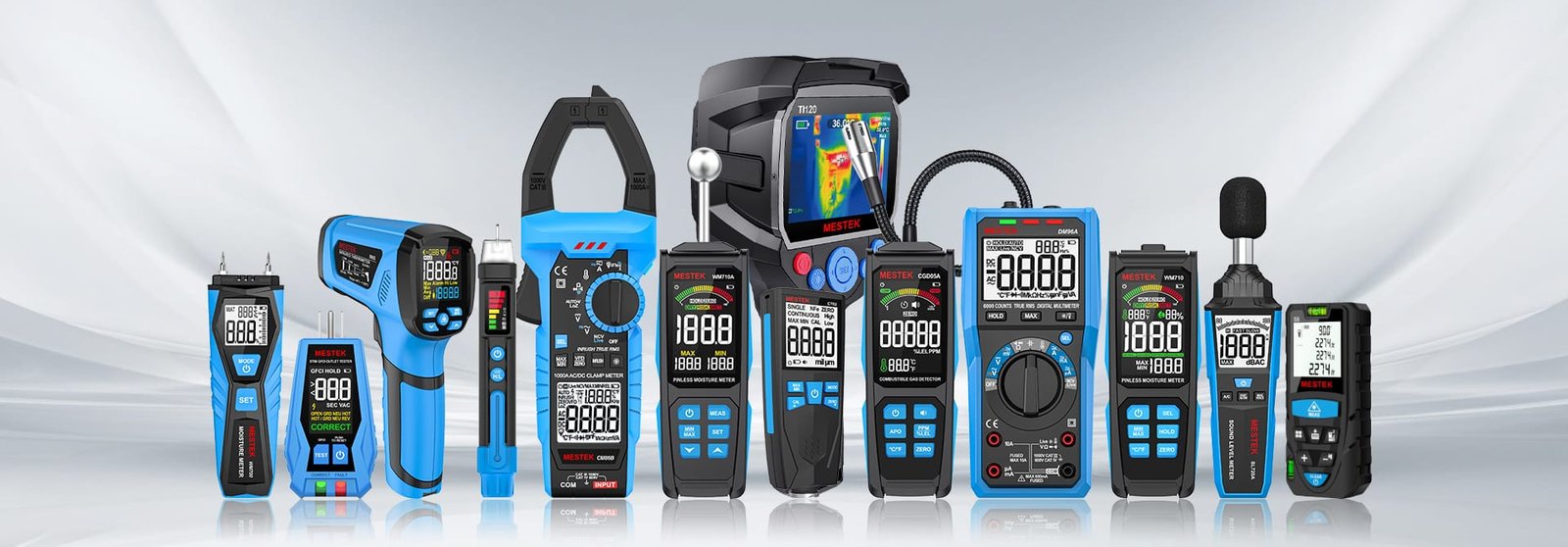
What Is a Sound Level Meter?

Noise is everywhere—and excessive noise can impact productivity, health, and even safety. That’s where a sound level meter comes in handy. A sound level meter is a sound measuring instrument that quantifies sound pressure levels in decibels (dB). Professionals use it to evaluate workplace noise, environmental noise pollution, and audio system performance. Whether you’re an engineer, building inspector, or audio enthusiast, understanding how this noise measuring instrument works is the first step to accurate sound measurement.

                What Is a Sound Level Meter Used For?

                A sound level meter serves as a noise measuring instrument across multiple industries:

                Occupational Safety – Ensures workers are not exposed to harmful noise levels in factories or construction sites.
                Environmental Monitoring – Measures traffic, airport, or industrial noise that may impact nearby communities.
                Audio System Testing – Optimizes speaker setups in theaters, studios, or event venues for balanced sound.
                Building Acoustics – Identifies areas with poor insulation or excessive noise leakage.

                In simple terms, this sound measuring device translates the invisible pressure of sound waves into numbers that you can analyze and act upon.

                How Does a Sound Level Meter Work?

                A digital sound level meter works by capturing sound waves and converting them into electrical signals. The process involves:

                        • Microphone Capture – The microphone senses sound pressure in the air.
                        • Signal Conversion – An internal circuit converts the acoustic energy to an electrical signal.
                        • Weighting and Time Filtering – Filters adjust the reading based on human hearing sensitivity.
                        • Display Output – The processed value is shown in decibels (dB) on the screen.

                        Modern digital sound level meter like the MESTEK SL750B feature AC-weighting, fast/slow response settings, and data hold functions, making field measurement faster and more reliable.

                        Time Weighting in Sound Measurement

                        Time weighting refers to how quickly the level meter responds to changes in noise levels. There are two common settings:

                        • Fast (F / 125ms) Captures quick sound fluctuations; ideal for machinery or sudden noise.
                        • Slow (S / 1000ms) Averages out fluctuations; useful for steady environmental noise.

                        Selecting the correct time weighting ensures that your measurements match the type of noise you are analyzing.

                        Tips: Selecting the correct time weighting ensures that your measurements match the type of noise you are analyzing.

                        Frequency Weighting Explained

                        Not all sound frequencies are equally harmful or noticeable to humans. Frequency weighting is applied to adjust measurements to better reflect perceived loudness.

                        A-Weighting (dBA)

                        • Mimics the human ear’s sensitivity.
                        • Best for workplace noise or general environmental studies.

                        C-Weighting (dBC)

                        • Less filtered, captures low-frequency noise.
                        • Useful for measuring machinery or bass-heavy sounds.

                        Z-Weighting (dBZ)

                        • Flat response across the entire range.
                        • Preferred for professional acoustic analysis.

                        A/C Dual Weighting

                        • Provides both human-perceived and low-frequency impact data, which is why many modern digital sound level meters support this mode.

                        Frequency Analysis for Noise Measuring Instruments

                        Frequency analysis allows users to identify which frequencies dominate the environment. For example:

                        • Low Frequencies (20–200Hz): HVAC systems, heavy vehicles
                        • Mid Frequencies (200–2,000Hz): Human speech, general machinery
                        • High Frequencies (2kHz+): Whistles, alarms, high-speed tools

                        Professional engineers often rely on frequency analysis to design noise control solutions or verify building acoustics.

                        Sound Level Meter Display And Reading
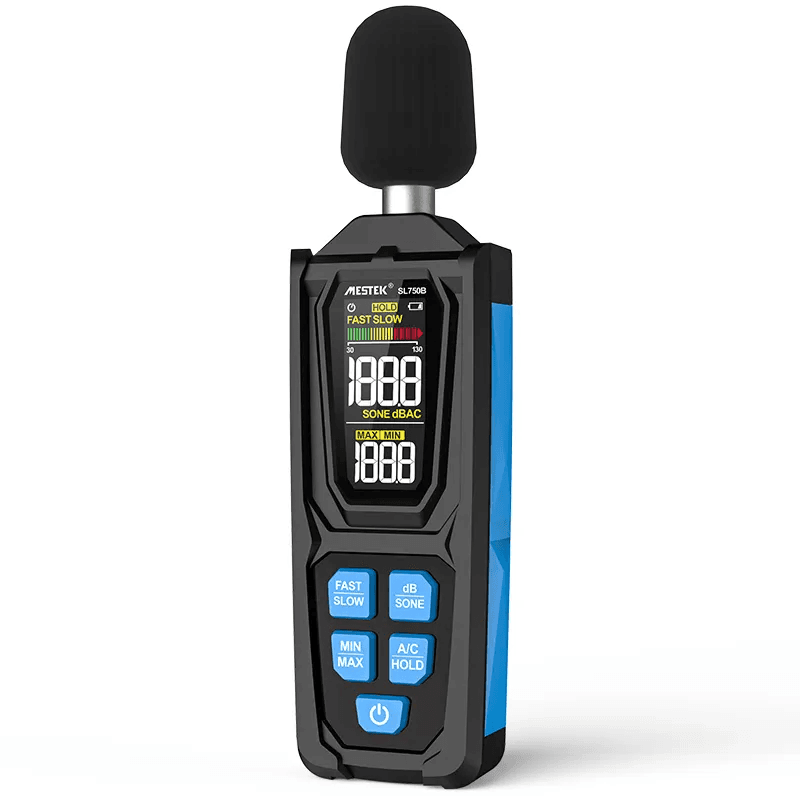
                        Noise meter SL750B features A&C weighting, making it ideal for a wide range of sound measurements.

                        Modern sound measuring devices provide real-time data through:

                        • 4-digit LCD display for precise readings (resolution 0.1dB)
                        • Data hold to freeze readings for recording
                        • Auto-ranging to switch between low (<100dB) and high (>100dB) sound levels

                        The MESTEK SL750B incorporates all these features, making it ideal for home, office, or basic industrial monitoring without excessive complexity.

                        Calibration of a Sound Level Meter

                        Accurate measurement depends on regular calibration:

                        Field Calibration – Using a portable calibrator before measurement sessions.
                        Factory Calibration – Recommended annually to maintain accuracy within ±2dB.

                        Conclusion

                        Whether you are monitoring environmental noise, workplace safety, or home acoustics, a reliable noise measuring instrument ensures that your decisions are based on accurate data.

                        If you’re starting your journey in sound measurement, consider a digital sound level meter like the MESTEK SL750B—compact, accurate, and designed for everyday use.
                        Share our interesting knowledge and stories on social media

                        Have questions? Get a quote

                        Want to learn more? Click the button now.

                        More Posts>>>

                        Learn how to identify line and load wires safely. Use a multimeter or voltage tester to understand wiring differences and avoid hazards.

                        How to Identify Line and Load Wires Safely and Accurately

                        Understanding the difference between line and load wires is essential for anyone working with electrical systems. Whether you are installing a switch, replacing an outlet, or troubleshooting a circuit, correctly identifying line and load wires helps prevent electrical hazards, equipment damage, and wiring errors. What Are Line and Load Wires Before identifying wires, it is important to understand their roles in an electrical circuit. What Is a Line Wire? The line wire carries electrical power from the power source (such as a breaker panel) to a device. It is the incoming energized conductor that supplies voltage to switches, outlets, or

                        The image shows what an infrared thermal imager is.

                        What Is an Infrared Thermal Imaging Camera?

                        What if you could see heat instead of light? An infrared thermal imaging camera makes that possible. It detects invisible heat energy and turns it into a visual image of temperature differences. Unlike regular cameras that rely on visible light, thermal cameras work in total darkness. They can also operate in smoke, fog, and other low-visibility conditions. Thermal cameras are widely used in electrical inspections, industrial maintenance, and building diagnostics. They help professionals detect problems the naked eye cannot see, such as overheated wires or hidden heat loss. This guide explains how infrared thermal imaging works, what it can detect,

                        The picture depicts a worker using a multimeter to check for socket malfunctions.

                        How to Use a Multimeter to Check a Faulty Socket

                        Household sockets can stop working for several reasons, including loose wiring, a blown fuse, tripped circuit breakers, or worn out internal connections. Sometimes the problem is obvious, but often it requires proper testing to confirm whether the socket itself is faulty. That’s where understanding how to use a multimeter to check a faulty socket becomes essential. A multimeter is one of the easiest and most reliable tools for diagnosing electrical outlet problems. It can measure voltage, resistance, and continuity, helping you determine whether power is reaching the socket and whether the internal wiring is intact. This article explores everything you

                        The diagram illustrates the tools needed to test a relay using a multimeter.

                        How to Test a Relay with a Multimeter

                        Relays are small but essential components used in cars, appliances, HVAC systems, industrial equipment, and countless electronic devices. Their job is simple: they use a low power signal to safely and efficiently control a higher power circuit. Because relays switch electrical loads, they experience wear over time. Burnt contacts, damaged coils, or internal mechanical failure can cause them to stop working correctly. When a device suddenly stops turning on or won’t turn off, a faulty relay is often the cause. Fortunately, diagnosing a relay is not complicated. A digital multimeter is the easiest and most reliable tool for checking relay

                        Get more information

                        Scroll to Top