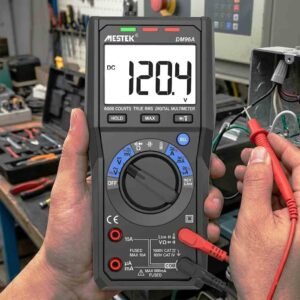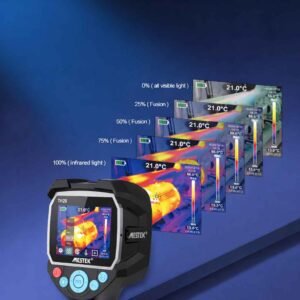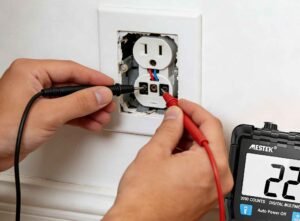

A clamp meter is a testing instrument that combines the basic functions of a multimeter with a current clamp. Instead of breaking a circuit to measure amperage, the user can simply clamp the jaw around a single conductor to get a current reading. The probes handle voltage measurements, while the clamp enables safe, non-contact current testing without shutting off power.
Inside the clamp, ferrite cores detect and focus the magnetic field created by current flow, allowing the meter to calculate amperage accurately. Along with current measurement, most clamp meters also provide basic multimeter features like voltage and resistance, making them a convenient tool for everyday electrical troubleshooting.
Clamp meter function
Modern clamp meters have moved far beyond basic current testing. While they can still measure amperage through their clamping jaw, they now integrate most core digital multimeter functions—voltage, resistance, and continuity—making them a more complete tool for general electrical work.
Common features found on today’s clamp meters include:
- Current-sensing jaw
- Safety grip / tactile barrier
- Hold function to freeze readings
- Rotary dial for selecting measurement modes
- Clear display with optional backlight
- Min/Max recording
- Inrush current measurement
- Zero/relative mode for removing DC offset
- Jaw release lever
- Alignment marks for accurate clamping
- Common input jack
- Voltage/ohm input jack
- Flexible current probe input (on some models)
Common Applications of Clamp Meters
Clamp meters are used across multiple industries, including:
Electrical Installation & Maintenance
- troubleshooting overloaded circuits
- checking breaker load
- verifying panel current balance
HVAC System Diagnostics
- compressor current draw
- capacitor testing
- inrush current measurement
Industrial Machinery
- motor load monitoring
- detecting abnormal current fluctuations
- preventive maintenance
Automotive & Battery Systems
- DC current draw
- alternator and charging system tests
Why Clamp Meters Matter in Real Diagnostics
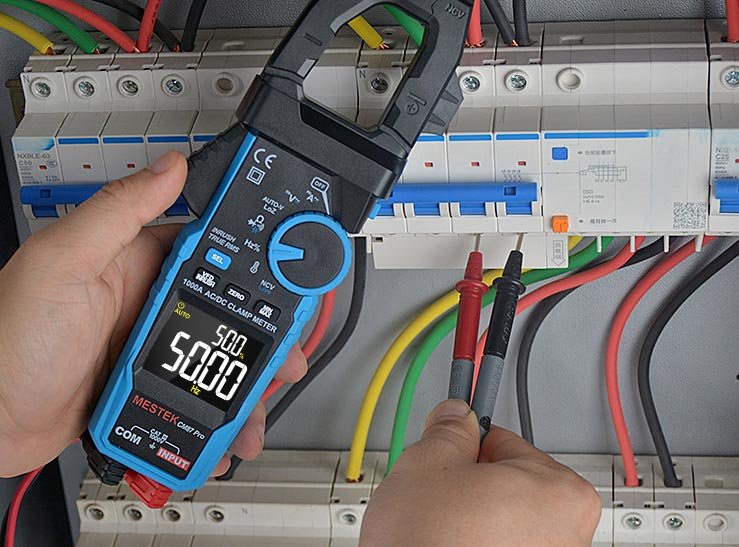
- Clamp meters are essential because they let technicians measure current quickly, safely, and under real-world operating conditions—without disconnecting wires.
- HVAC technicians use clamp meters to check a compressor’s inrush current. If the startup current is too high or inconsistent, it often indicates failing capacitors, tight bearings, or an aging compressor.
- Electricians rely on clamp meters to spot unbalanced loads across phases. A noticeable difference in current can signal an overloaded circuit, poor distribution, or developing equipment faults.
- Automotive technicians measure DC current draw to locate parasitic drains. Abnormal standby current helps quickly narrow down faulty modules, relays, or wiring issues.
Clamp Meter vs. Multimeter
Many professionals now carry both tools, but clamp meters are preferred for current diagnostics.Important Specifications to Consider Before Buying a Clamp Meter
| Feature | Clamp Meter | Multimeter |
| Best at | Current measurement | Voltage, resistance |
| Contact needed | No (for current) | Yes |
| Safety | Higher | Slightly lower |
| Ideal for | Live circuits | Low-voltage diagnostics |
How to choose the best clamp meter
1. Current Range
Common ranges include:
- 0–600A
- 0–1000A
2. Accuracy
Better clamp meters provide ±3% or lower—essential for professional diagnostics.
3. Jaw Opening Size
Larger jaws allow measurement on thicker cables found in industrial systems.
4. True RMS
Necessary for accurate measurements on modern electronic systems.
5. Safety Category (CAT Rating)
Choose based on environment:
- CAT II – appliances & outlets
- CAT III – distribution panels
- CAT IV – incoming service & outdoor lines
6. Additional Features
- inrush current
- NCV (non-contact voltage detection)
- temperature measurement
- data hold & backlight
Safety Tips When Using a Clamp Meter
Never clamp around both conductors in a cable.
Always check the CAT rating before testing.
Avoid using damaged test leads.
Keep fingers behind protective barriers.
Do not use in wet or explosive environments unless rated for such use.
Conclusion
A clamp meter is an indispensable tool for modern electricians, HVAC technicians, industrial engineers, and maintenance professionals. It provides a safe, fast, and non-intrusive way to measure current while offering a wide range of additional diagnostic features. Understanding how clamp meters work—and selecting one with the right specifications—can significantly improve the accuracy and efficiency of your electrical diagnostics.