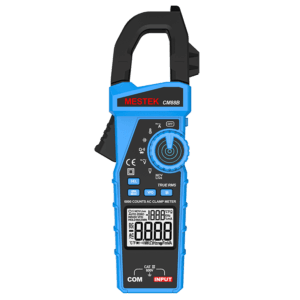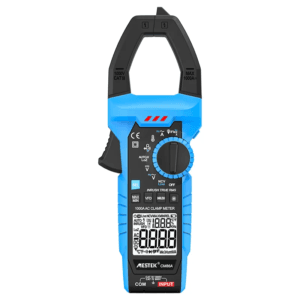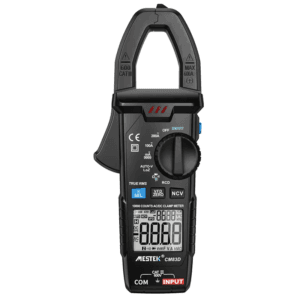
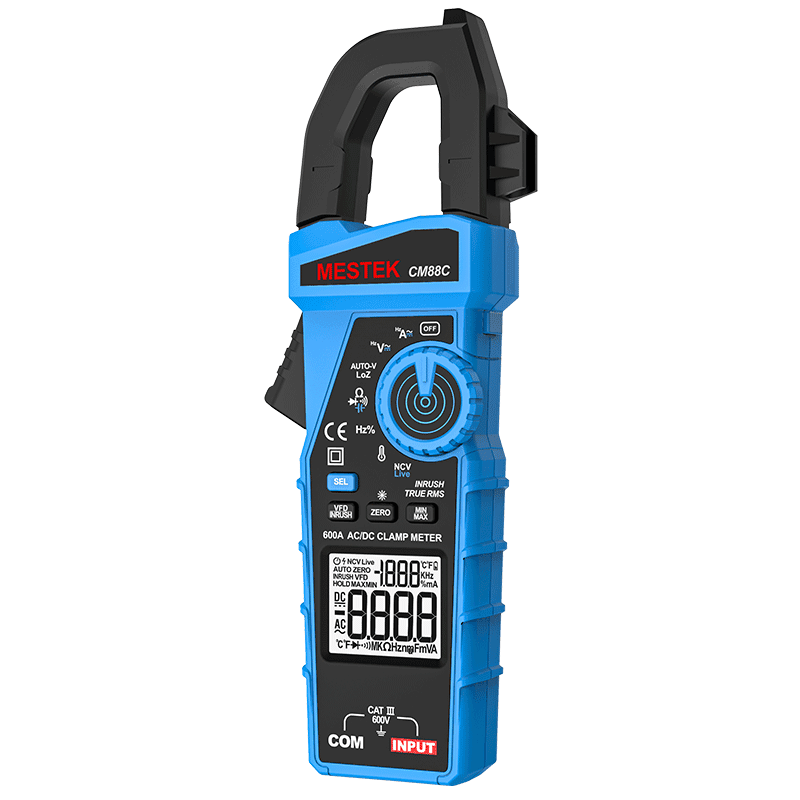

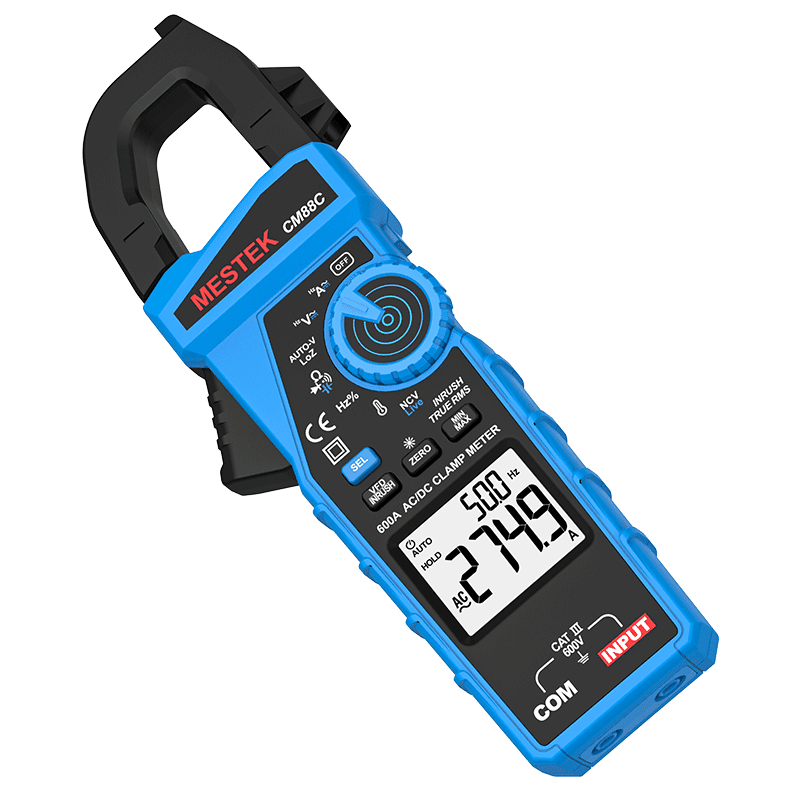
CM88C
600V DC current test, clamp electric meter with zeroing function
MESTEK CM88C True RMS clamp electric meter offers a 6000-count range and robust overload protection up to 600V. Unlike standard models, it supports accurate AC and DC voltage measurements up to 600V and reliable AC and DC current measurements up to 600A. The CM88C also features 10MHz frequency testing and a zero return function for precise DC readings. Its versatile capabilities include resistance up to 60MΩ, capacitance up to 60mF, temperature testing (-20°C to 1000°C) using a K-type probe, and non-contact voltage detection. Other highlights include data hold, live line identification, VFD measurement, maximum/minimum value recording, a flashlight, and auto-off functions for enhanced efficiency. Designed for professional troubleshooting, the CM88C delivers stable and accurate results in demanding environments.
Functions
| Maximum display value | 6000 Counts |
| Full range overload protection voltage | 600V |
| AC/DC Voltage | 600V |
| AC/DC Current | 600A |
| Automatic range | Yes |
| Resistance | 60MΩ |
| Capacitance | 60mF |
| Data Hold | MAX and MIN data |
| NCV | Non-contact AC Voltage Detection. |
| LIVE | Live wire identification |
| K-type probe Temperature test | °C/°F: -20°C~1000°C/-4°F~1832°F |
| VFD | Variable frequency measurement |
| ZERO function | Clear the low number of the DC |
| Frequency Hz% | 10MHz |
| Continuity/Diode Test | √ |
| Flashlight for Dark Area. | √ |
| MAX value locking | √ |
| Screen | LCD |
| Over-range display | OL or-OL |
| Sampling time | About 3 times/second |
| Automatic shutdown time | About 15 minutes |
| Backlight automatic off time | About 3 minutes |
| Flashlight automatic off time | About 5 minutes |
| Power Supply | 2*1.5V AAA batteries |
| Working temperature | 0C~50C |
| Storage temperature | -10C~60C |
| Size | 218*75*39(mm) |
| Jaw size | 30mm |
| Weight | About 240g (excluding battery) |
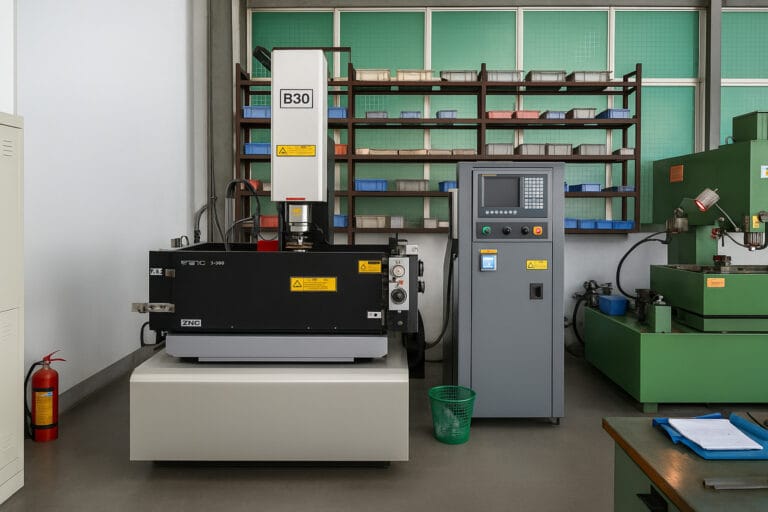
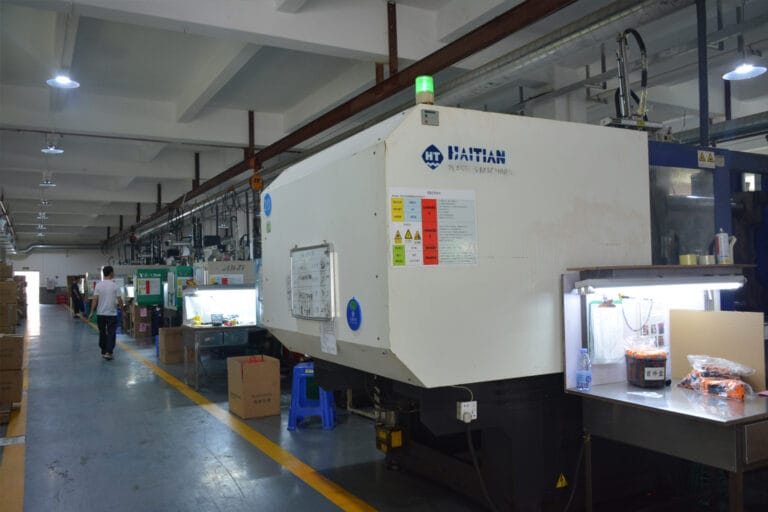
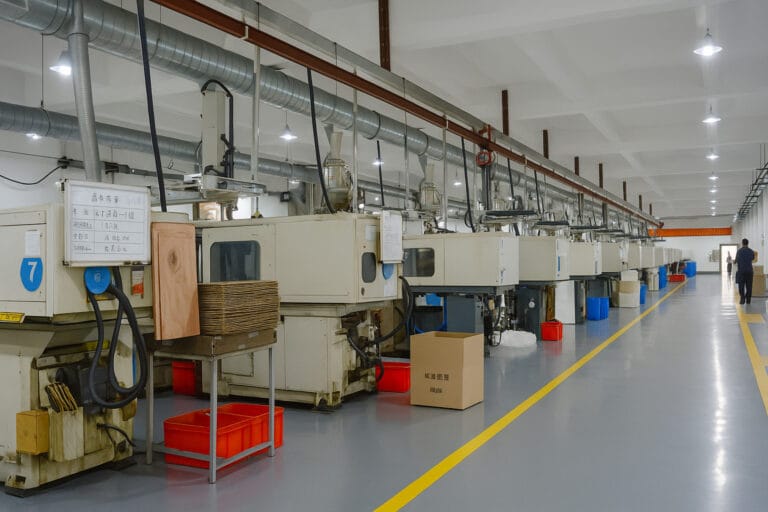
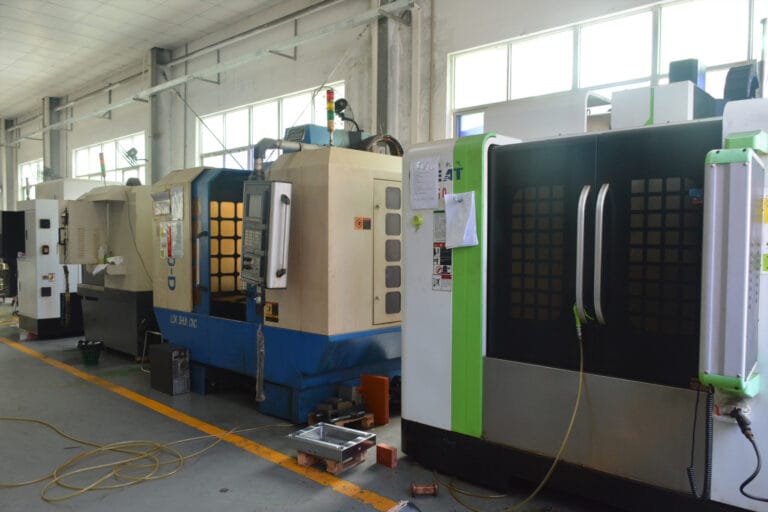
Factory Showcase
Mestek achieves high standards and high consistency in product inspection and calibration through precise machinery and a clean environment.

FREQUENTLY ASKED QUESTIONS
What's the difference between a clamp meter and a multimeter?
A clamp meter is specialized for current measurement through its jaws, especially high amperage. A multimeter offers broader functions like voltage, resistance, and continuity testing, but typically measures current via test leads.For a more detailed comparison, please refer to the blog:clamp electric meter vs multimeter.
Can a clamp meter measure both AC and DC current?
Yes, many modern clamp meters can measure both AC and DC current. Be sure to check if the model specifically supports DC current, as not all do.
How do I measure current with a clamp meter?
To measure current, first set your clamp meter to the correct current mode—AC or DC. Then open the clamp jaws and place them around a single live conductor, not the entire cable, as clamping around both live and neutral wires will cancel out the current reading. Make sure the wire is centered in the clamp for better accuracy. Once clamped, the current value will appear on the display. For DC current measurements, some models require you to zero the meter before use to ensure accuracy.
What is the maximum current a clamp meter can measure?
It depends on the model. Entry-level clamp meters typically measure up to 400A–600A, while industrial models can go up to 1000A or more.
What is non-contact voltage (NCV) detection in a clamp meter?
NCV detection is a safety feature that lets you detect the presence of AC voltage without physically touching a wire. The clamp meter senses the electromagnetic field emitted by a live wire and alerts you with a visual or audible signal. It’s a fast and convenient way to identify live wires or check for voltage in outlets, switches, and breaker panels. However, NCV only indicates the presence of voltage—it doesn’t tell you the exact voltage level, so it should be used as a preliminary safety check rather than a precise measurement.
How accurate is a clamp meter?
Clamp meter accuracy varies by model and technology. Most standard models offer ±2% to ±3% accuracy, while high-end True RMS meters can reach ±1%. Accuracy may be affected by wire position, interference, or temperature. For best results, follow the manufacturer’s usage and calibration guidelines.