Is a clamp meter better than a multimeter?

From an electrician’s perspective, we have a lot of maintenance tools. The question is, which tool should we choose? Clamp electric meter or multimeter? The clamp electric meter is better than a multimeter?

We are often troubled by these questions, and now we will discuss these two measurement tools. Because they appear in the same scene, but they have their own advantages in dealing with the details of maintenance.

First, let’s look at some parameters of multimeter and clamp electric meter.

Multimeter

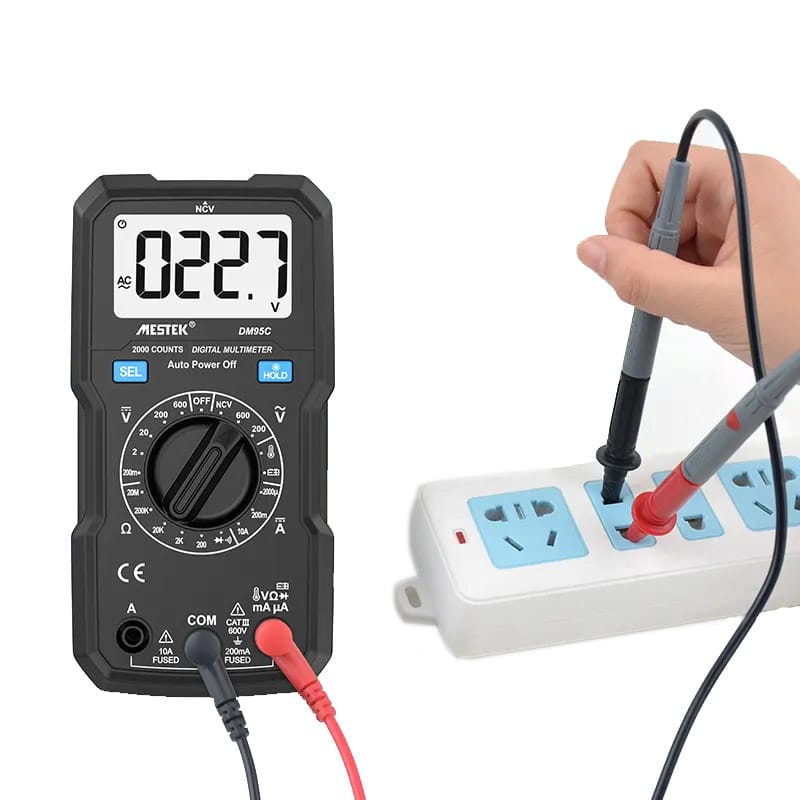
Multimeters can measure voltage, current, resistance, capacitance, temperature, diodes and many other parameters. They are common in electronic repair, circuit testing, and home appliance repair. Digital multimeters usually have automatic and manual types to cope with different measurement scenarios. We can read the readings on the LCD screen.

SceneApplication
Electronic devicesElectrical parameters of computers, telecommunication equipment, and PCB circuits
Home appliancesDetect voltage, current and resistance of air conditioners, refrigerators and washing machines
laboratoryPrecise measurement of electronic components
Automobile circuitCar batteries and motors

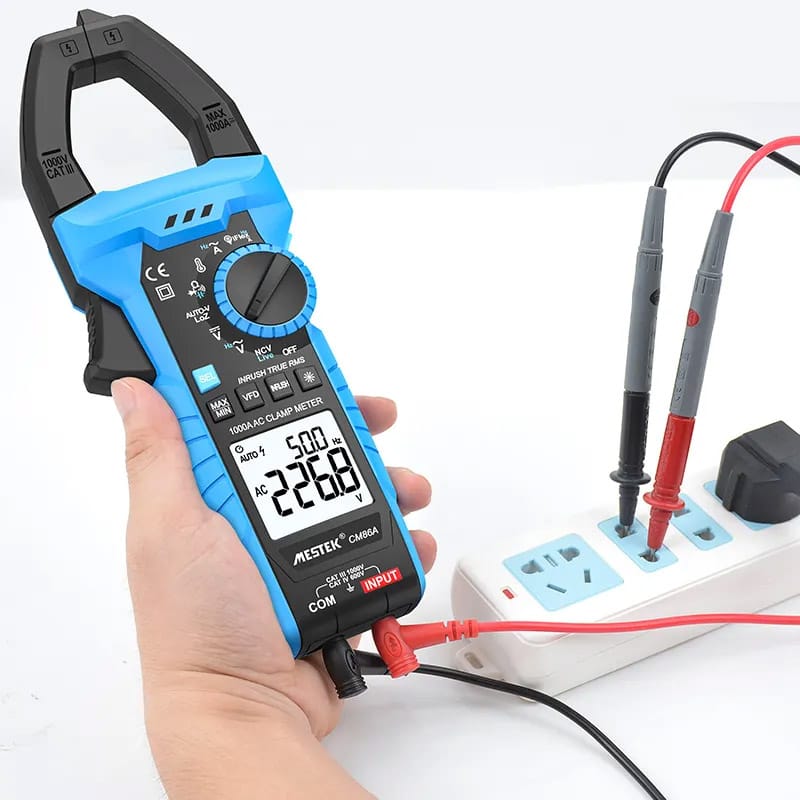
The clamp electric meter is more commonly used for measuring current. Unlike a multimeter, a clamp meter does not require a probe to measure current, which avoids physical contact in most cases.

SceneApplication
Industrial power distributionMeasuring large AC currents in transformers and industrial power lines
Home appliancesHVAC, elevator systems, monitoring motors
laboratoryAC current measurement for solar energy and energy storage systems
Automobile circuitCurrent detection in the computer room to ensure load balance

Safety

If you are very concerned about safety, then the best choice is a clamp electric meter. Because when we measure current, in order to avoid contact with the wires, the clamp meter’s built-in clip can solve this problem, it is safer than a multimeter. If you need to measure more accurate current or voltage, we need to choose a multimeter. In terms of mA and mV performance, it is beyond doubt.

This CM86B is one of the best clamp electric meters with 1000A AC/DC measurement. It is worth mentioning that the flexible clamp can be used in more places. When we choose a clamp electric meter, we look for a backlight, which is a great choice. If it also has lighting on the top, it will be great. In many cases, we are in a dim environment in the maintenance room, such as you are in the basement or the wire you need to test is in a corner that is not easy to find.

Buy a clamp electric meter or a multimeter?

This depends a lot on what you intend to do. If you are thinking about mains power, yes, what you need is to buy a clamp electric meter. On the other hand, if you are interested in electronics, perhaps battery-powered equipment, and you want to check and minimize power consumption, then you will definitely want to measure current in a multimeter, in the mA and µA range.
Share our interesting knowledge and stories on social media

Have questions? Get a quote

Want to learn more? Click the button now.

More Posts>>>

Learn how to identify line and load wires safely. Use a multimeter or voltage tester to understand wiring differences and avoid hazards.

How to Identify Line and Load Wires Safely and Accurately

Understanding the difference between line and load wires is essential for anyone working with electrical systems. Whether you are installing a switch, replacing an outlet, or troubleshooting a circuit, correctly identifying line and load wires helps prevent electrical hazards, equipment damage, and wiring errors. What Are Line and Load Wires Before identifying wires, it is important to understand their roles in an electrical circuit. What Is a Line Wire? The line wire carries electrical power from the power source (such as a breaker panel) to a device. It is the incoming energized conductor that supplies voltage to switches, outlets, or

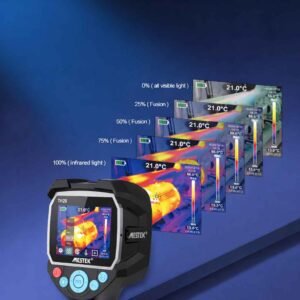
The image shows what an infrared thermal imager is.

What Is an Infrared Thermal Imaging Camera?

What if you could see heat instead of light? An infrared thermal imaging camera makes that possible. It detects invisible heat energy and turns it into a visual image of temperature differences. Unlike regular cameras that rely on visible light, thermal cameras work in total darkness. They can also operate in smoke, fog, and other low-visibility conditions. Thermal cameras are widely used in electrical inspections, industrial maintenance, and building diagnostics. They help professionals detect problems the naked eye cannot see, such as overheated wires or hidden heat loss. This guide explains how infrared thermal imaging works, what it can detect,

The picture depicts a worker using a multimeter to check for socket malfunctions.

How to Use a Multimeter to Check a Faulty Socket

Household sockets can stop working for several reasons, including loose wiring, a blown fuse, tripped circuit breakers, or worn out internal connections. Sometimes the problem is obvious, but often it requires proper testing to confirm whether the socket itself is faulty. That’s where understanding how to use a multimeter to check a faulty socket becomes essential. A multimeter is one of the easiest and most reliable tools for diagnosing electrical outlet problems. It can measure voltage, resistance, and continuity, helping you determine whether power is reaching the socket and whether the internal wiring is intact. This article explores everything you

The diagram illustrates the tools needed to test a relay using a multimeter.

How to Test a Relay with a Multimeter

Relays are small but essential components used in cars, appliances, HVAC systems, industrial equipment, and countless electronic devices. Their job is simple: they use a low power signal to safely and efficiently control a higher power circuit. Because relays switch electrical loads, they experience wear over time. Burnt contacts, damaged coils, or internal mechanical failure can cause them to stop working correctly. When a device suddenly stops turning on or won’t turn off, a faulty relay is often the cause. Fortunately, diagnosing a relay is not complicated. A digital multimeter is the easiest and most reliable tool for checking relay

Get more information

Scroll to Top