5 Key Factors to Consider When Choosing a Moisture Meter

Why Choosing the Right Moisture Meter Matters

Moisture problems in construction are more common—and costly—than you might think. Studies show that excess moisture in concrete or wood can cause:

Flooring failures and adhesive issues
Mold growth in walls and ceilings
Structural integrity concerns

Whether you’re a contractor, flooring installer, or building inspector, a reliable moisture meter helps you avoid these risks and ensure your projects meet quality standards. But how do you know which moisture meter is truly reliable?

Here are five key indicators to look for in a moisture meter for construction:

Wide Measurement Range

A professional moisture meter should handle a variety of materials:

A best moisture meter for concrete should offer low-range detection (0.1%–6%) to accurately assess moisture in masonry and cement-based surfaces.

For example:
Some leading brands like Wagner and Tramex focus on pin-free scanning of large areas, while the likes of Protimeter excel at pin-type precision testing, and the MESTEK spherical moisture meter is suitable for non-destructive testing of a wide range of materials.

Pin vs Pinless Technology

Mestek WM700D provides pin and pinless modes, giving you the choice based on your site needs

Pin-Type Moisture Meters
A pinless moisture meter for wood or drywall is non-invasive and ideal for scanning large areas quickly without leaving marks—perfect for finished surfaces.

    Pinless Moisture Meters
    Pros: Non-invasive, ideal for scanning large areas quickly
    Cons: Less accurate for deep material readings

    Best of both worlds?
    Look for a moisture meter for construction that offers both measurement options.The WM700D provides pin and pinless modes, giving you the choice based on your site needs.

    Moisture Accuracy for Construction

    In construction, precision matters. A small error can lead to:

    • Premature installation on damp concrete
    • Failed moisture-sensitive coatings
    • Costly rework

    Choose a meter with:

    • ±5% accuracy or better
    • A response time under 0.5 seconds for efficient workflows
    • Both Protimeter Surveymaster and MESTEK WM700D meet these standards, helping you act confidently on your readings.

    Build Quality and Certifications

    Construction sites are harsh environments—dust, debris, and occasional drops are inevitable. Choose a meter that’s:

    • Certified (CE, ISO9001) for safety and quality assurance
    • Designed with a robust, ergonomic body

    MESTEK WM700D, like leading Tramex models (CMEX5 and MRHIII), carries these certifications, providing peace of mind for professionals

    User-Friendly Features

    Extra features can save time and frustration on the job:

    • Backlit display for dark spaces
    • Data hold for easy recording
    • Auto power-off to save battery life
    • Lightweight design for all-day use

    Whether you’re working on a high-rise or residential site, these details add up to better productivity.

    Final Thoughts: Choosing Your Moisture Meter

    Selecting a moisture meter isn’t just about specs—it’s about getting reliable data that protects your projects.

    If you’re exploring a professional-grade moisture meter with all the features above, models like the MESTEK WM700D are worth considering.
    Share our interesting knowledge and stories on social media

    Have questions? Get a quote

    Want to learn more? Click the button now.

    More Posts>>>

    Learn how to identify line and load wires safely. Use a multimeter or voltage tester to understand wiring differences and avoid hazards.

    How to Identify Line and Load Wires Safely and Accurately

    Understanding the difference between line and load wires is essential for anyone working with electrical systems. Whether you are installing a switch, replacing an outlet, or troubleshooting a circuit, correctly identifying line and load wires helps prevent electrical hazards, equipment damage, and wiring errors. What Are Line and Load Wires Before identifying wires, it is important to understand their roles in an electrical circuit. What Is a Line Wire? The line wire carries electrical power from the power source (such as a breaker panel) to a device. It is the incoming energized conductor that supplies voltage to switches, outlets, or

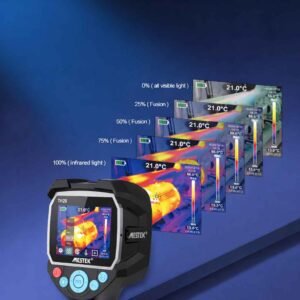
    The image shows what an infrared thermal imager is.

    What Is an Infrared Thermal Imaging Camera?

    What if you could see heat instead of light? An infrared thermal imaging camera makes that possible. It detects invisible heat energy and turns it into a visual image of temperature differences. Unlike regular cameras that rely on visible light, thermal cameras work in total darkness. They can also operate in smoke, fog, and other low-visibility conditions. Thermal cameras are widely used in electrical inspections, industrial maintenance, and building diagnostics. They help professionals detect problems the naked eye cannot see, such as overheated wires or hidden heat loss. This guide explains how infrared thermal imaging works, what it can detect,

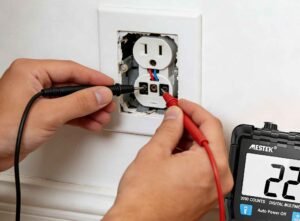
    The picture depicts a worker using a multimeter to check for socket malfunctions.

    How to Use a Multimeter to Check a Faulty Socket

    Household sockets can stop working for several reasons, including loose wiring, a blown fuse, tripped circuit breakers, or worn out internal connections. Sometimes the problem is obvious, but often it requires proper testing to confirm whether the socket itself is faulty. That’s where understanding how to use a multimeter to check a faulty socket becomes essential. A multimeter is one of the easiest and most reliable tools for diagnosing electrical outlet problems. It can measure voltage, resistance, and continuity, helping you determine whether power is reaching the socket and whether the internal wiring is intact. This article explores everything you

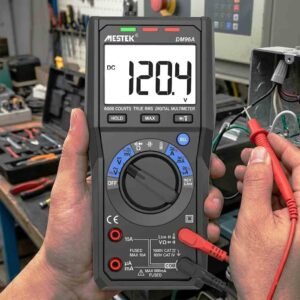
    The diagram illustrates the tools needed to test a relay using a multimeter.

    How to Test a Relay with a Multimeter

    Relays are small but essential components used in cars, appliances, HVAC systems, industrial equipment, and countless electronic devices. Their job is simple: they use a low power signal to safely and efficiently control a higher power circuit. Because relays switch electrical loads, they experience wear over time. Burnt contacts, damaged coils, or internal mechanical failure can cause them to stop working correctly. When a device suddenly stops turning on or won’t turn off, a faulty relay is often the cause. Fortunately, diagnosing a relay is not complicated. A digital multimeter is the easiest and most reliable tool for checking relay

    Get more information

    Scroll to Top