Do you really understand moisture meter?


You have prepared all the materials for DIY your house.

But whether the environment you live in is humid or too dry. This has become your current problem.

Because you can’t adapt them to the environment.

Too humid ground will make the wood board moldy and spotty in a short time, while too dry will make the wood board crack.

Don't worry, a short article will help you choose the moisture meter that's right for you.

Pinless moisture meters and pin-type moisture meters are the two most common moisture measuring instruments. Pin-type moisture meters can be directly inserted into the wood or material to be measured. The instrument measures the resistance between the built-in pins through electrodes. The size of the resistance is affected by the moisture content of the material. By observing whether the resistance is close to the standard value of the material, it can be judged whether the wood or material meets the standard.
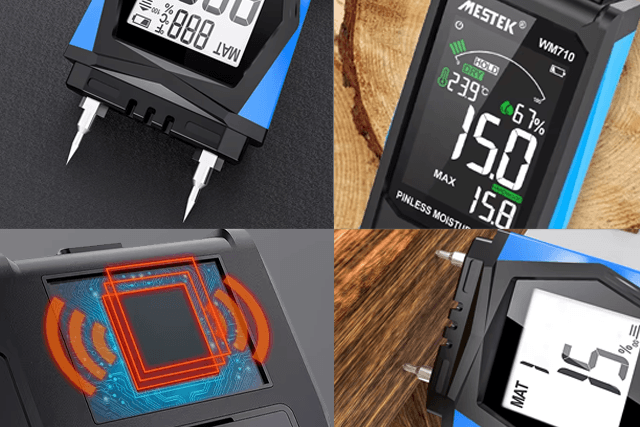
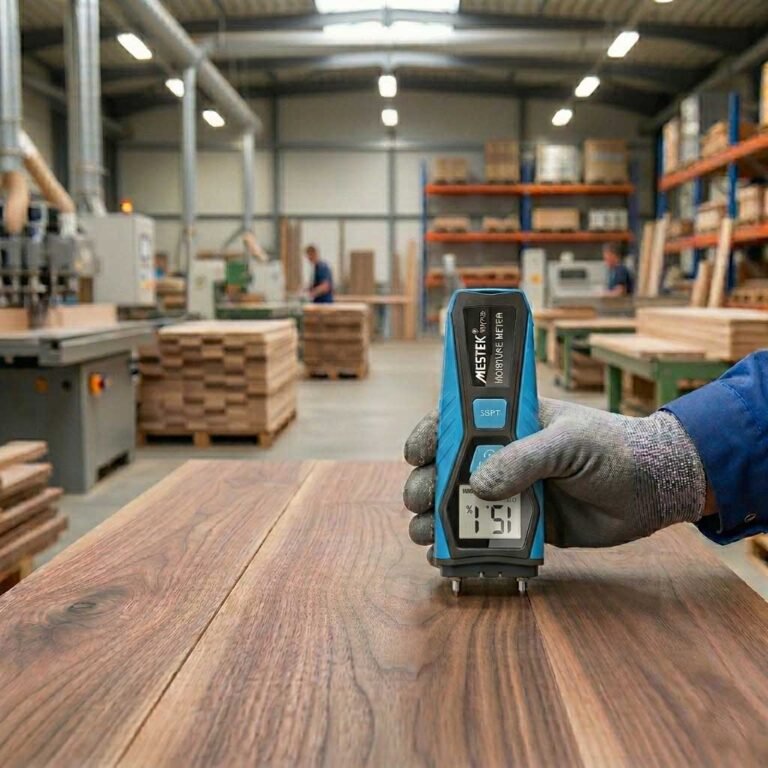
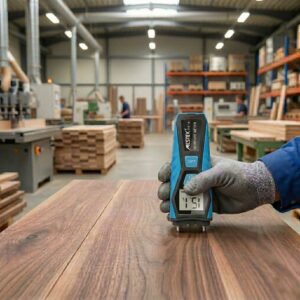
The working principle of the pinless moisture meter is relatively simple to understand. Its electrode plate only needs to contact the surface of the material to work, and the relative moisture content of the material is measured by the generated electric field. The working principles of these two moisture meters are basically the same.

So, what is the right moisture meter for you?

First, make your goal clear. If you just need to know the moisture content of your concrete floor, then you can choose a pin-type moisture meter. Even if the measurement process will leave holes in your floor, it will eventually be covered by your wooden boards, so you don’t have to worry about it.

The ASTM standard is that the relative humidity of concrete should be less than 75%. Of course, this is not the only standard. You also need to know what humidity the material you purchased can withstand? You can ask the manufacturer, usually find this information on the wood manufacturer’s website. After waiting for the concrete to reach the appropriate ambient humidity, you can decorate your room as you like. When you are preventing the wood wall from getting moldy and spots, and you don’t want a pin-type moisture meter to leave a bunch of holes after measuring, then a pinless moisture meter will be your best choice.

Time and effort are two important factors when choosing a moisture meter.

Time and effort are two important factors when choosing a moisture meter.

  • The volume of wood you work with and the time it takes to measure with the meter.
  • You need to repeatedly measure the moisture content of the wood to experiment.
  • You need to handle a lot of wood regularly.
  • You don’t have time to learn how to change the pins on a hygrometer.
  • The material you are working with is hard, such as hardwood

In this case, a pinless moisture meter is more suitable because your energy should not be wasted repeatedly inserting the pin into the wood.

  • You only have to deal with less wood.
  • You may only need to take a few simple instrument readings.
  • The wood you treat will easily fit the pins.

Then, the needle moisture meter will be the best choice, it is relatively simple to operate


Next, I will recommend you a more practical moisture meter, a moisture meter with a spherical probe.

It is also a pinless moisture meter, but it is more convenient and quick to use, and it has a unique ball shape. It has a unique way of calculating the moisture content of four materials, namely drywall, concrete, cork, and hardwood. After you get the standard moisture content of this material, you can set it to a dangerous or warning state, and it will issue a warning when it reaches this value.

Share our interesting knowledge and stories on social media

Have questions? Get a quote

Want to learn more? Click the button now.

More Posts>>>

Fork Meter vs Flexible Clamp Meter: Which One Should You Use?

Fork Meter vs Flexible Clamp Meter: Which One Should You Use?

Choosing the right electrical testing tool depends heavily on the type of work you do. While both fork meters and flexible clamp meters are designed for current measurement, they solve very different problems in real-world electrical environments. A fork meter is typically designed for fast and convenient electrical diagnostics, while a flexible clamp meter is built for measuring high-current conductors in difficult-access environments. Understanding these differences can help electricians, HVAC technicians, and maintenance professionals choose the right tool for the

Flexible Clamp Meter is testing cables.

How Flexible Clamp Meter Simplify High Current Measurements

Traditional clamp meters face significant limitations when measuring high current in industrial settings. Large conductors, limited panel access, and densely packed switchgear create scenarios where rigid jaw designs simply do not work. Electricians and maintenance teams working on three phase systems or crowded electrical panels often struggle to position standard meters around oversized cables. The flexible clamp meter addresses these challenges directly. It offers a practical solution for difficult measurement environments where precision and accessibility matter most. This article explores

MESTEK circuit breaker finder is diagnosing the cause of false alarms.

Why Is My Circuit Breaker Finder Picking the Wrong Breaker?

A circuit breaker finder is one of the easiest tools for identifying which breaker controls a specific outlet or circuit. However, many homeowners quickly discover that the tool does not always point to the correct breaker. Sometimes multiple breakers beep at the same time, while other times the receiver identifies a completely different circuit. This problem is surprisingly common. According to discussions from electricians, DIY forums, and troubleshooting threads, false positives are usually caused by electrical interference rather than a

Common Cable Tracing Problems and How to Avoid Them

Cable tracing is a routine task in network installation and low-voltage maintenance, but it does not always go smoothly. In offices, server rooms, and commercial buildings, technicians often work with crowded cable bundles, unlabeled network lines, and interference from nearby equipment. These conditions can make tracing the correct cable more difficult than expected. While a wire tracker helps simplify the process, understanding common tracing problems is just as important. This article explains several real-world cable tracing issues and practical ways

Get more information

mestek product collection